Enjoy homegrown tea blends by creating a beautiful herbal tea container garden filled with easy-to-grow herbs. It's a perfect small space garden projects and a thoughtful last-minute Mother's Day gift idea.
This post may contain affiliate links. Making a purchase through one of these links helps support this blog.
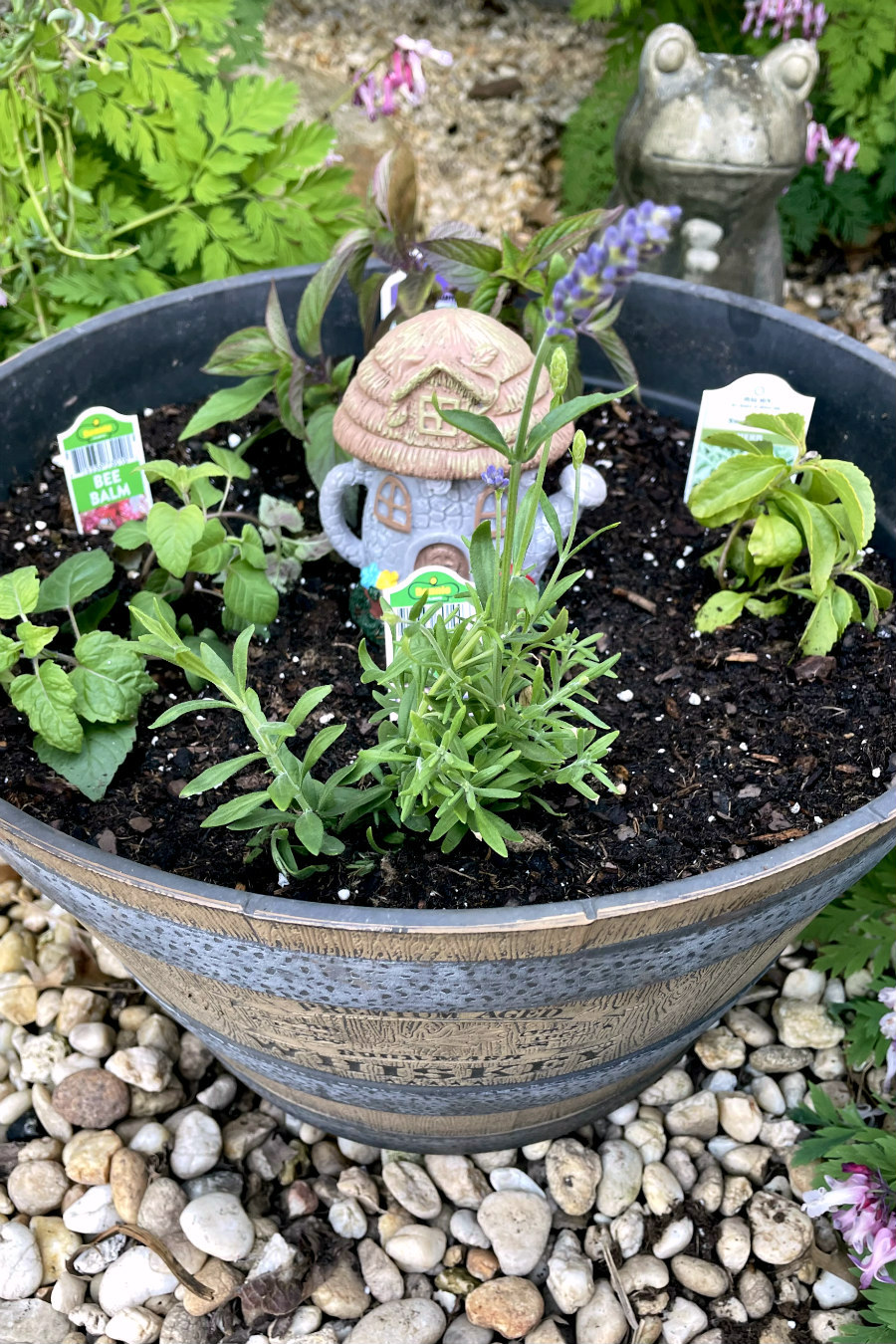
The herbs in my garden and containers are finally springing back to life. From snipping bundles to dry to clipping fresh sprigs for infused water and cups of herbal tea, it’s become one of my favorite seasonal rituals. There’s something so special about stepping outside your door and gathering everything you need for a homegrown tisane. Whether you have a full garden bed or a few pots on a patio, growing your own tea ingredients is both easy and fulfilling..
An herbal tea container garden also makes a thoughtful last-minute Mother’s Day gift - one that keeps on giving all season long. You can create a personalized tea garden based on the benefits you’d like to enjoy. Think chamomile and lavender for calming blends, mint for a refreshing, energizing boost, and lemon balm or pineapple sage for a bright, fruity twist.
Types of Herbs to Use for Tea
When planning your herbal tea garden, choose a mix of herbs that not only offer flavor, but also soothing properties. Mixing different scents and flavors not only enhances your homegrown tea experience, but also creates a visually appealing container garden.
- Chamomile: A classic choice for a calming cup of tea. It has an apple-like flavor with airy leaves and pretty daisy-like flowers.
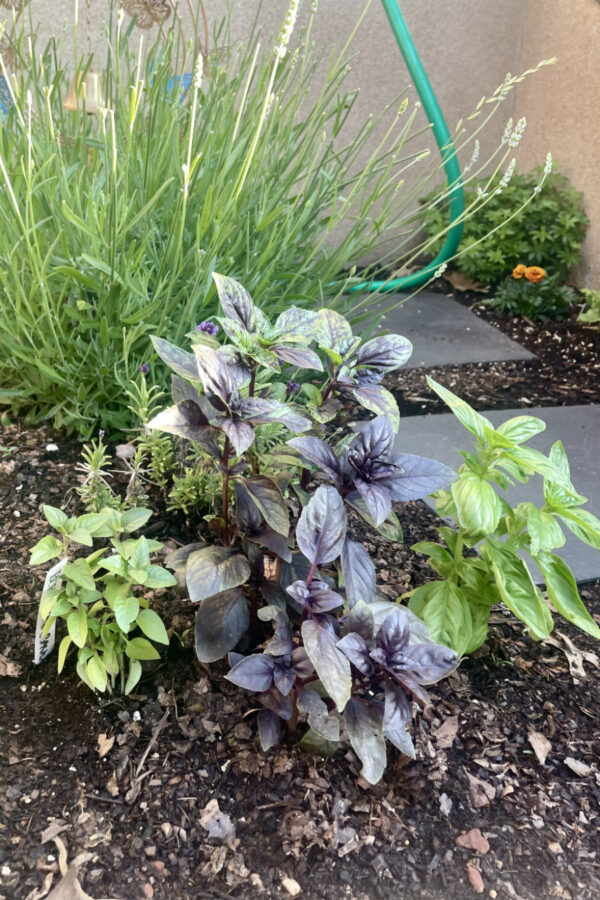
- Lavender: Since I'm allergic to chamomile, lavender is my best choice for a calming tea ingredient. It grows beautiful purple buds and has a slightly sweet and floral flavor. It's also great for attracting pollinators.
- Mint: Mint is one of my favorite ingredients to use for herbal garden. Classic peppermint is refreshing. You can also find other varieties of mint like pineapple and orange - both of which I have growing in pots in my garden. Be sure to keep your mint contained since it grows vigorously.
- Lemon Balm: Lemon Balm is in the mint family so it's another herb that's best grown in a container. Its bright, citrus scent and lemony flavor makes it a wonderful addition to herbal tea blends.
- Pineapple Sage: Pineapple Sage is not only a tropical and fruity addition to an herbal tea garden, but it's beautiful, too. Its bold red flowers standout to pollinators like hummingbirds making it both useful and ornamental.
- Bee Balm: Mainly sold in dwarf varieties at big box garden centers, bee balm is another functional and ornamental herb. It has a slightly minty, citrusy flavor and it's bright and vibrant flowers attract pollinators like bees, butterflies, and hummingbirds.
- Holy Basil (Tulsi): If you want a spicy addition to your herb garden, add holy basil. It has clove-like flavor and is known for its medicinal properties like boosting immunity, stress reduction, improving respiratory health, and more.
- Thyme: If you feel a cold coming on, you might want to brew a cup of tea with thyme in it. While it's known for adding earthy, peppery flavor to dishes, it can be used in small amounts in tea for its immune-supporting benefits.
- Rosemary: Another herb that's known for adding flavor to dishes rather than tea, rosemary is an unexpected addition to an herbal tea garden. It's fragrant and adds a pine-like, earthy flavor to tisanes - a little goes a long way.
- Stevia: If you're looking for a natural way to sweeten your tea, stevia is a nice addition. Its leaves are super sweet (you only need one or two) making it a great way to round out your herbal tea garden.
You can also make tea out of other plants like roses and lemongrass, but these are best planted on their own. For more ideas, head to your local garden center and ask about plants you can use for your herbal tea container garden.
Herbal Tea Container Garden
Creating your own herbal tea garden doesn't require a lot of space. Choose a large container, well-draining potting soil, and a small variety of plants that will grow well together. Customize your tea garden based on the flavors and benefits you wish to enjoy while sipping a homegrown cup of herbal tea.
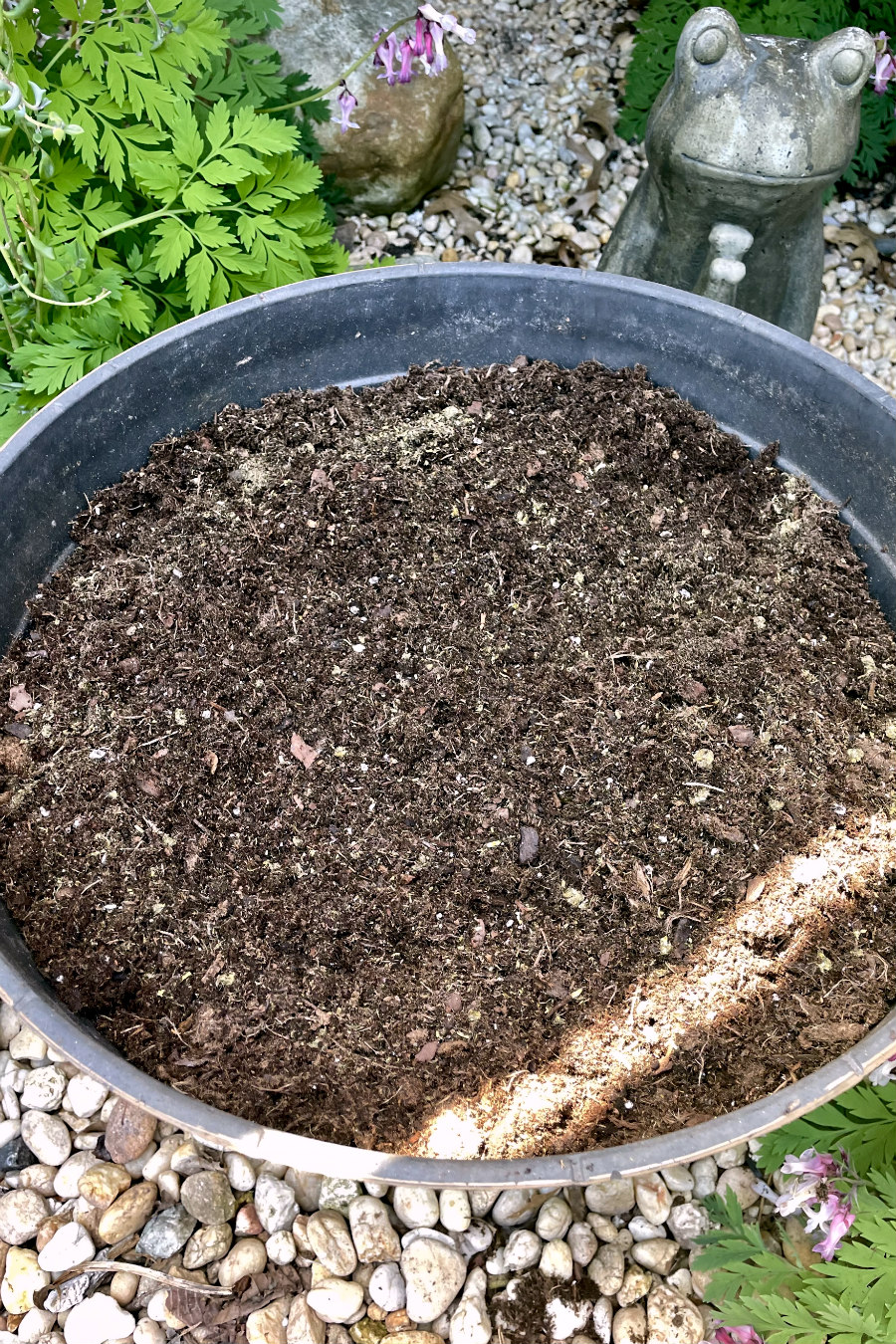
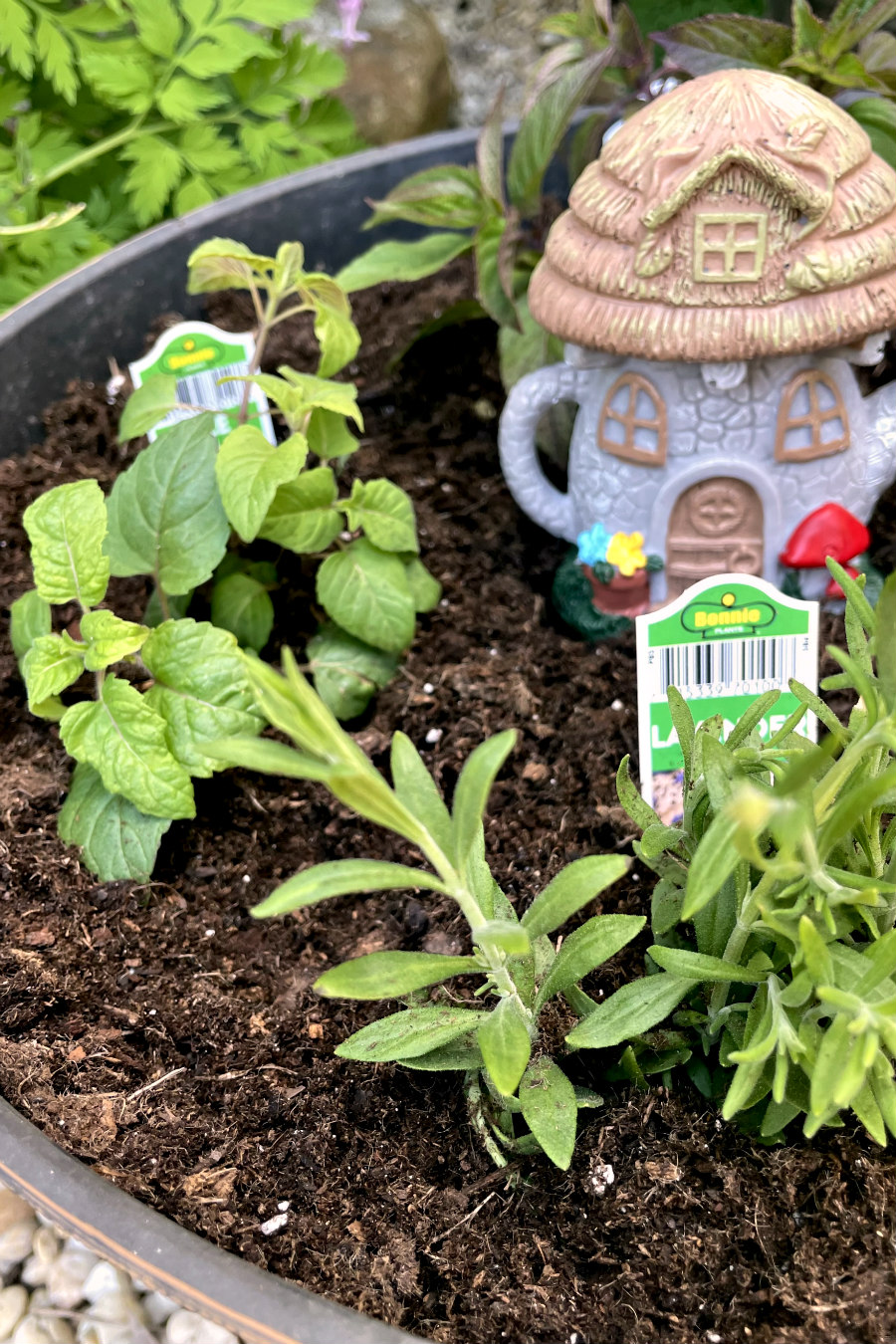
I actually went greenhouse hopping to find herbs for my container garden. After gathering the herbs I wanted to use (lavender, bee balm, pineapple sage, and stevia), I chose a large barrel planter and filled it with potting soil. Then, I mixed in some all-purpose fertilizer and earthworm castings.
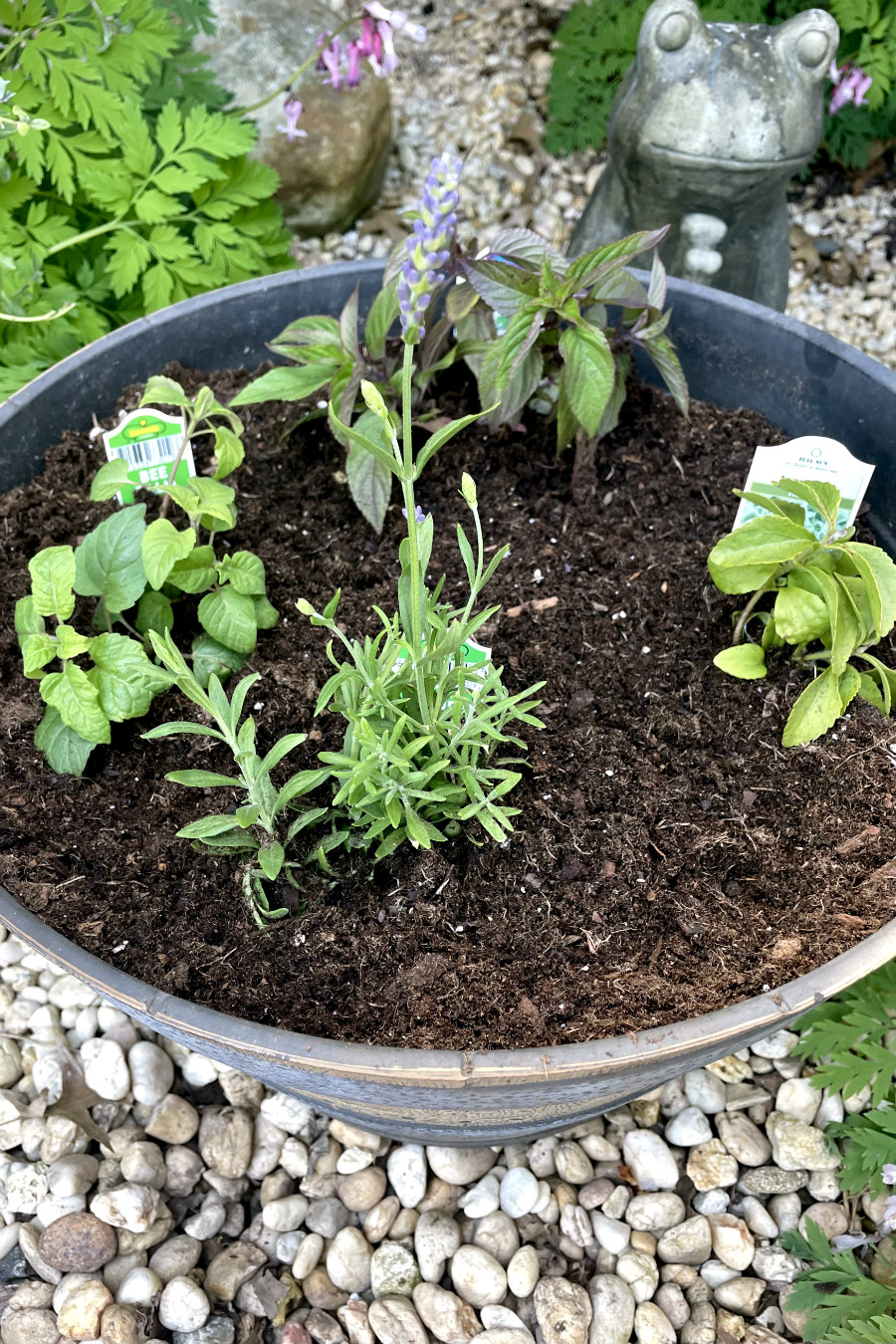
Next, I positioned my plants where I wanted them, dug holes, and planted them in place.
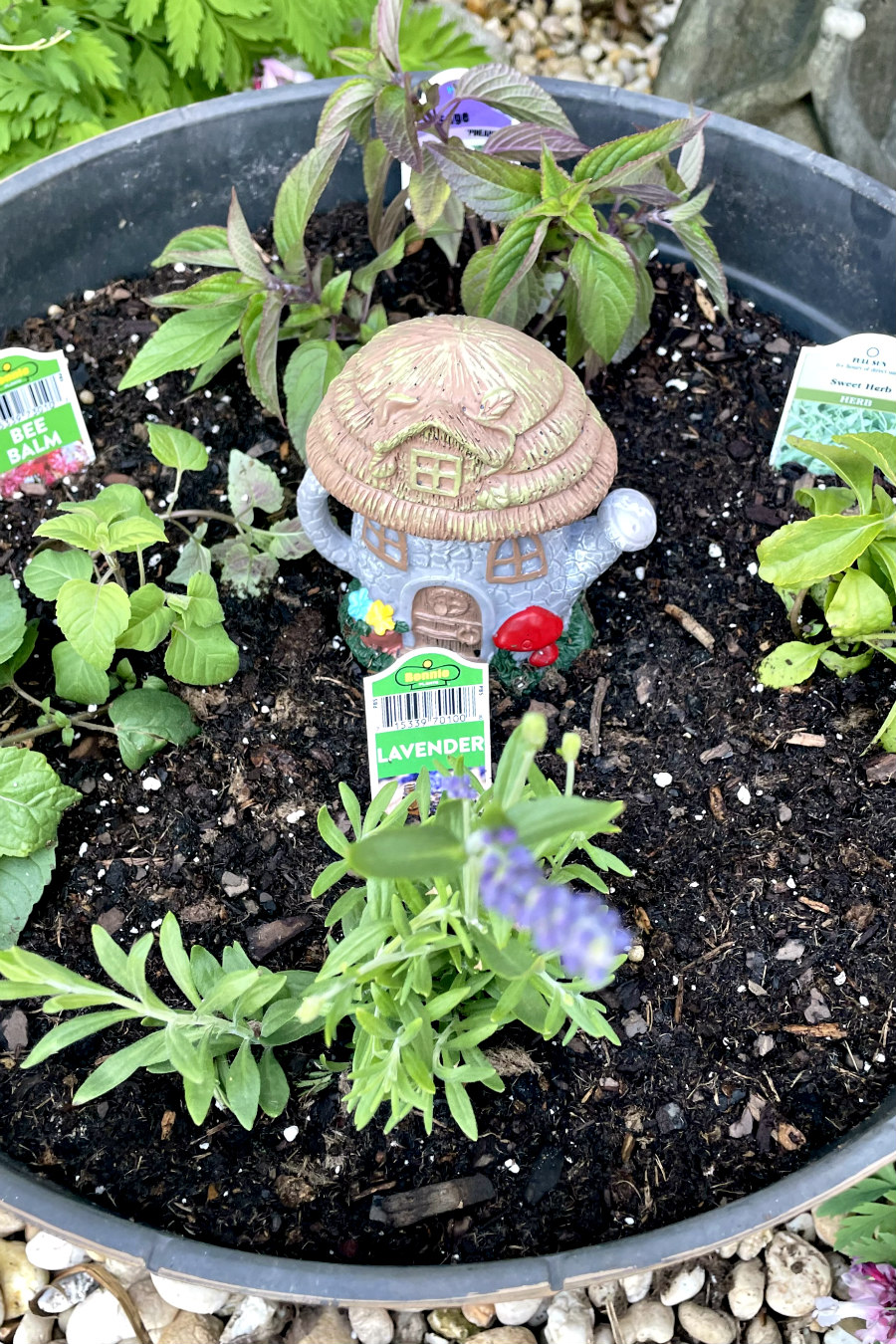
I watered the container thoroughly and set it in a sunny spot. Now, I can go out and grab herbs to make tea right outside our back door anytime I want.
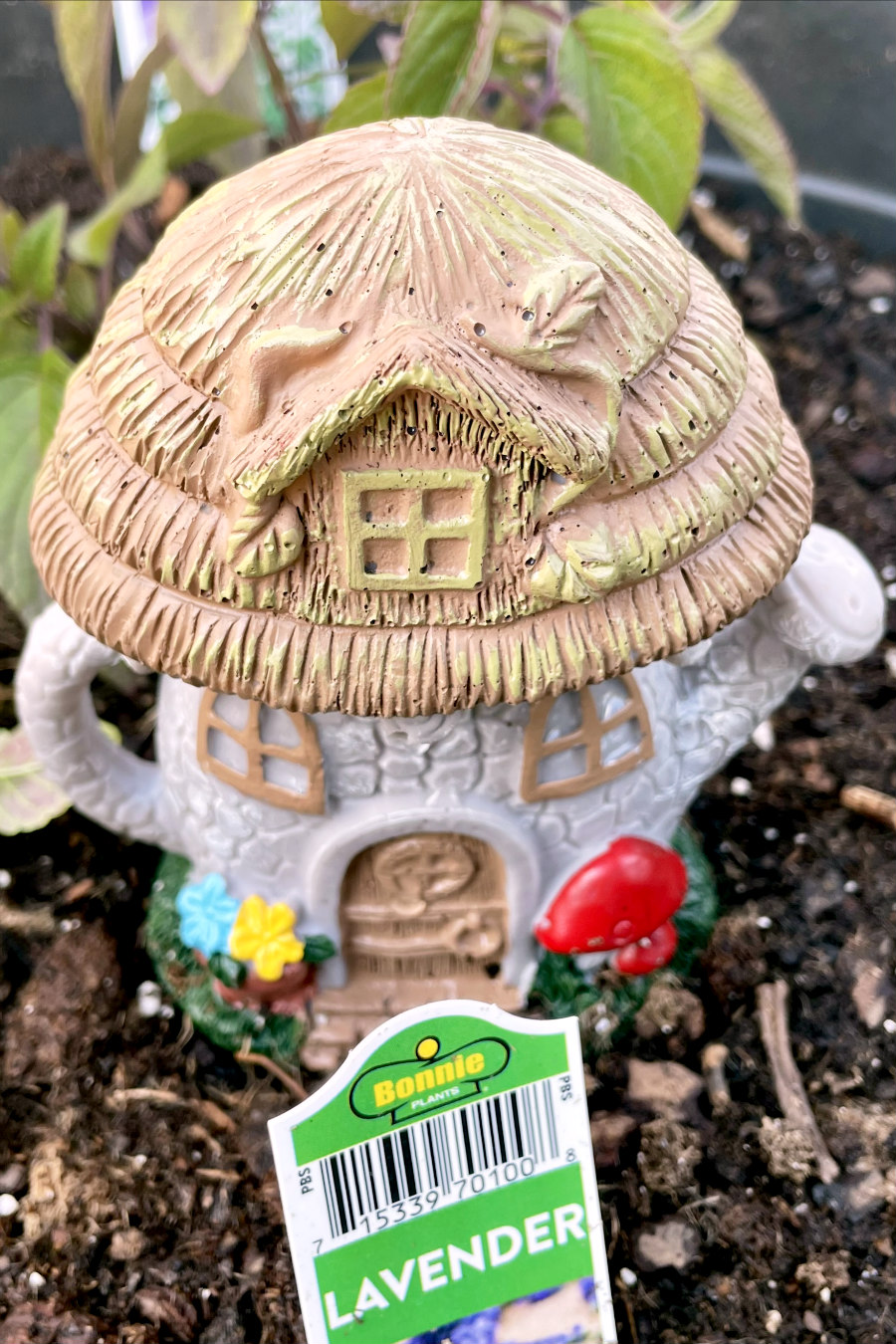
If you're planting a container garden as a gift, you might even want to add a cute and whimsical garden stake, or gift it with a tea cup, to pull the whole thing together.
I found this fairy house at Dollar Tree. It reminded me of a teapot (even though I think it's supposed to be watering can).
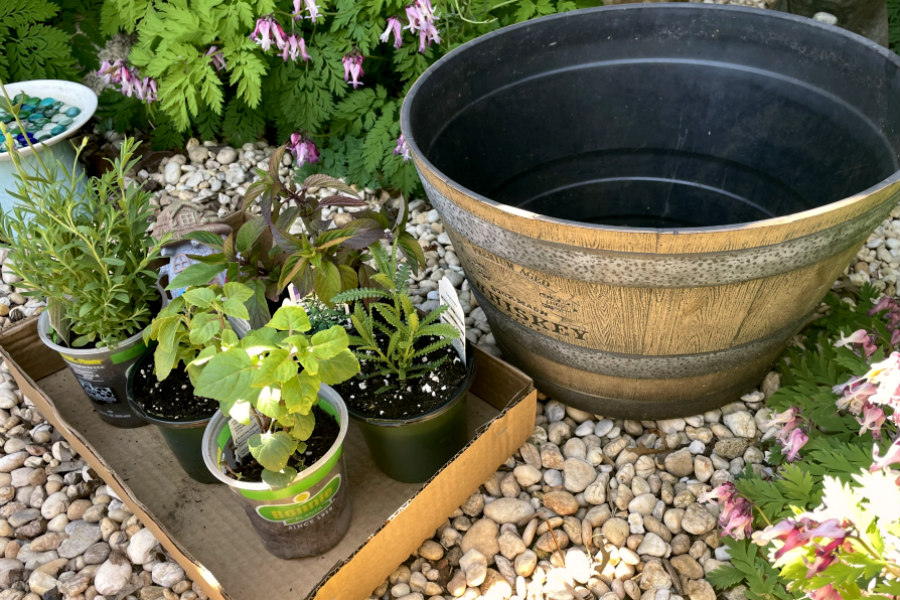
SUPPLIES
- 12-18" container
- Potting soil
- Optional: all-purpose fertilizer
- Optional: earthworm castings
- Herbs, such as lavender, bee balm, pineapple sage, or stevia
STEPS
- Make sure your container has drainage holes. If not, drill holes into the bottom. Then, fill with potting soil. If desired, mix in all-purpose fertilizer and earthworm castings.
- Position the herb plants were you want them to grow. Then, dig holes large enough for each plant and set into place.
- Water the container garden thoroughly and set in a sunny spot in your yard. Snip herbs throughout the season to use for tea, or dry and store in an airtight container for later use.
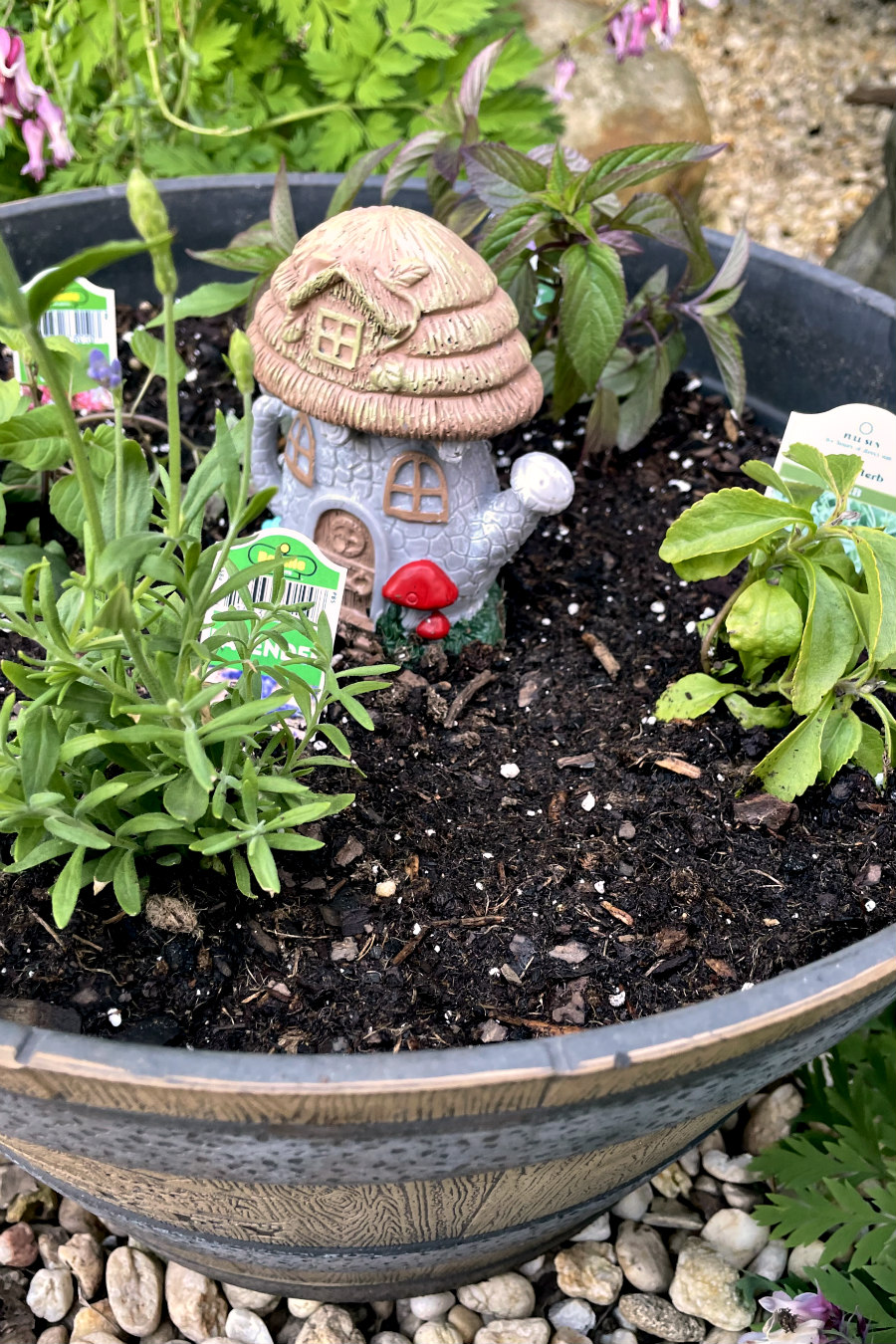
Whether you're making this container garden for yourself or as a thoughtful and comforting Mother's Day gift, growing a simple herbal tea garden is a beautiful addition to any outdoor space that allows you to savor homegrown custom tisane blends.
Did you make this Herbal Tea Container Garden project? Share it on social media using the hashtag #holokahome. Don’t forget to tag me @holokahome!