Sharing all of the herbs growing in our yard and garden this year including common culinary herbs, herbs grown for aromatherapy, and pollinator-friendly plants. There's a big variety and I'll be using all of them in my cooking and Etsy shop products.
This post may contain affiliate links. Making a purchase through one of these links helps support this blog.
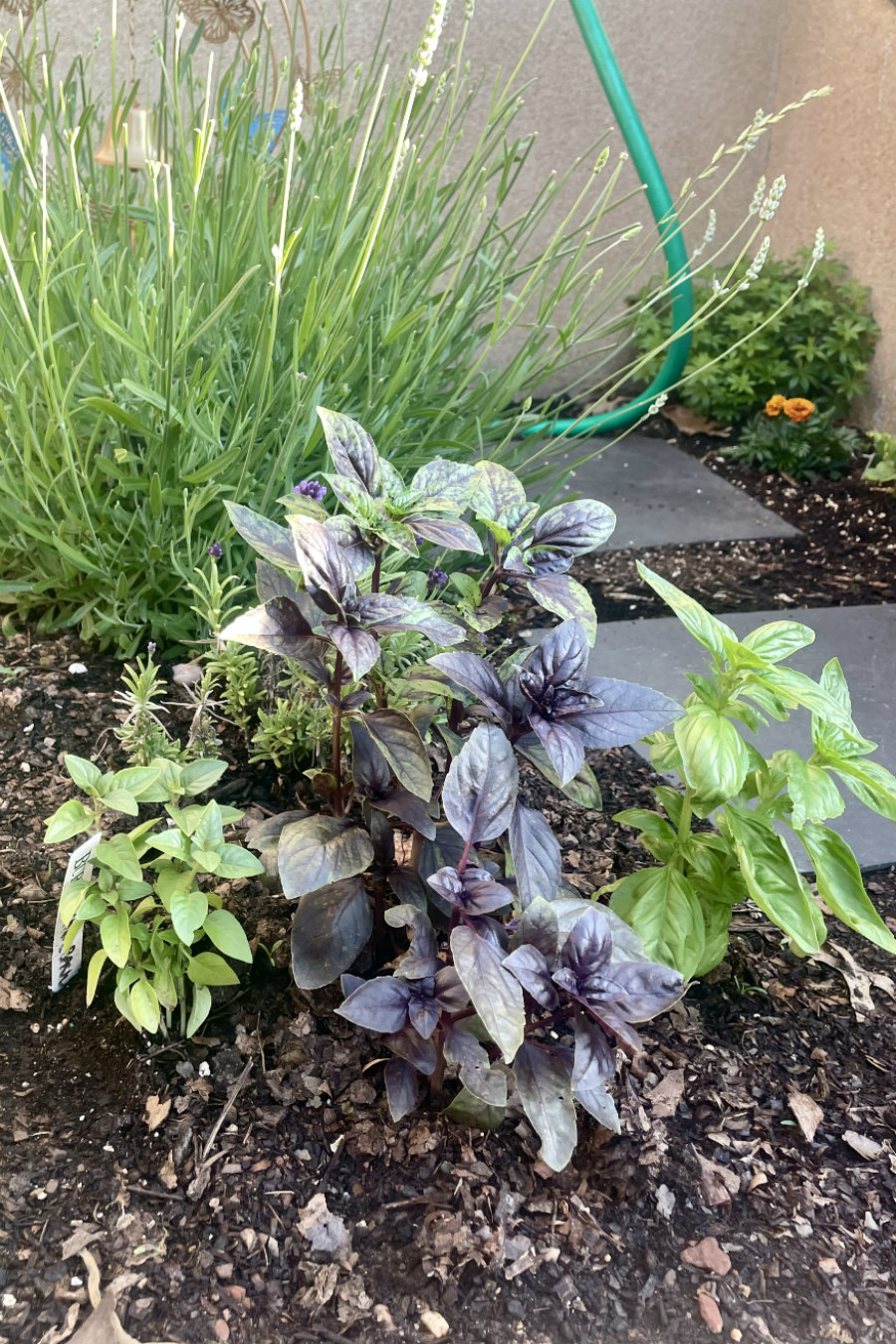
Welcome to a four-part blog series about everything we're growing in our yard and garden this year. Instead of one big blog post (and it would be a big blog post), I'm breaking everything down into four smaller posts. We're kicking things off with all of the herbs I'm growing this year.
Earlier in the spring, we moved our container herb garden into its own little section in our yard. While the majority of my herbs are now in the ground, I still have a lot growing in pots (several you've probably already seen in previous posts).
Most of the herbs I'm growing are for culinary purposes. But some of the herbs are being grown to use in products for my Etsy shop. I'm even growing herbs to support animals and pollinators. There's quite a variety this year - especially since I've had much more room to plant.
Herbs We're Growing in Our Garden this Year
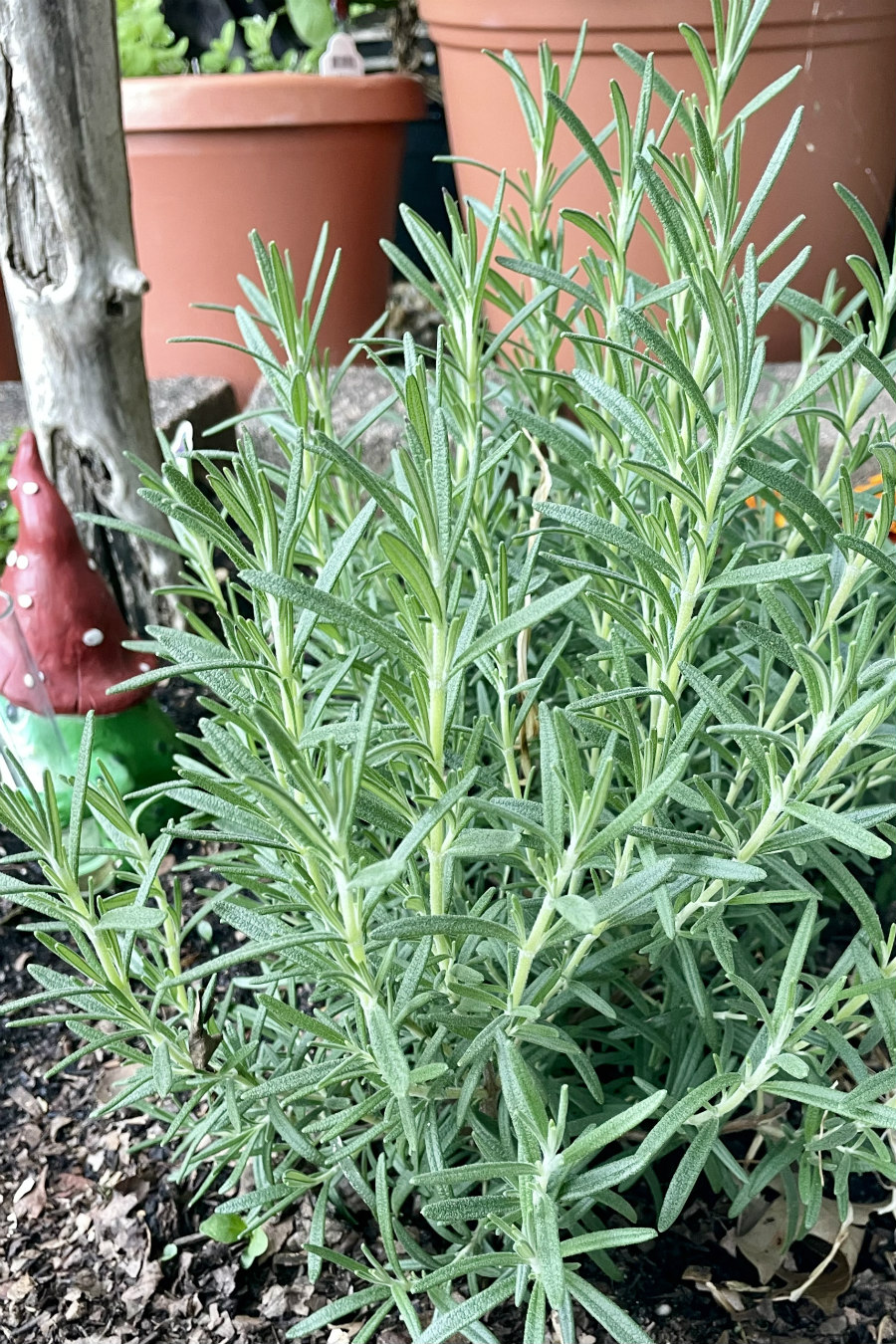
Rosemary
I'm growing rosemary in the ground for the first time. My goal is to have big, bushy plants by the end of the season. Not only do I like to use rosemary in my cooking, it's one of the herbs I use most for my Etsy products (I love the way it smells). So I tend to clip a lot of it throughout the season to dry and store. Along with growing it in the ground, I also have it growing in a container garden.
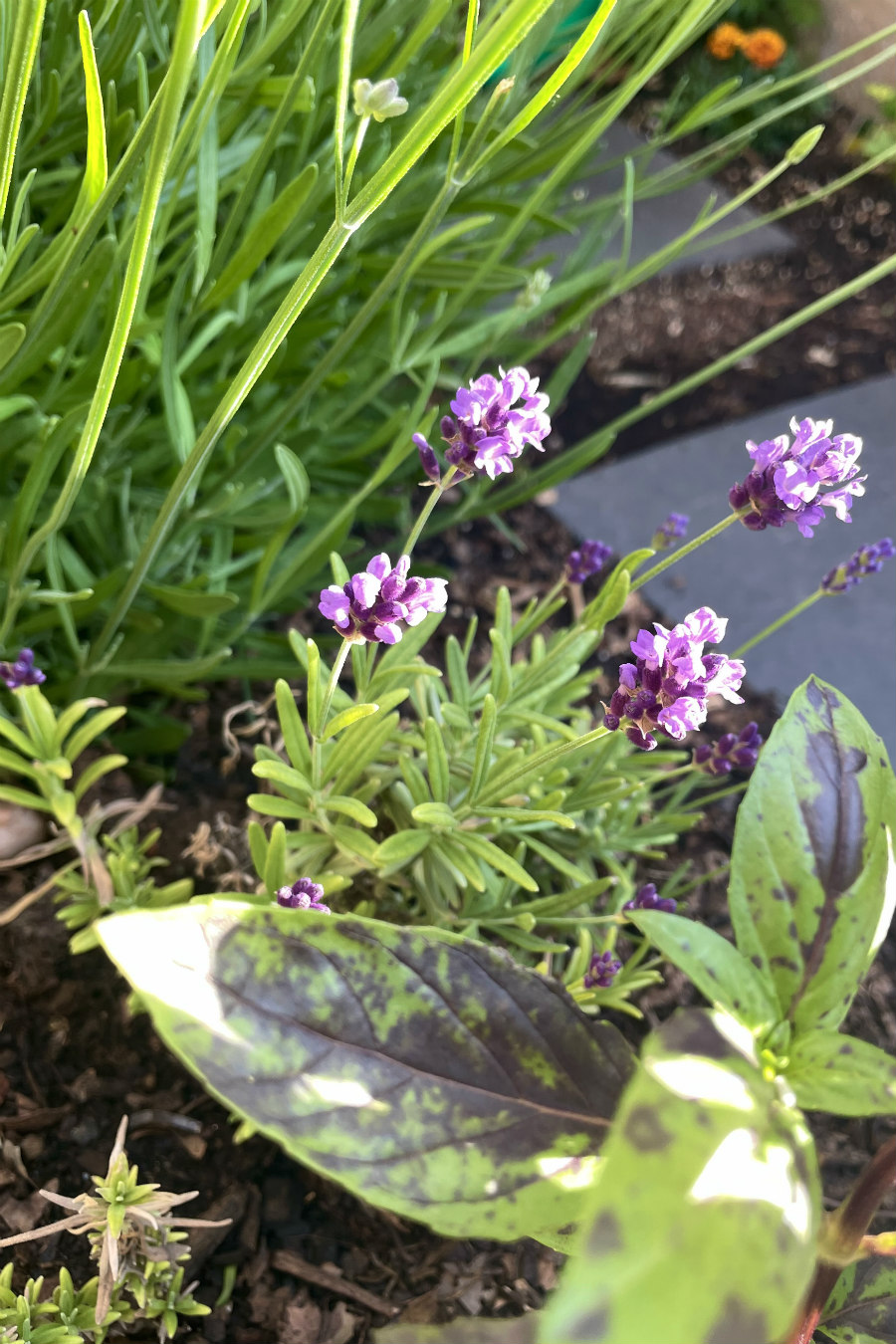
English Lavender
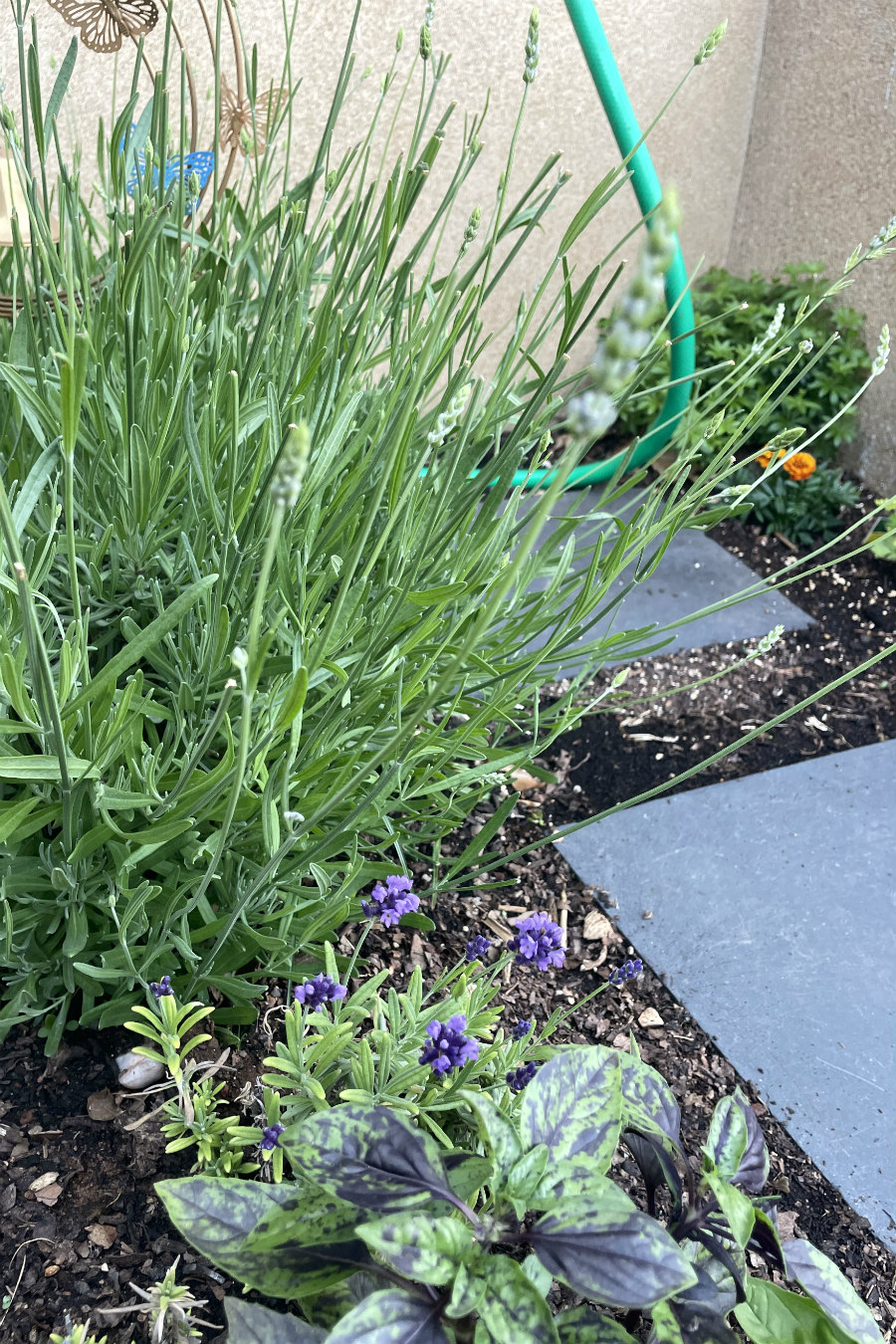
Just like rosemary, lavender is one of the herbs I use most in my products. English lavender is the first lavender variety I added to my yard years ago. It's one of the most commonly found lavender plants in greenhouses and garden centers. Not only is it used for bouquets and crafts, but it is also edible. I'm growing it in my herb garden as well as a container garden.
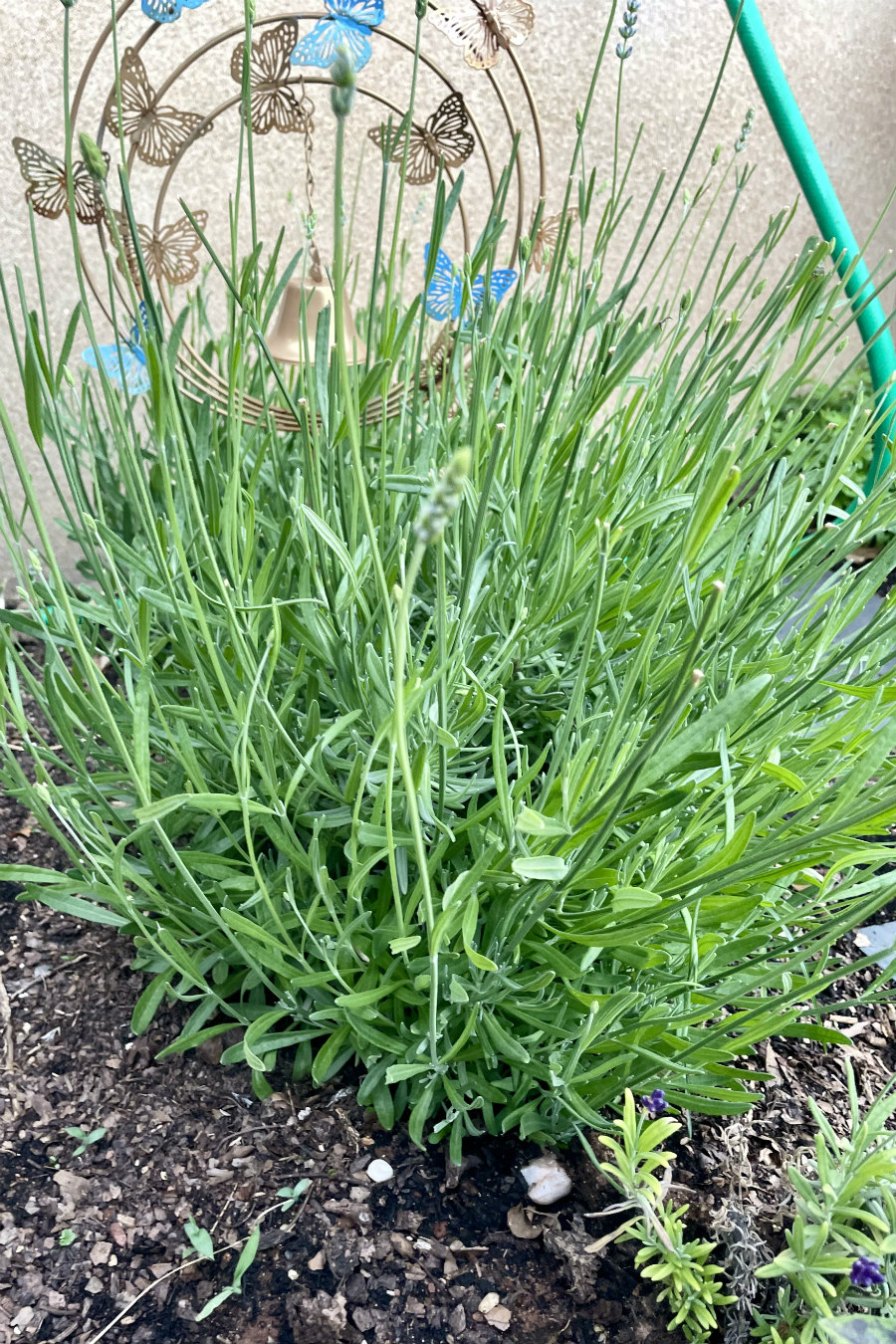
Provence Lavender
Provence lavender is a type of French lavender that's highly fragrant with tall stems. It's often used in cooking and especially for its essential oil. I have two of these lavender plants growing in my herb garden and they are doing so well. I've already harvested a good bunch of stems to dry already this season.
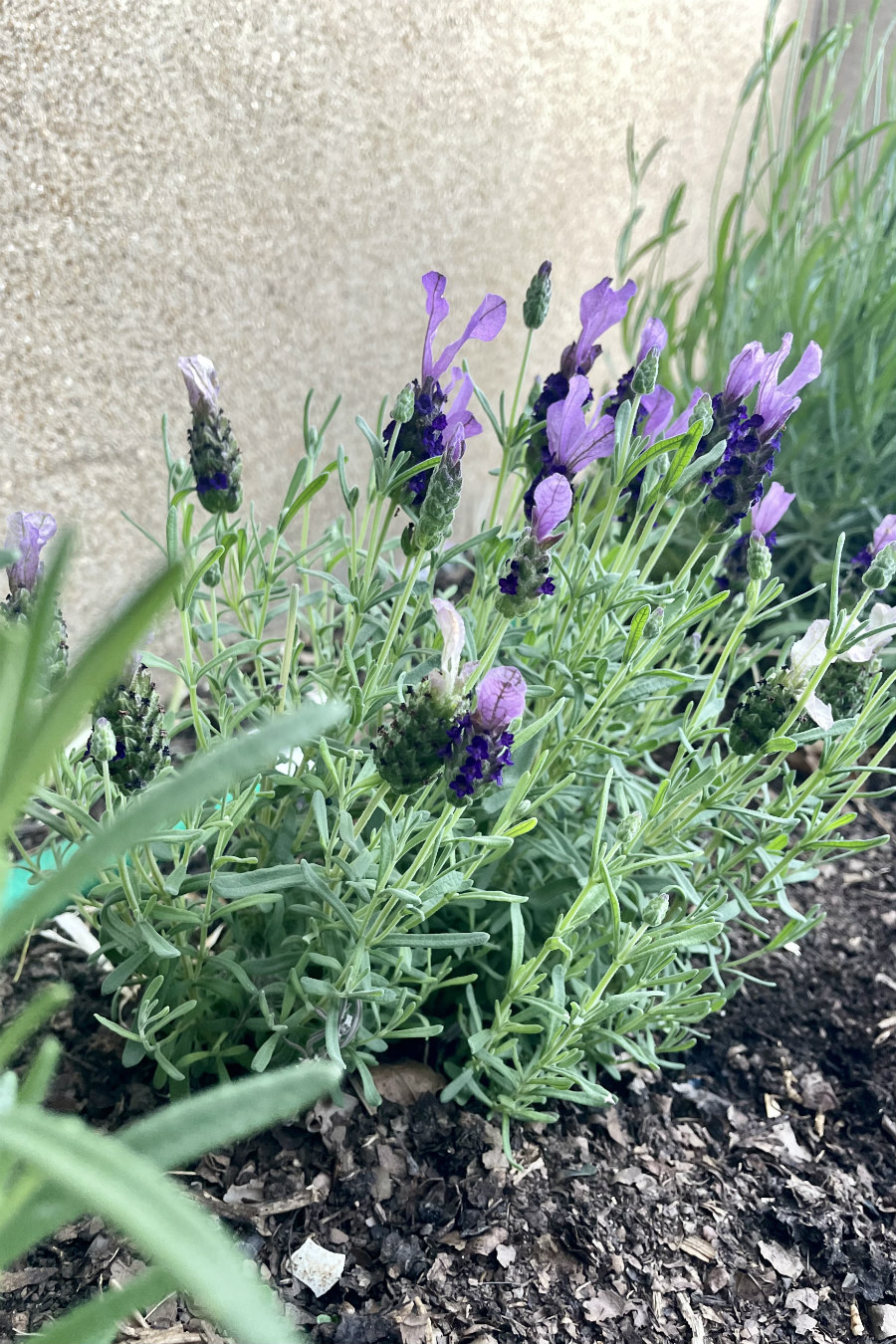
Spanish Lavender
Spanish lavender is one of my favorite lavender varieties to grow. Not only does it have unique looking flower heads (they kind of look like purple pineapples), but it's highly fragrant with a scent that's more fresh than sweet and floral.
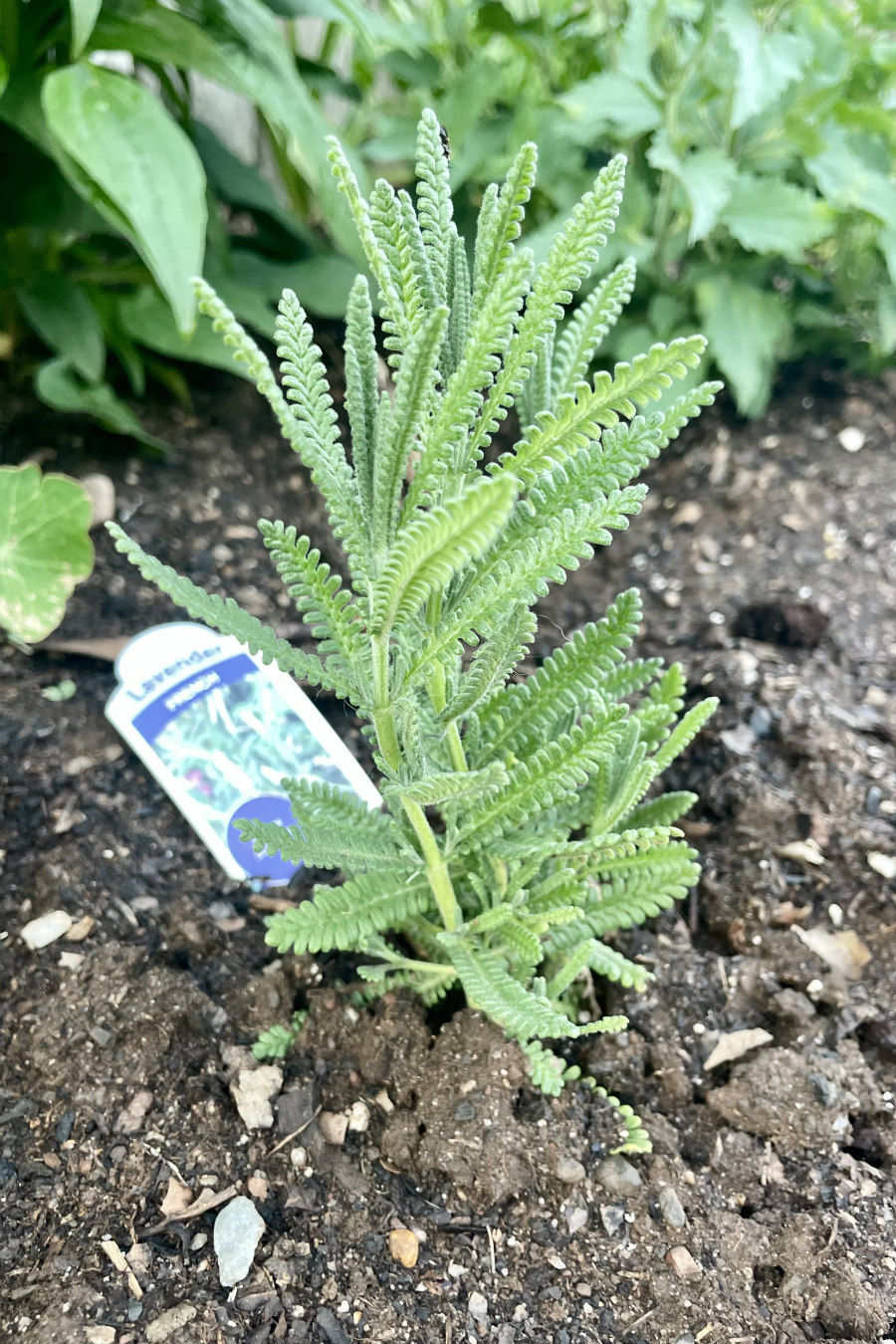
French Lavender
True French lavender is a new addition to my yard this year. It has serrated leaves with flower heads that are simliar to Spanish lavender. Its scent is more herbal than sweet and it's commonly used for aromatherapy products.
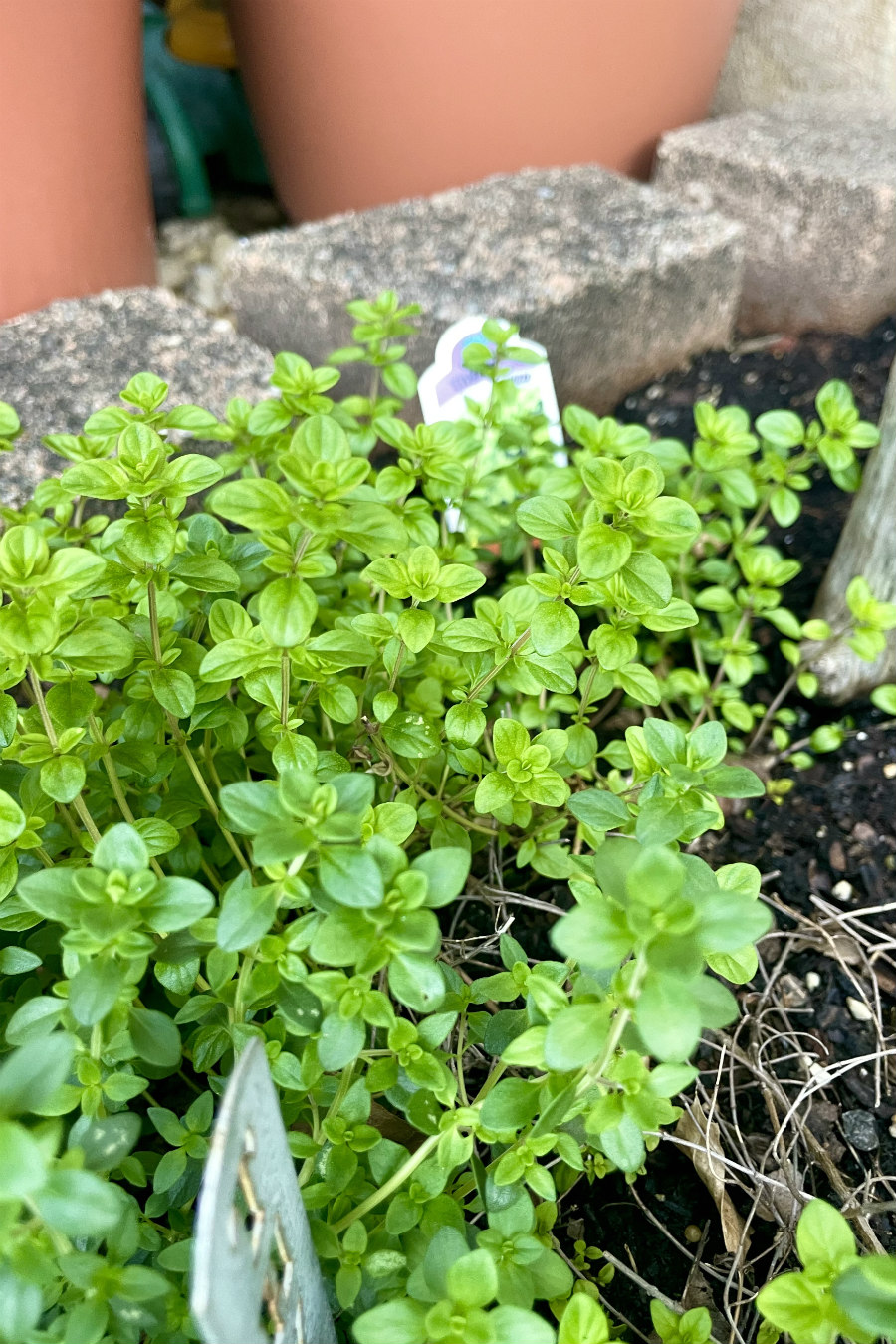
Pizza Thyme
We move on from lavender to thyme. It's another herb I use for cooking often and has also joined my lineup of herbs used for products. Pizza thyme, however, is a new-to-me variety I added last year. Its flavor is a cross between thyme, oregano, and a hint of marjoram. As its name suggests, I use it as a pizza topping or in my pizza sauce.
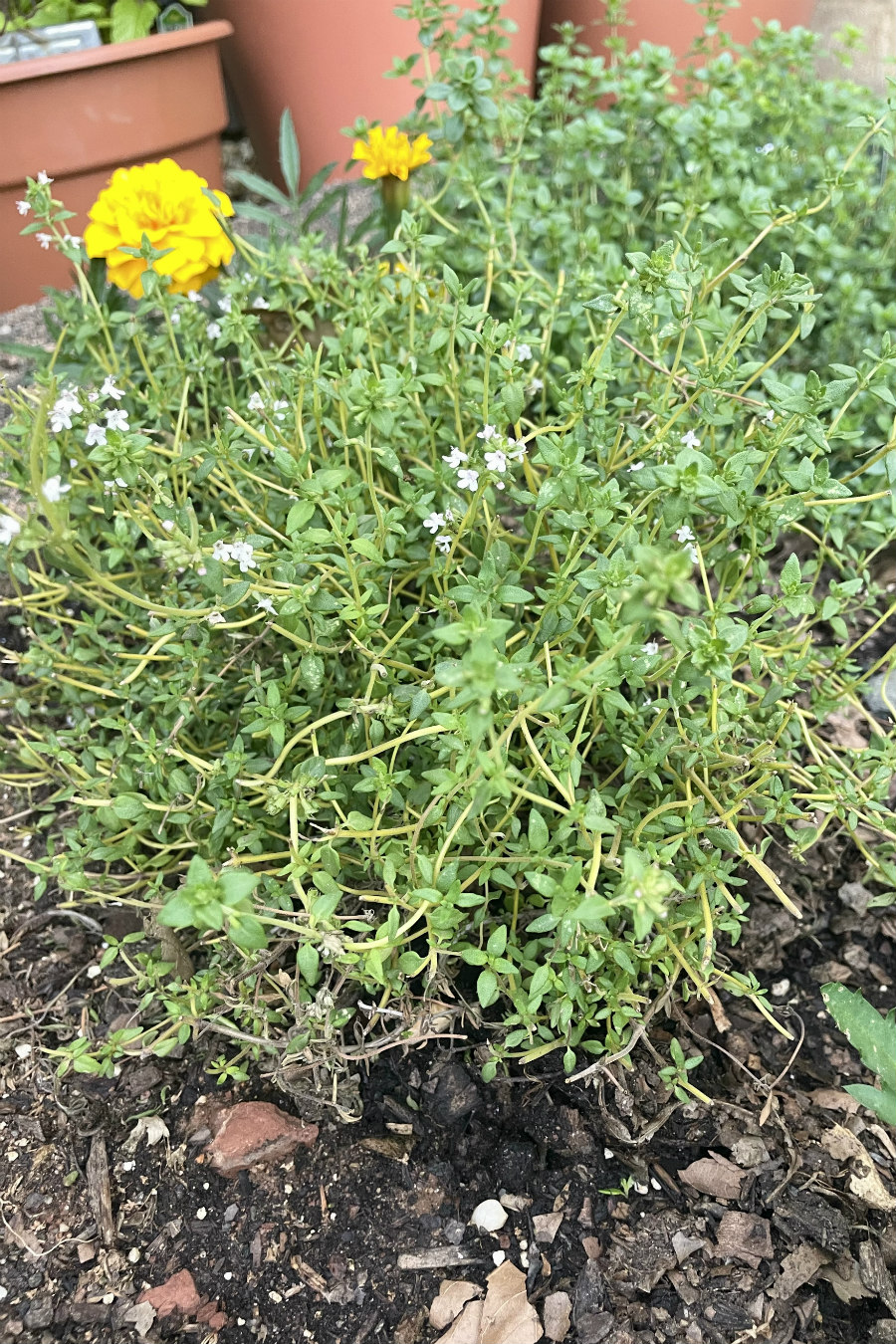
German Thyme
German thyme is a variety of thyme that's commonly found in garden centers. It's cold-hardy and popular to use in cooking. I dry this thyme to use in some of my Etsy products. But for the most part, it's used in some of the dishes I make.
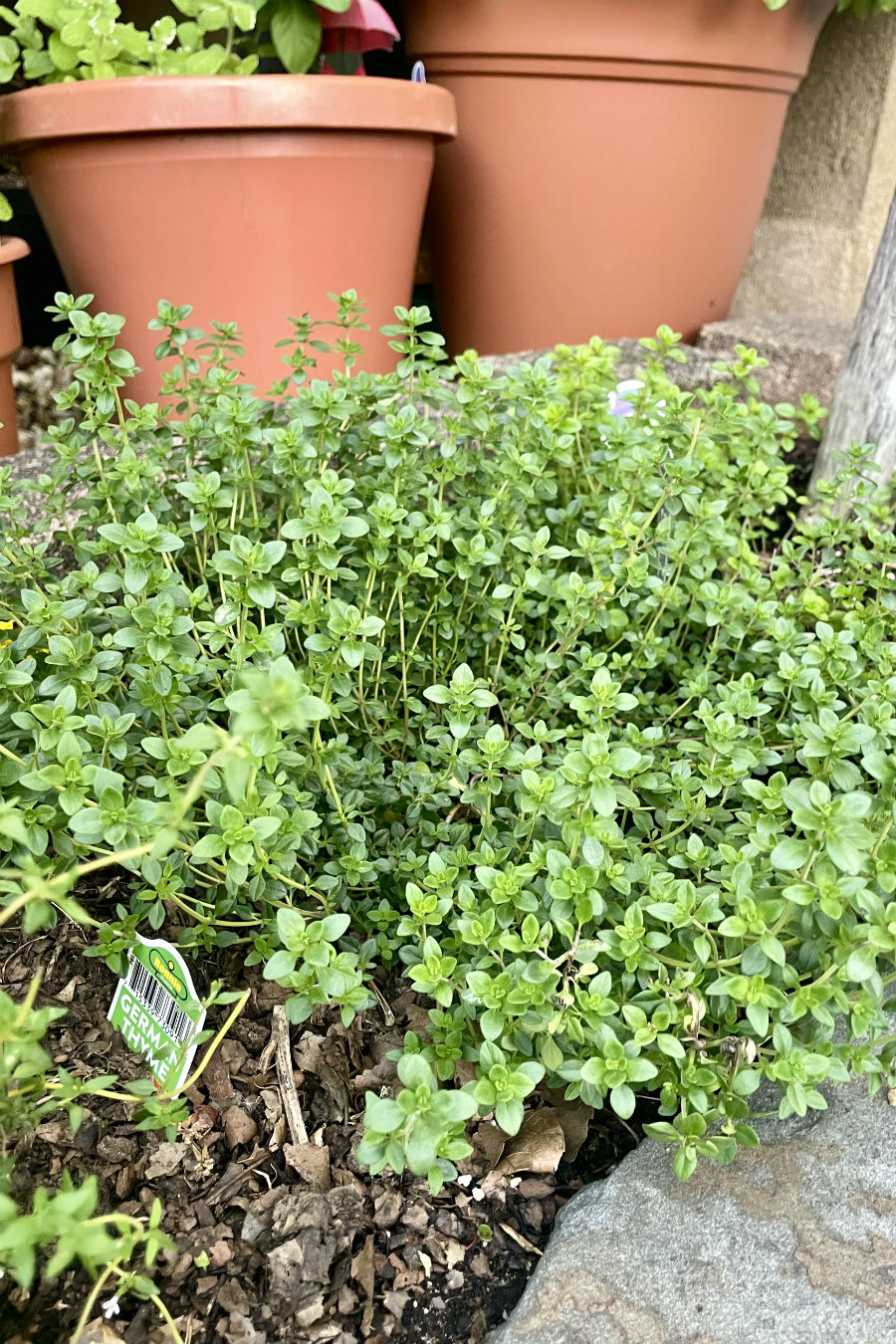
Lemon Thyme
I wll basically buy any herb with "lemon" in it. So I knew I had to add lemon thyme to the varieties I was already growing. Lemon thyme has a subtle citrus scent to it. Use it in cooking to add an earthy, citrus flavor to chicken dishes and vegetables.
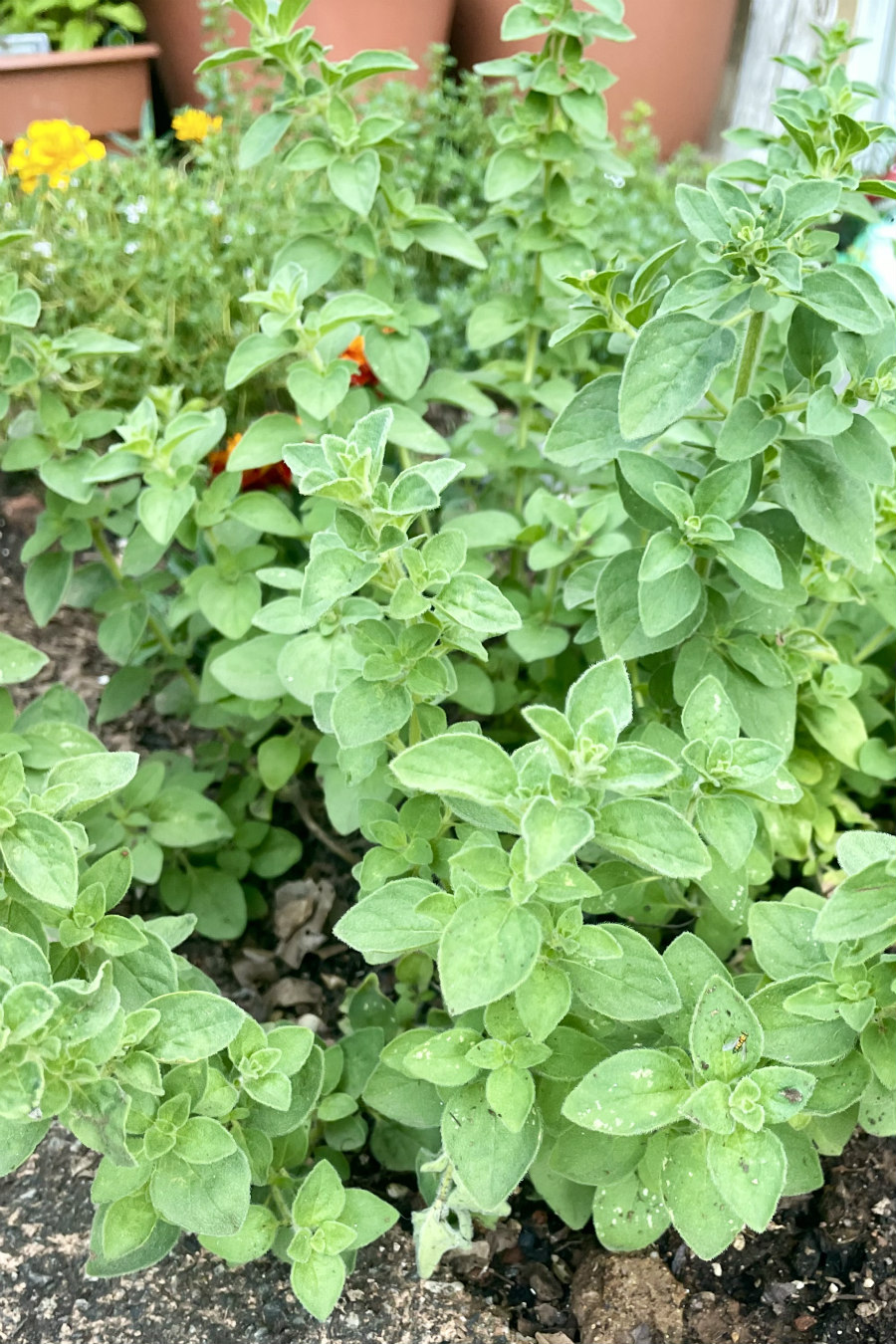
Oregano
Some people won't grow oregano in the ground because it tends to take over. I am not "some people." Oregano has become a staple in my herb garden. It's cold-hardy and once you taste fresh oregano, you'll want to put it in everything. Along with sauces, pizza, and pasta, I also like to add fresh oregano to tomato salads during the summer.
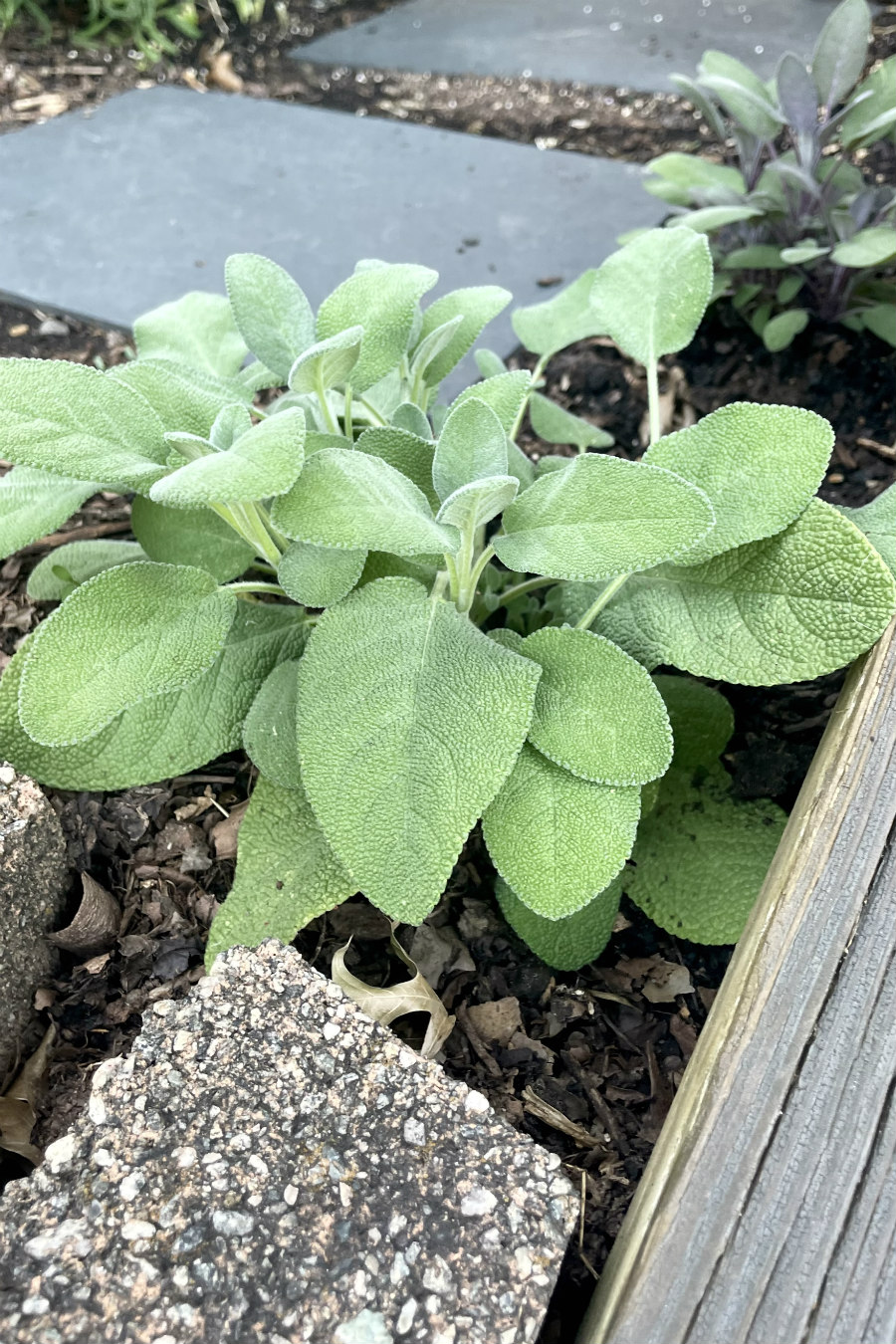
Garden Sage
Sage might be one of those overlooked herbs. Personally, I love it. Especially after discovering how good it is in a brown butter sauce over pasta. Not only do I cook with sage, but it's also used in my products. Plus, I like the way its velvety leaves look in the garden.
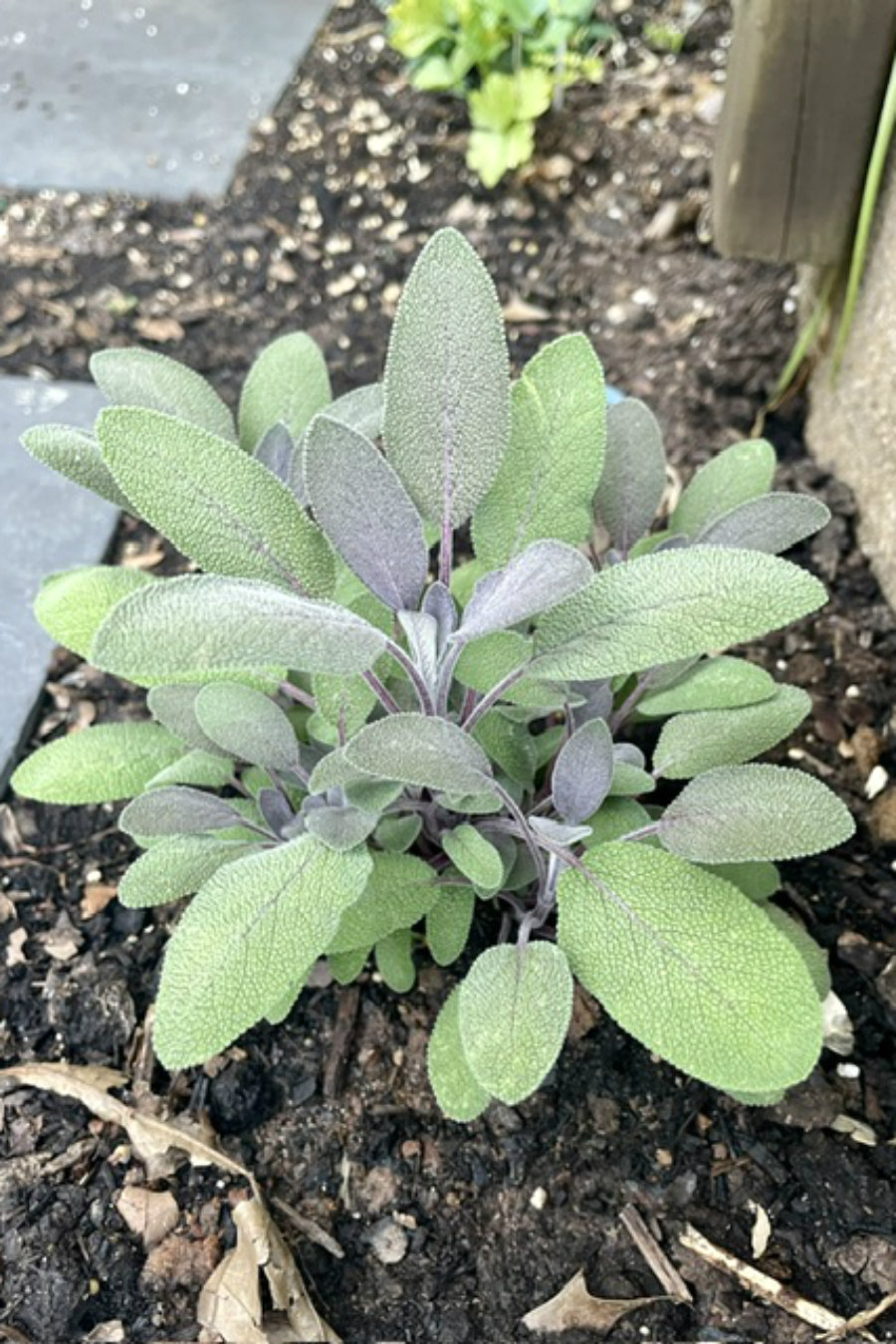
Purple Sage
While I was planning my herb garden, I wanted to add a bit of variety. So I decided to grow another type of sage as well - purple sage. While it tastes just like garden sage, its purple leaves stand out in the garden bed.
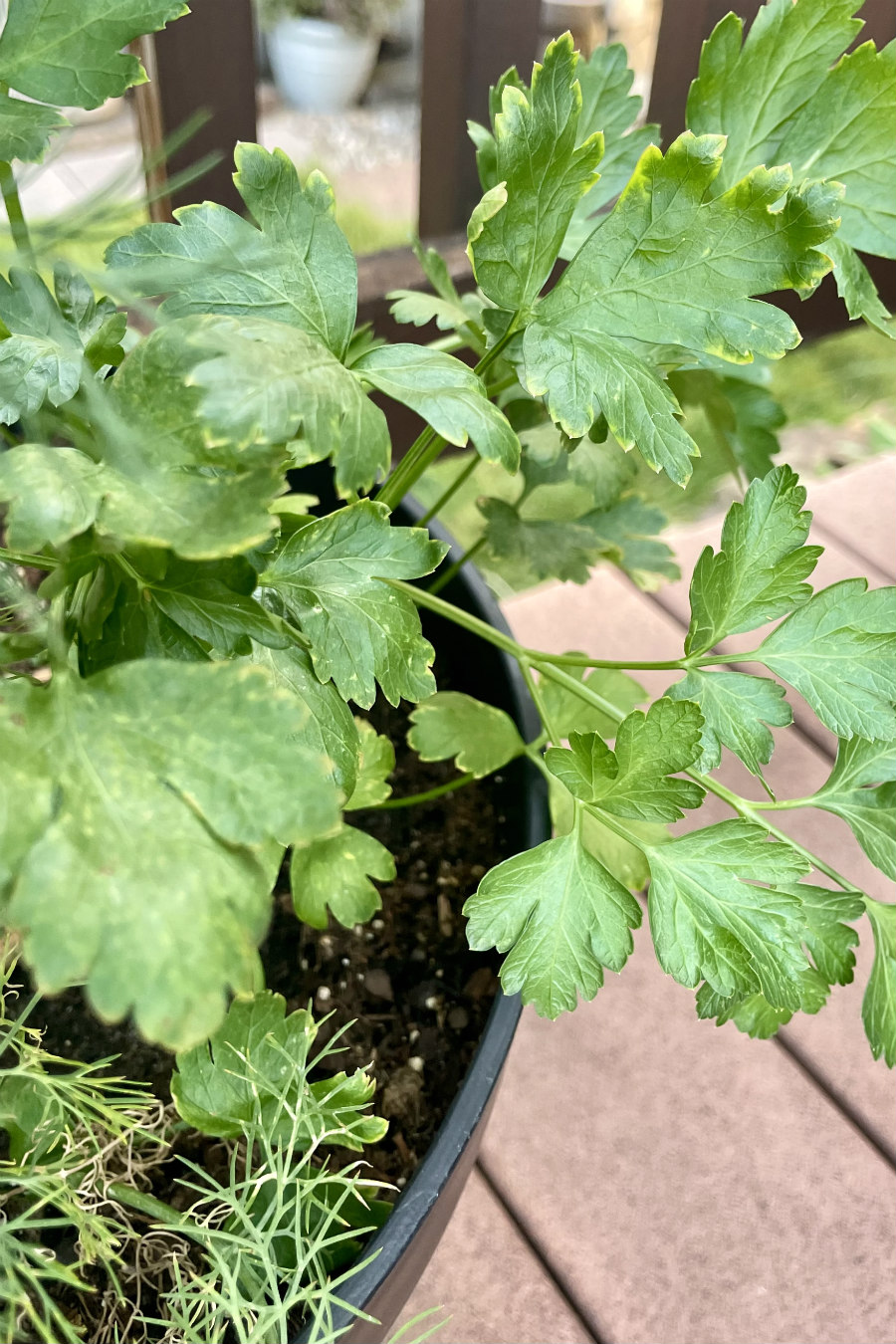
Parsley
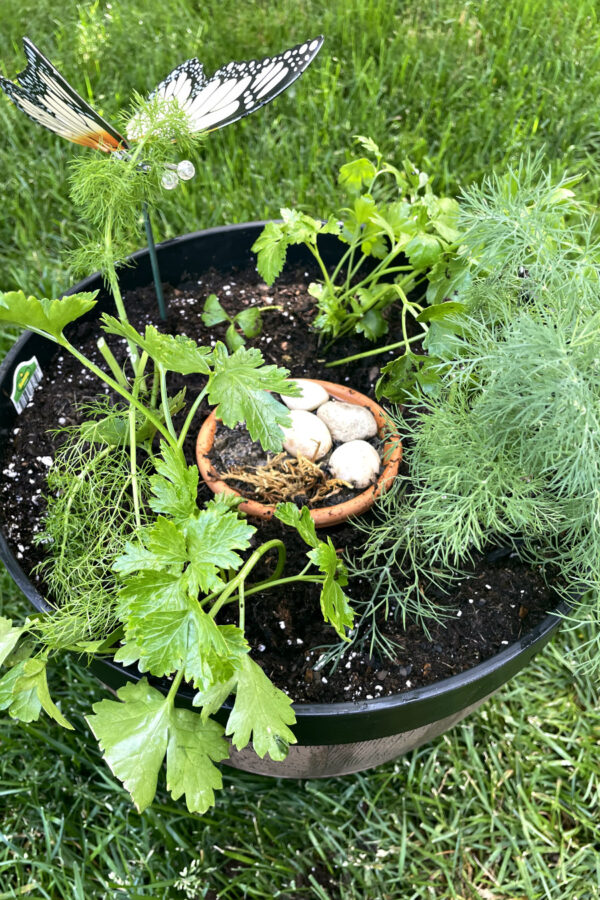
I usually only grow parsley for the butterflies to lay their eggs on (and I do have some growing just for that purpose). But I decided to add a couple plants in my herb garden this year. I don't use parsley a lot, but it's there if I need it.
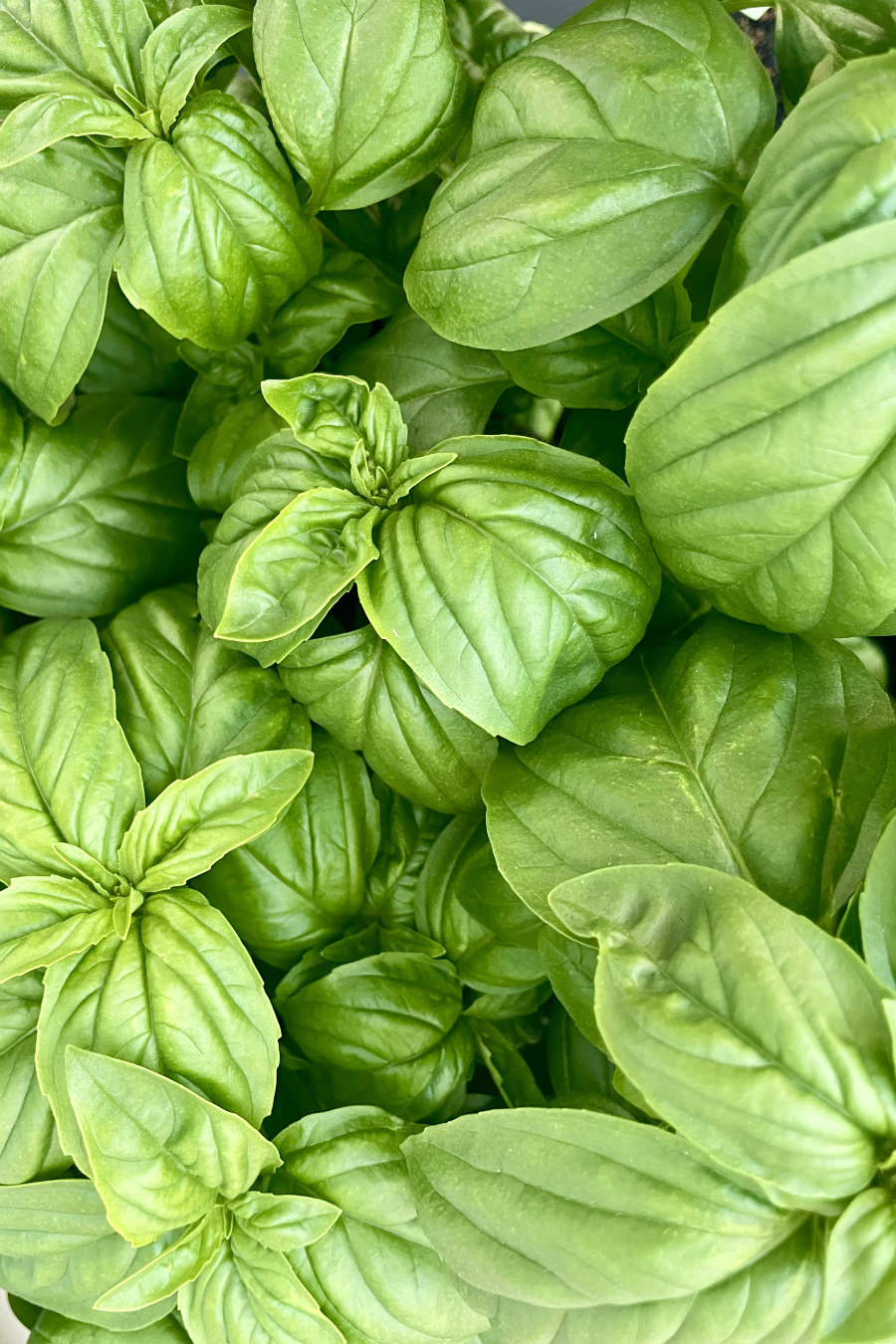
Sweet Basil
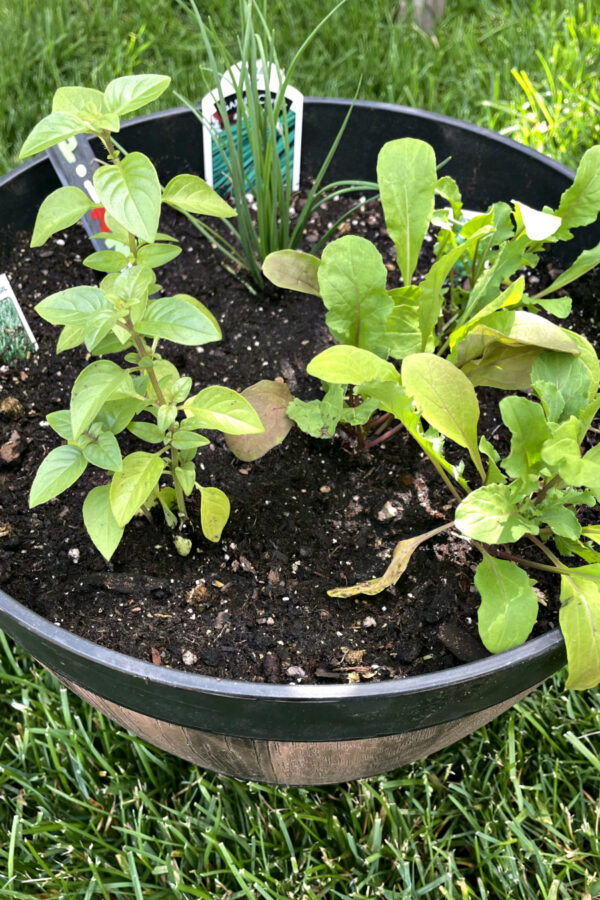
Basil is another staple in the garden and it's probably one of my most used herbs. It's so good in summer salads, delicious in pasta, and of course on top of pizza, too. It's even nice in lemonade.
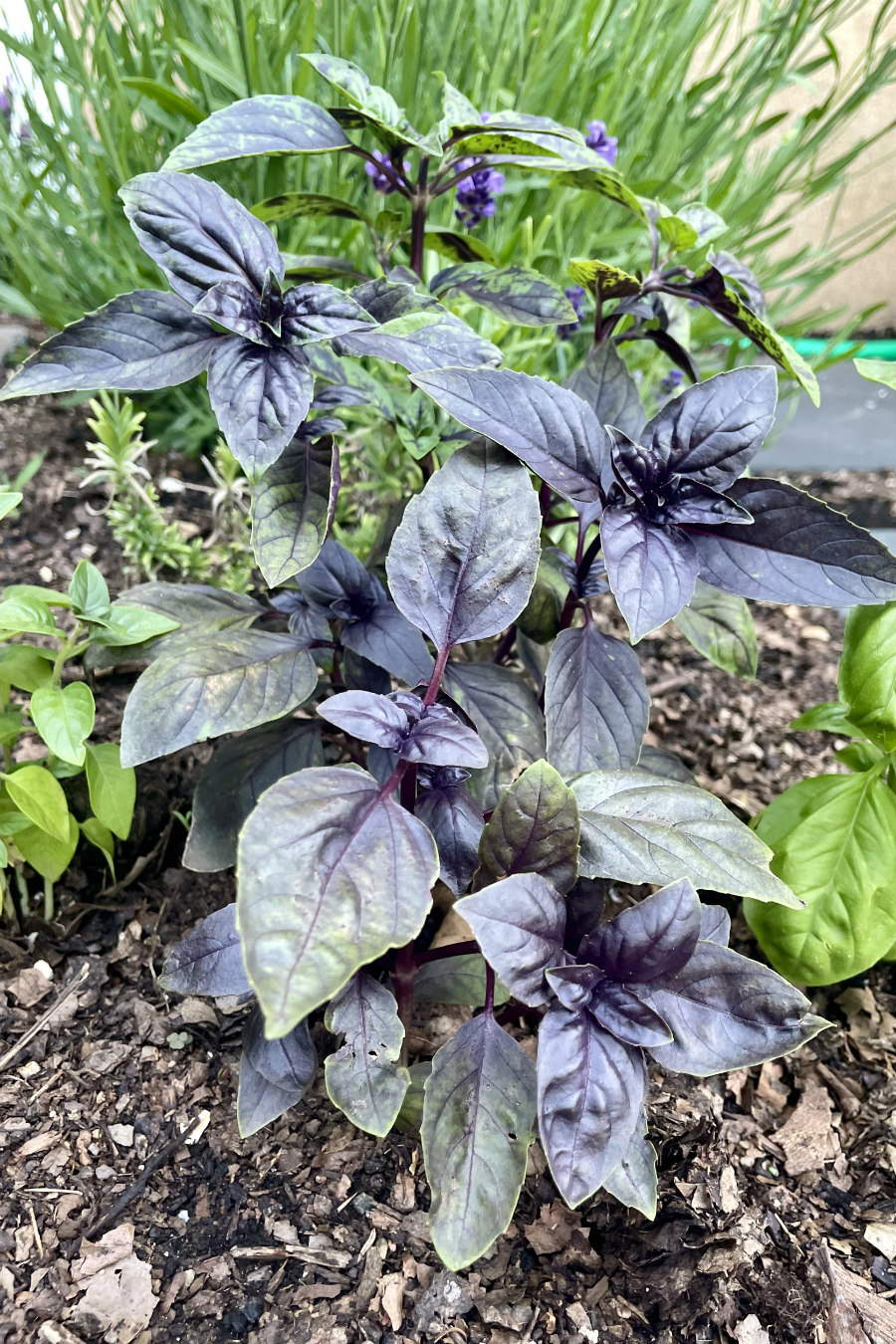
Purple Basil
Purple basil doesn't taste too different from sweet basil. But I honestly plant it for the color. The deep purple is so pretty. And when it's used alongside sweet basil in a Caprese salad, it adds some nice contrast to the presentation.
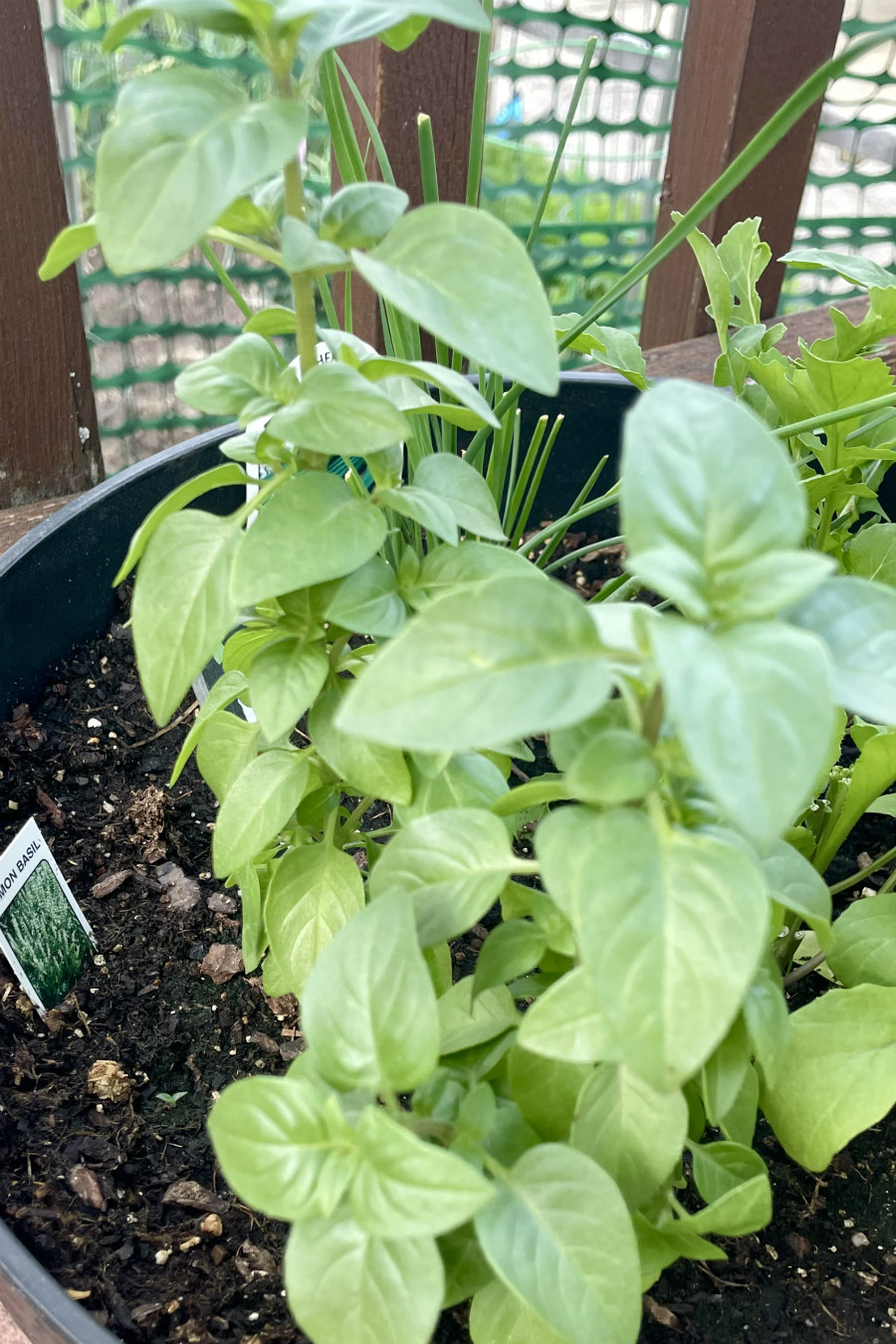
Lemon Basil
I grabbed lemon basil when I was putting together my pizza container garden. It tastes like regular basil with a bright citrus twist! Remember that basil lemonade I mentioned? Lemon basil would be perfect for that!
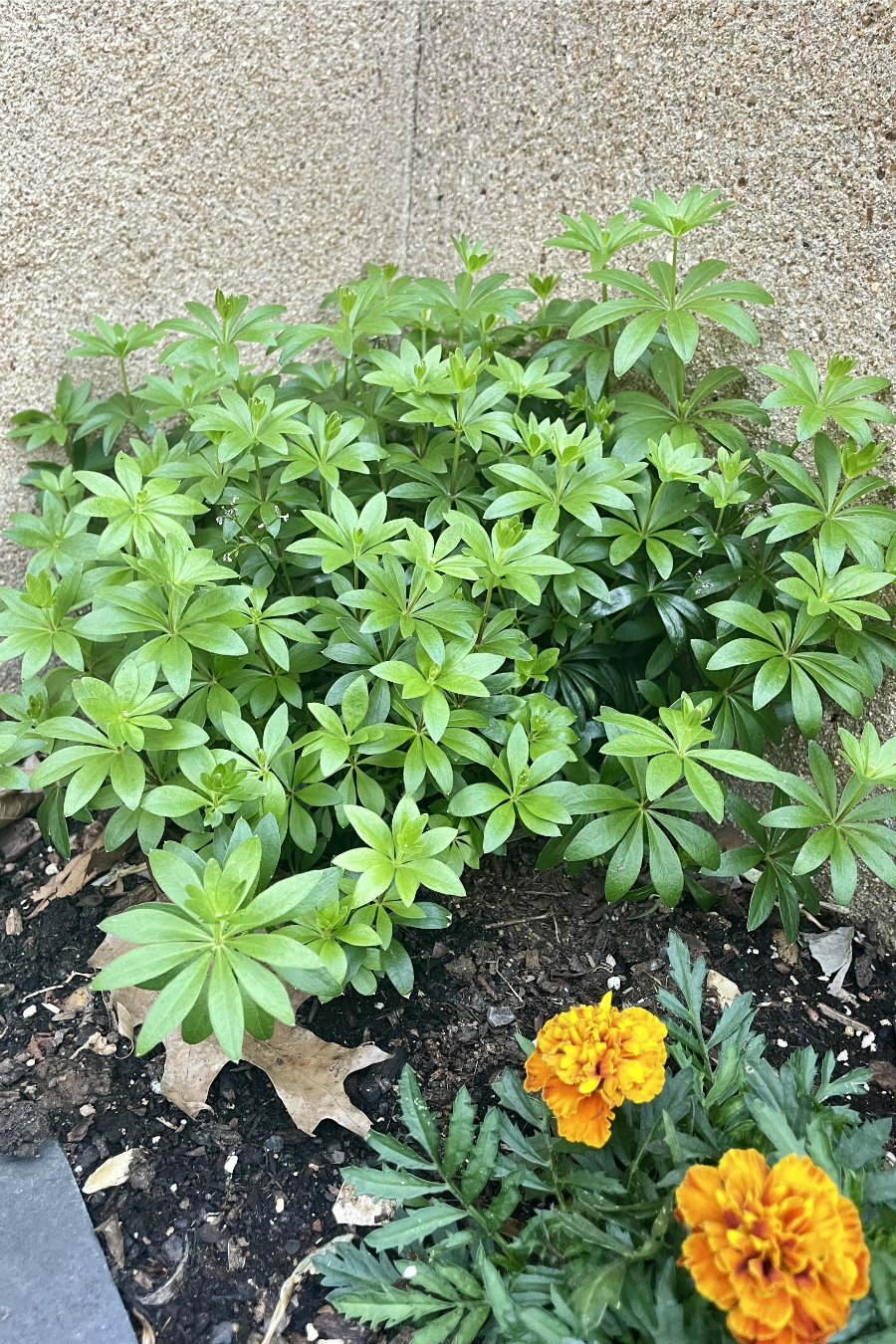
Sweet Woodruff
I found sweet woodruff early in the spring. And why did I purchase it? To make May wine! Sweet woodruff is tucked in a corner of my herb garden. It has a flavor that's said to be a mix of hay and vanilla. When infused in a bottle of Riesling, it adds a vanilla sweetness that's quite delightful! Its tiny white flowers bloom early, but it stays green throughout the growing season.
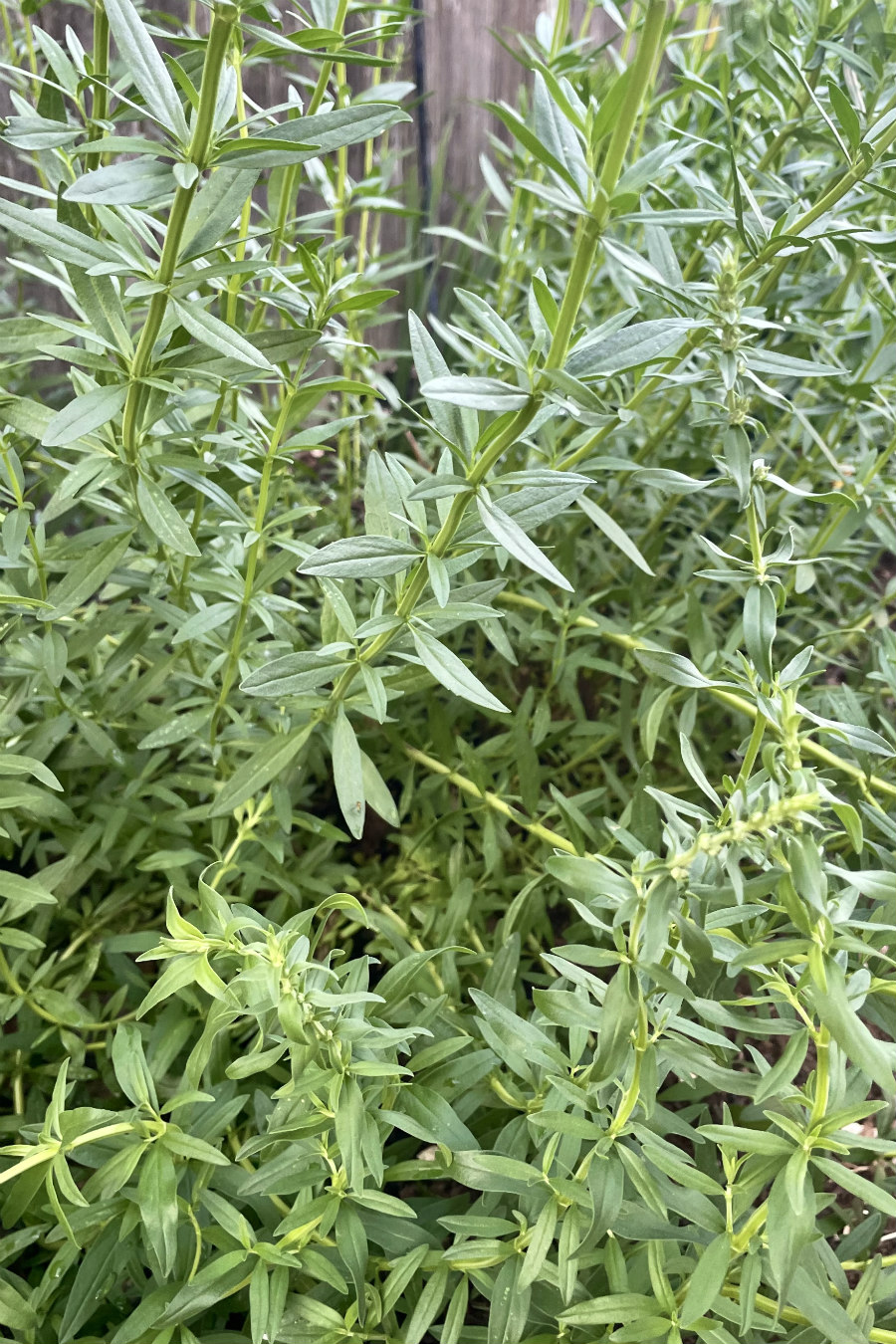
Blue Hyssop
I added blue hyssop to the yard last summer. Once its blue flowers bloomed, it quickly became a magnet for pollinators. When it's not blooming, it's big and bushy and fills a nice space in the garden.
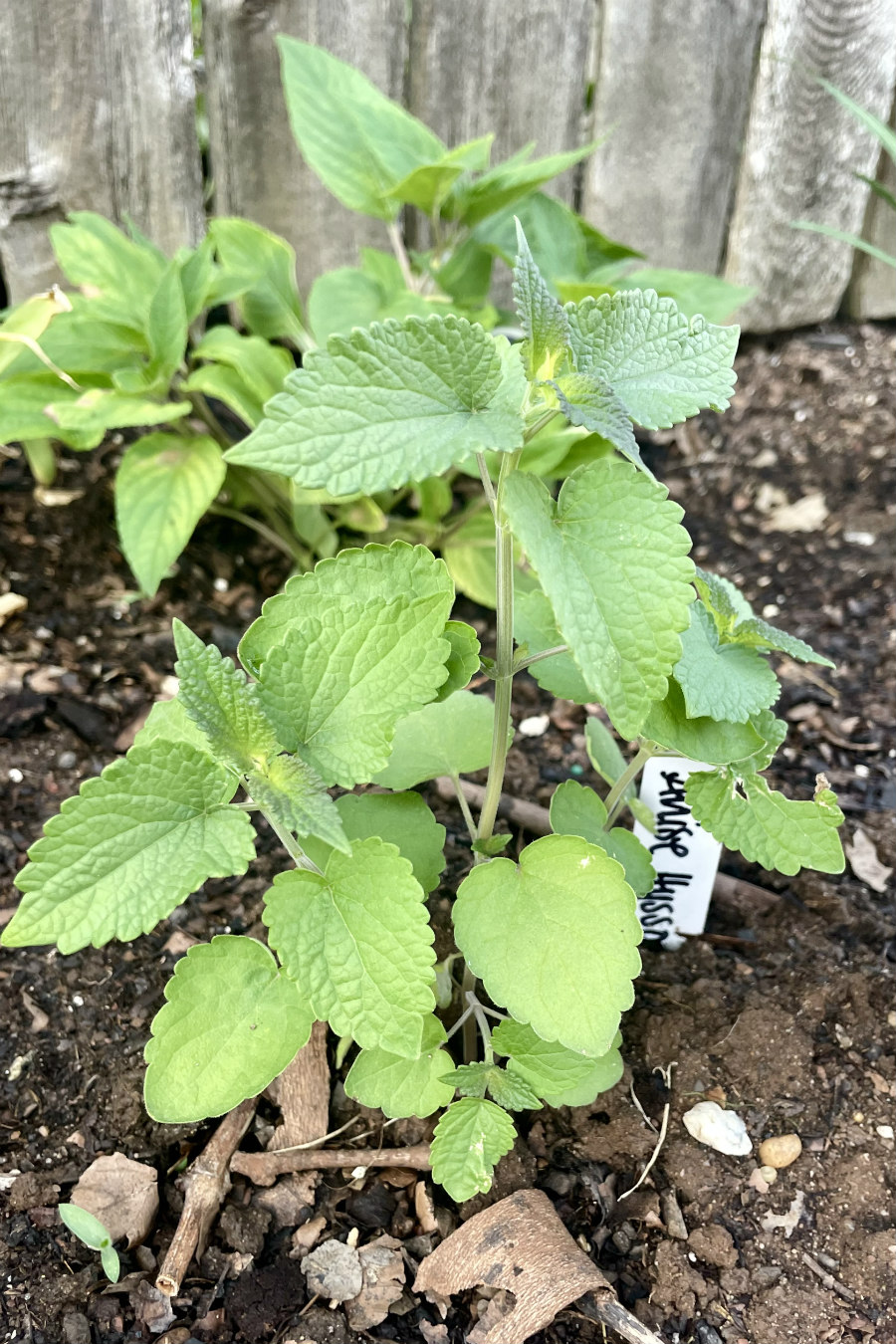
Anise Hyssop
I recently added anise hyssop to my flower bed. I wanted it for its strong anise scent and to use the leaves in tea. While the plant is small now, it'll eventually fill out and grow spikes of purple flowers.
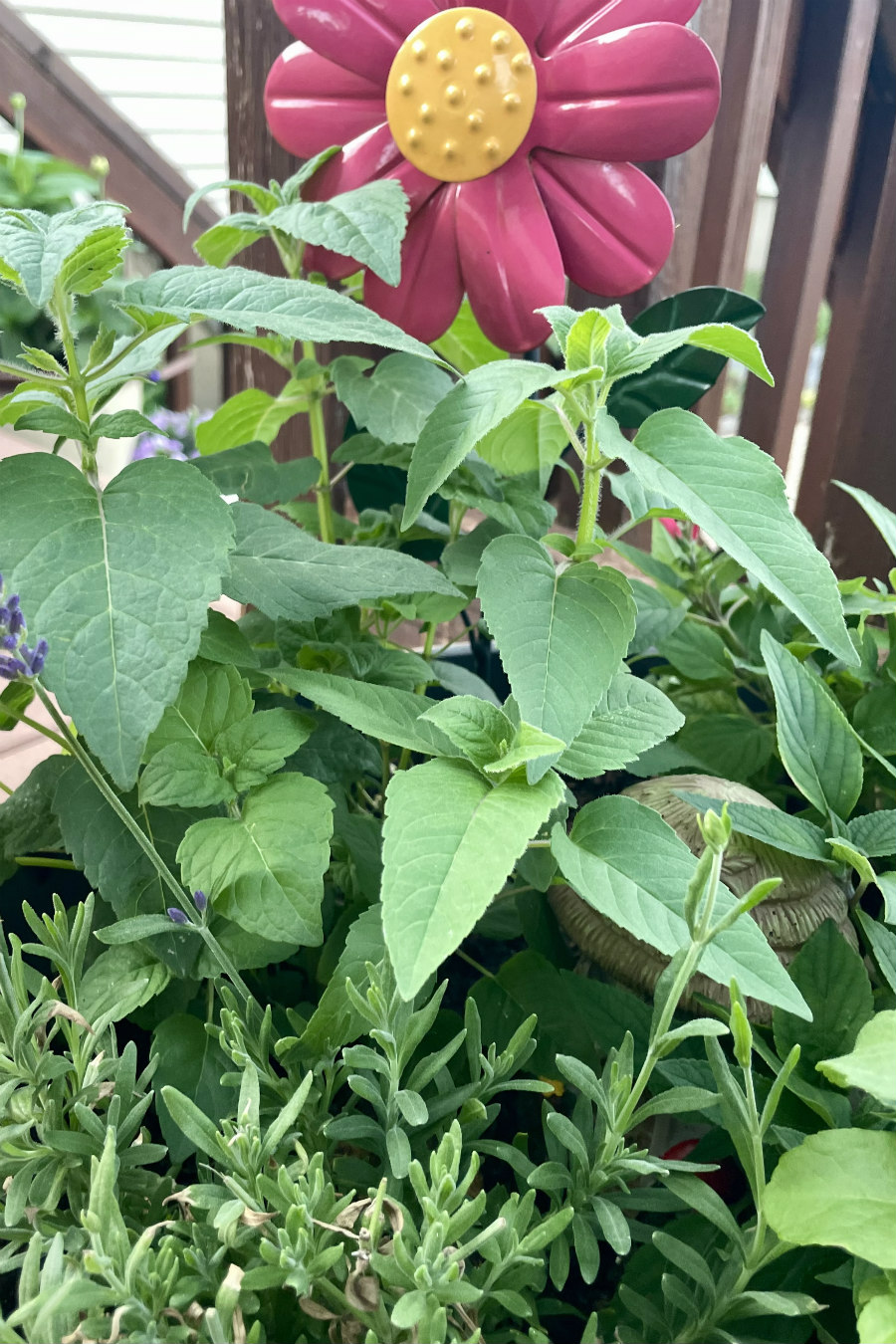
Dwarf Bee Balm
I added bee balm to my tea container garden as well as my flower bed. It's a pollinator magnet. Not only that, but it supposedly tastes like citrusy-mint.
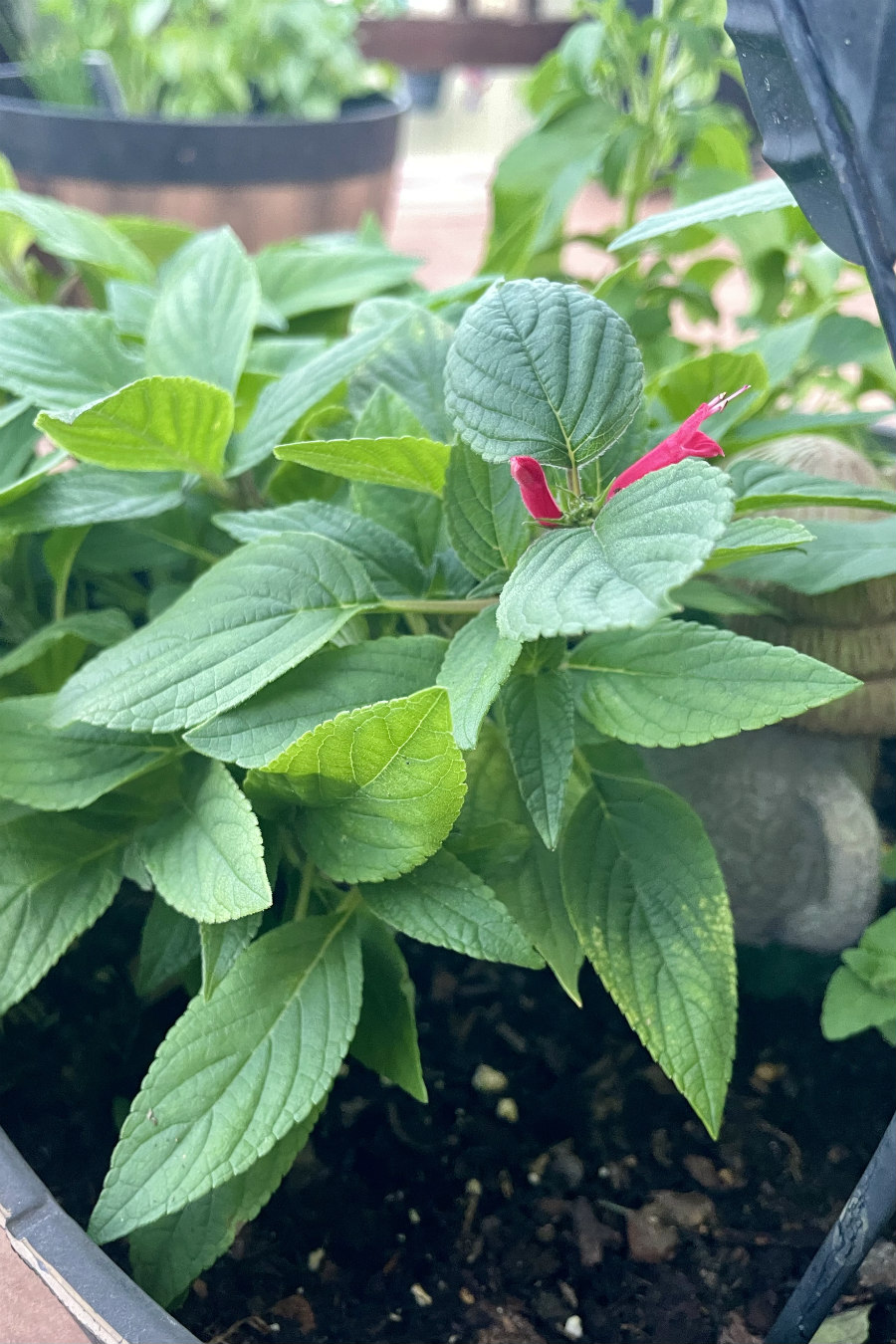
Pineapple Sage
I've wanted to add pineapple sage to my garden since last summer. I couldn't find the plants anywhere, but finally got my hands on one this year. I now have some growing in my tea garden as well as my flower patch. Its tubular red flowers attract pollinators and its leaves smell like pineapple. However, the leaves taste more herbal than they smell.
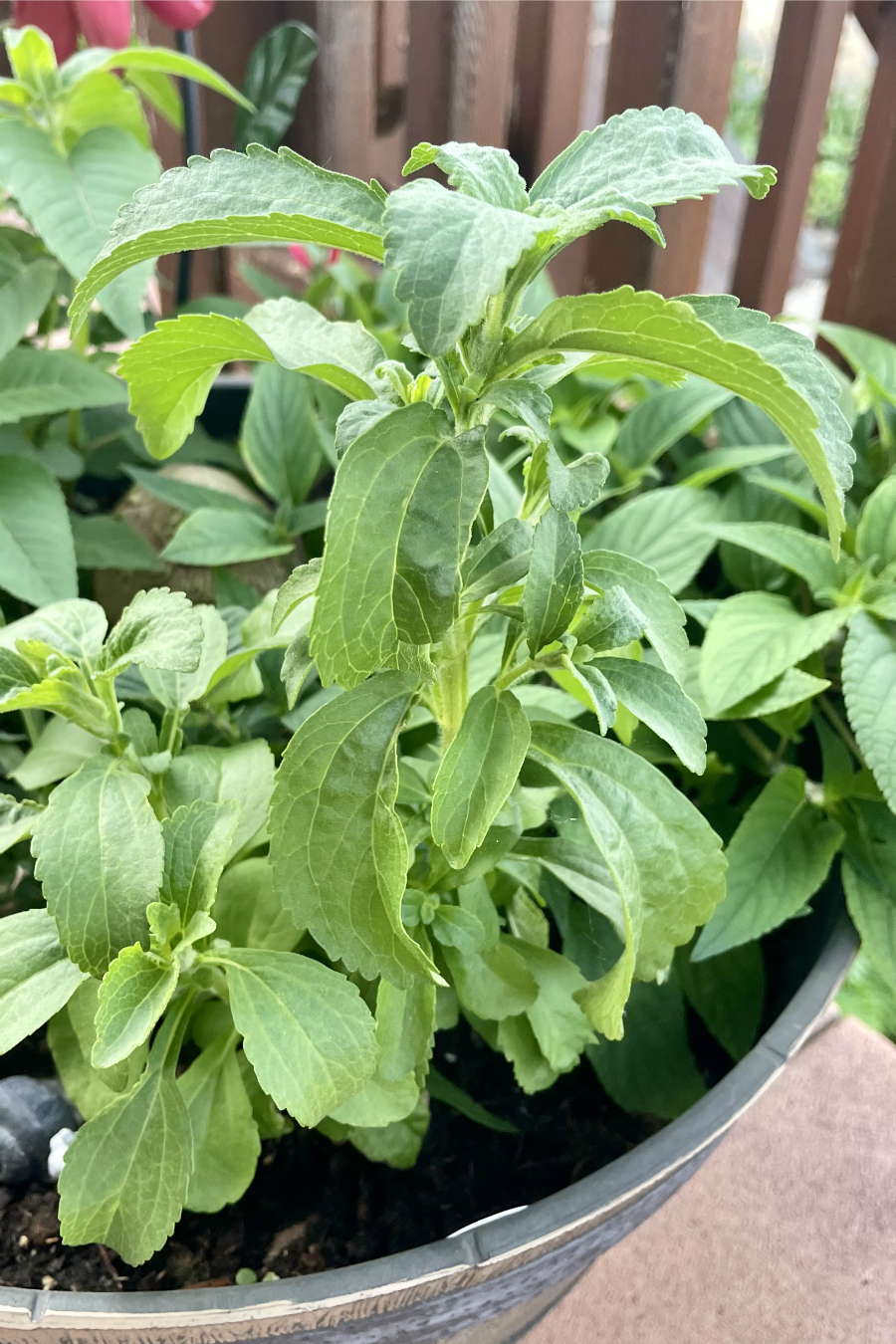
Stevia
Stevia has become an annual staple in my garden. This sugar substitute is super sweet and a little goes a long way. I like to use it in herbal water infusions and teas. When it flowers, the bees go crazy for it!
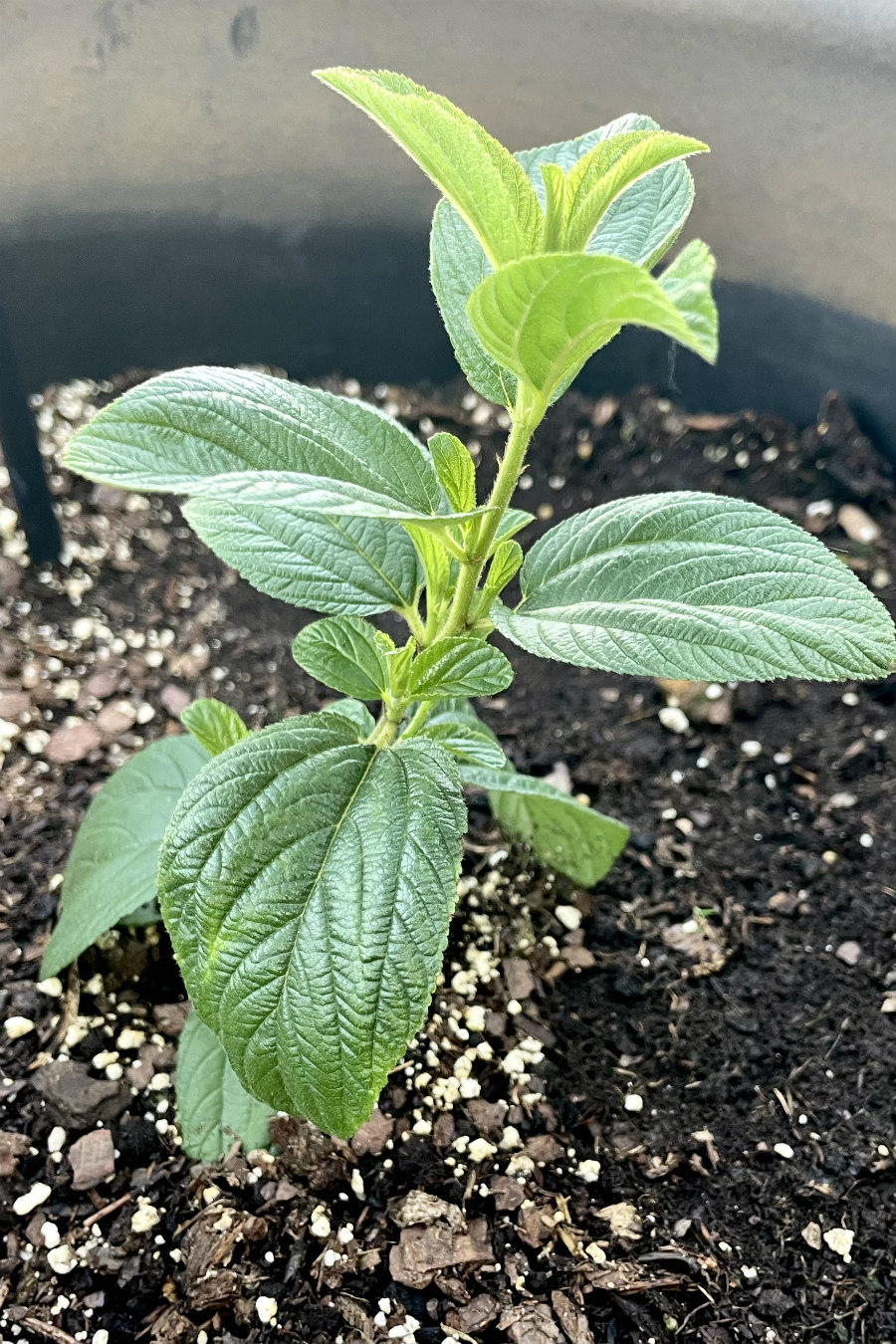
New Jersey Tea Plant
My big wishlist plant has been the New Jersey Tea Plant. I finally found them this year and got three of them! One is growing in a pot and two are in the ground out back. While they're still small, these plants will grow into a shrub with white clusters of flowers that attract pollinators. The leaves can be used for tea and are said to taste similar to green tea.
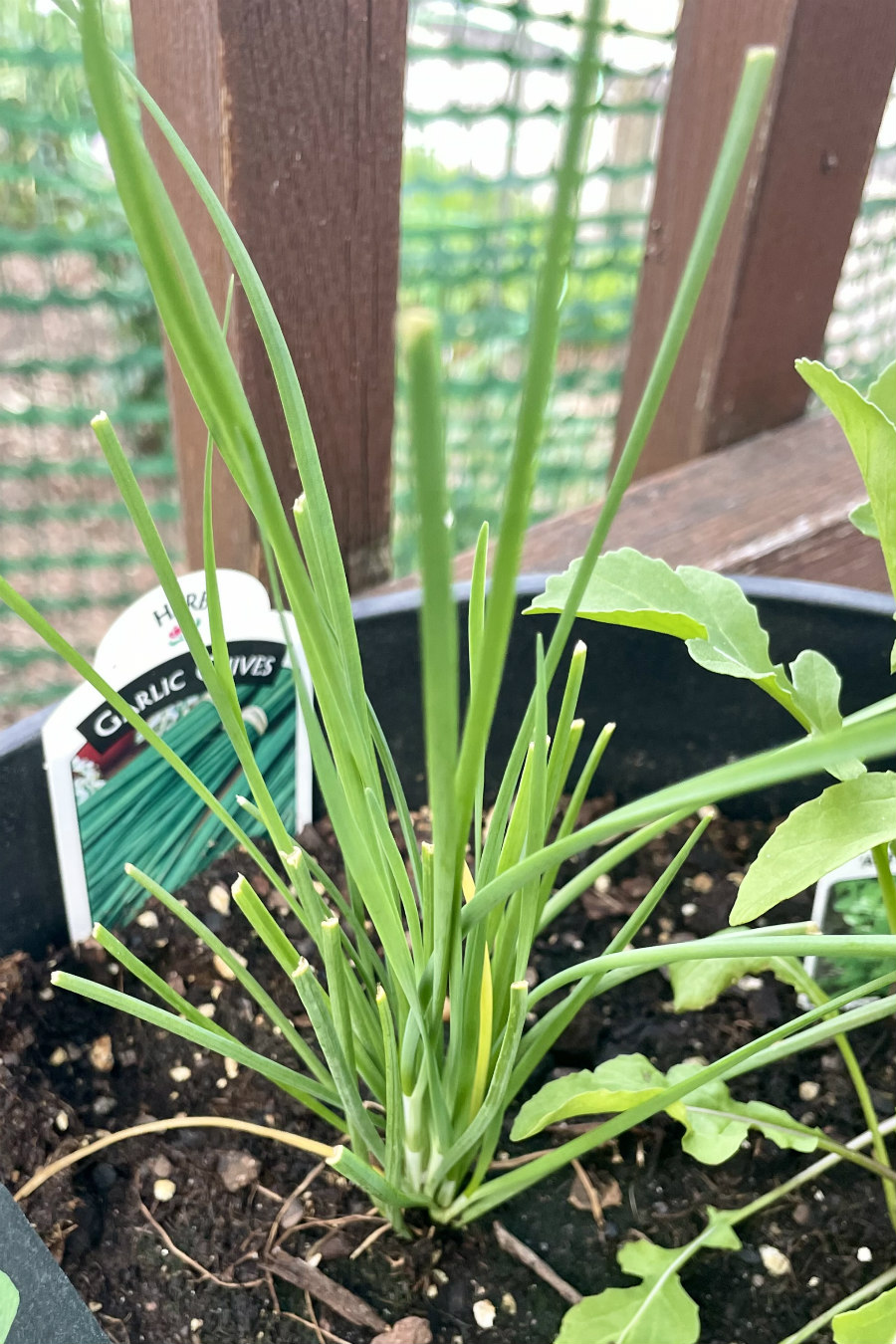
Garlic Chives
Garlic chives are also part of my pizza container garden. I decided to grow them after becoming a big fan of garlic scapes - they taste similar. Garlic chives grow just like regular chives, but have a garlicky flavor to them. They're a great addition to pizza, stir-fries, soups, potatoes, and more.
Cilantro
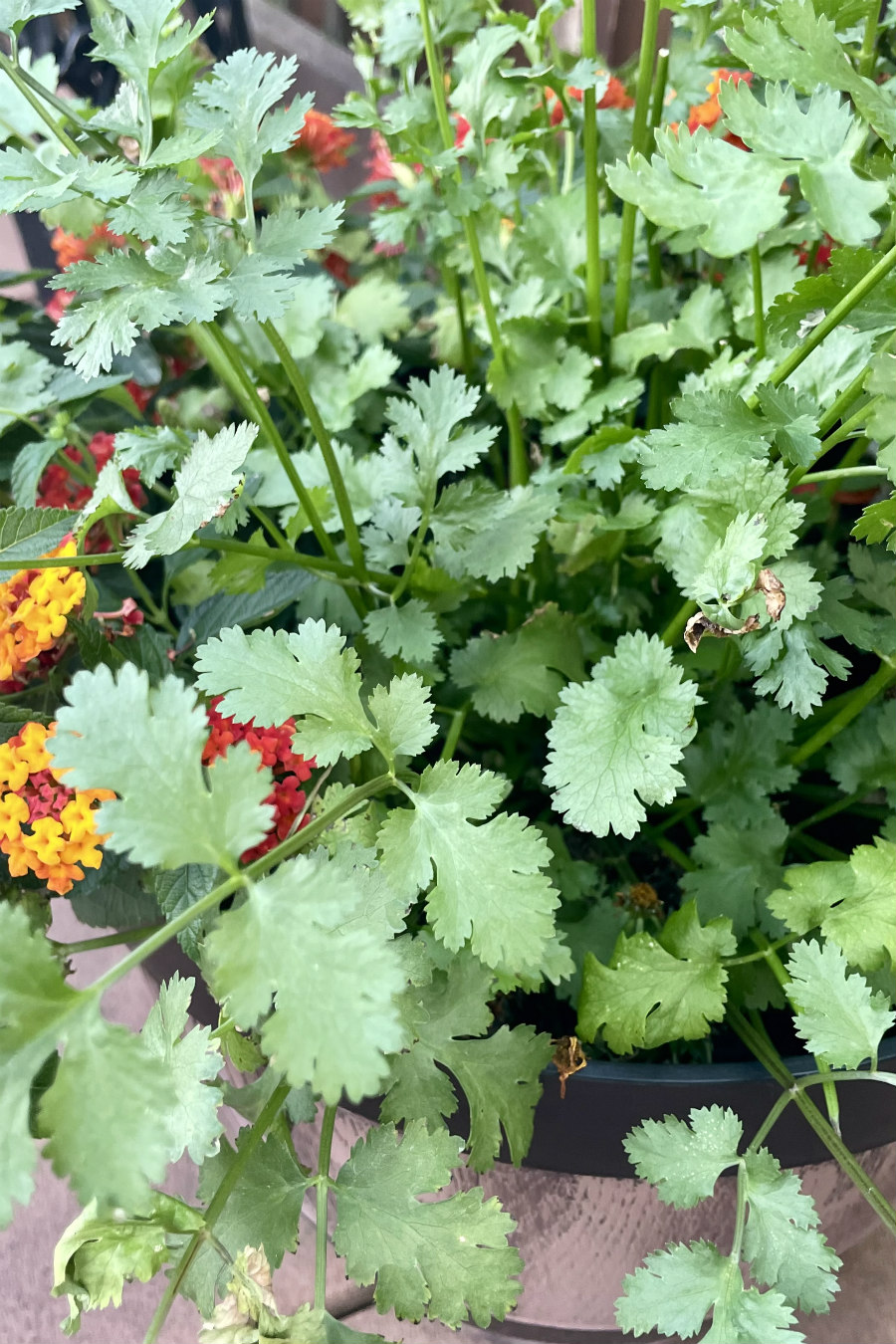
I grew cilantro as part of my fiesta container garden. And honestly, I didn't have high hopes for it. I've had trouble growing cilantro in the past. But this year, it really took off! It's growing like crazy! Cilantro, of course, is a big part of Mexican cooking. So I've been snipping it to use in tacos, guacamole, fresh salsas, and more.
Dill
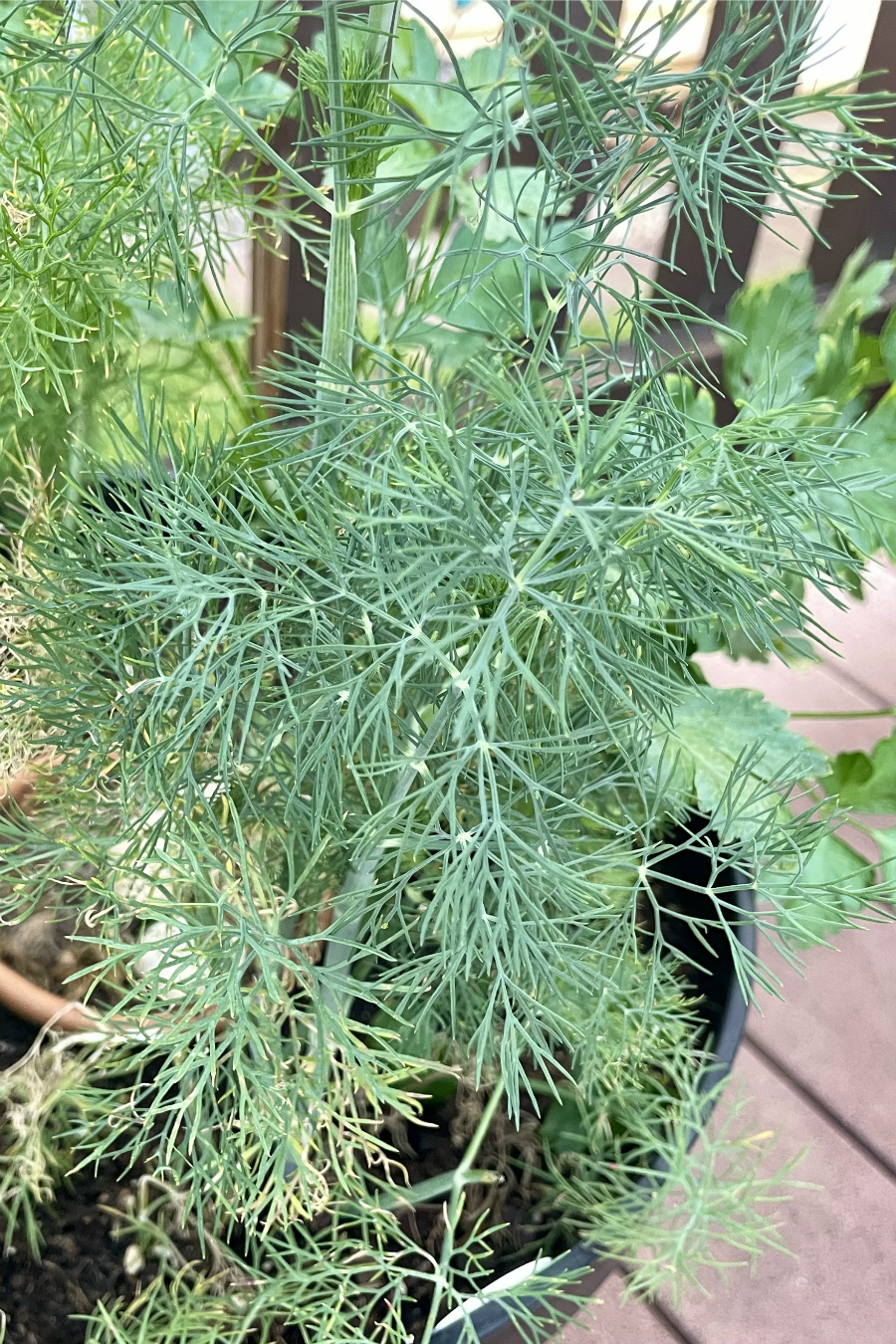
I'll clip a little dill every so often to toss in a cucumber or potato salad. But for the most part, I planted it for the butterflies. Swallowtail butterflies will lay their eggs on dill and the caterpillars will chomp away at it. I've already had butterflies (swallowtails and monarchs) visit the yard, so I'm hoping to see some baby cats emerge soon.
Fernleaf Fennel
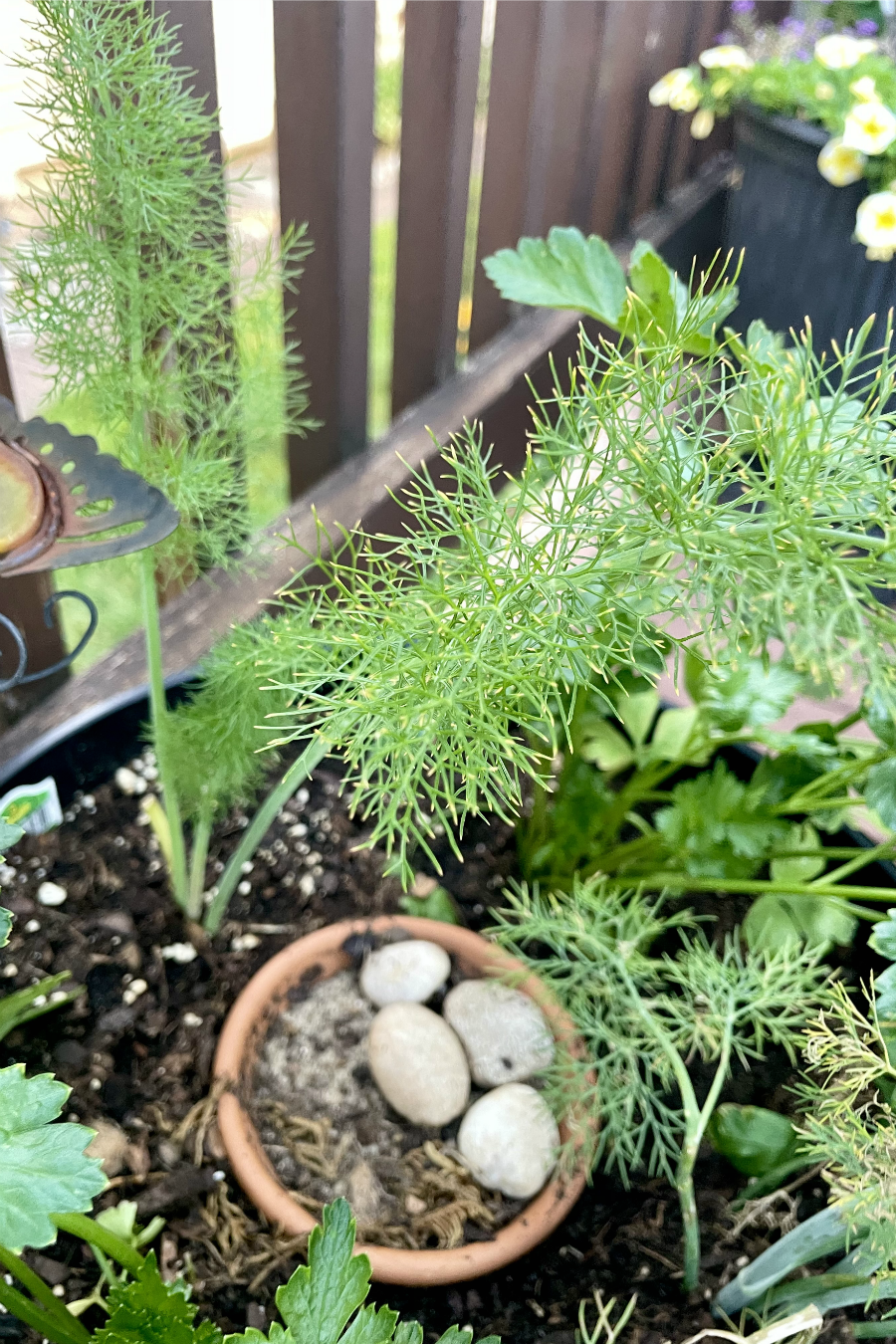
Just like my dill and parsley, this is another herb I planted just for the butterflies. It's another host plant for swallowtail butterflies. But the leaves and the bulb are edible. If this plant goes untouched, we might have to experiement with it in my cooking.
Eucalyptus
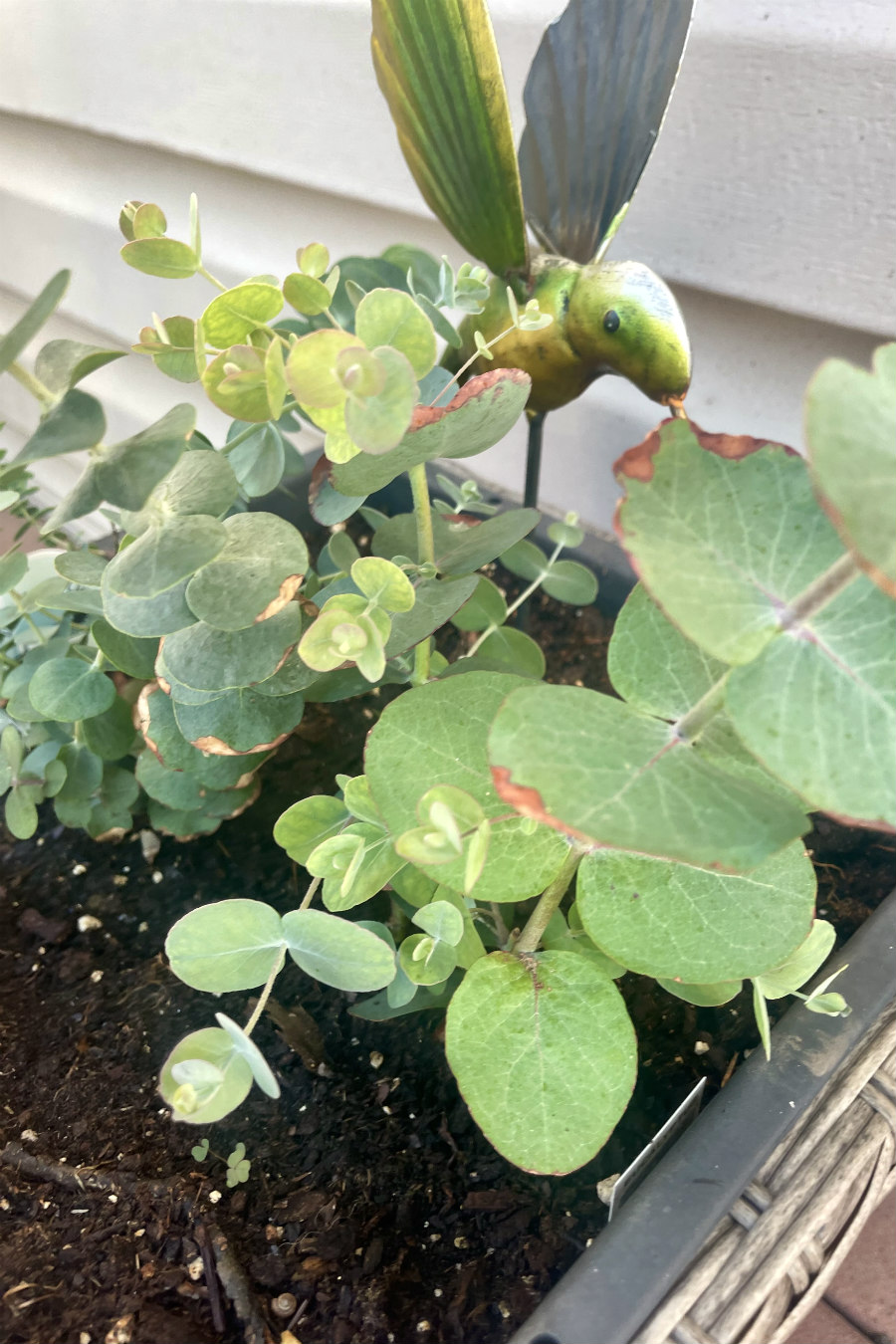
Eucalyptus is one of my favorite herbs to grow. I've been growing it the past few years to use in cut bouquets as well as Etsy shop products. I've had a rough couple of years trying to grow it. But this year, I'm going to basically wait until the end of the season to cut it, water infrequently, and make sure it gets some good sun.
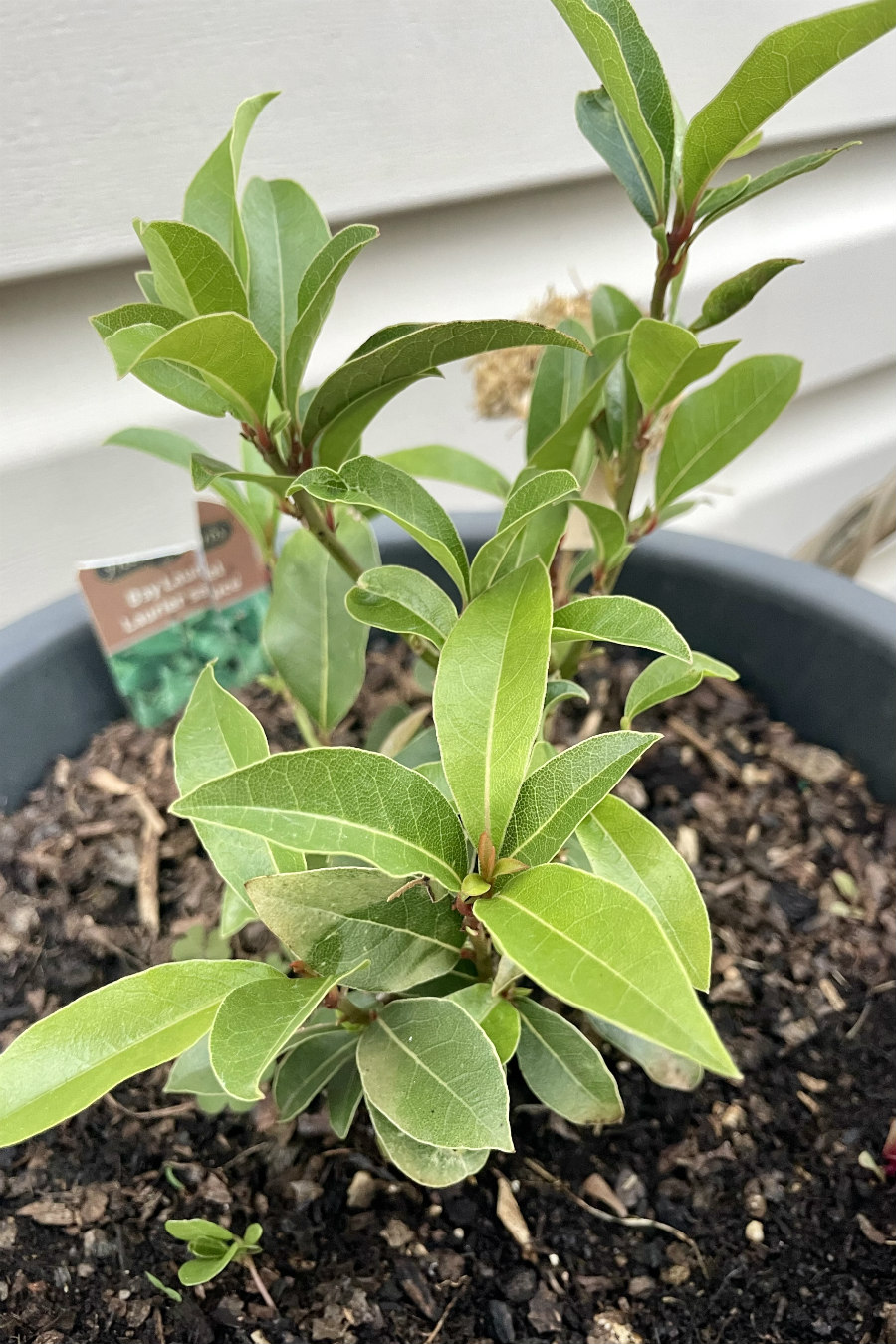
Bay Leaves
I"ve had this same bay leaf plant growing for a couple years now. While it's not a perennial in my area, I overwinter it each year and it comes back in the spring. I love tossing bay leaves in stews and roasts. But the leaves are mostly used in Etsy products.
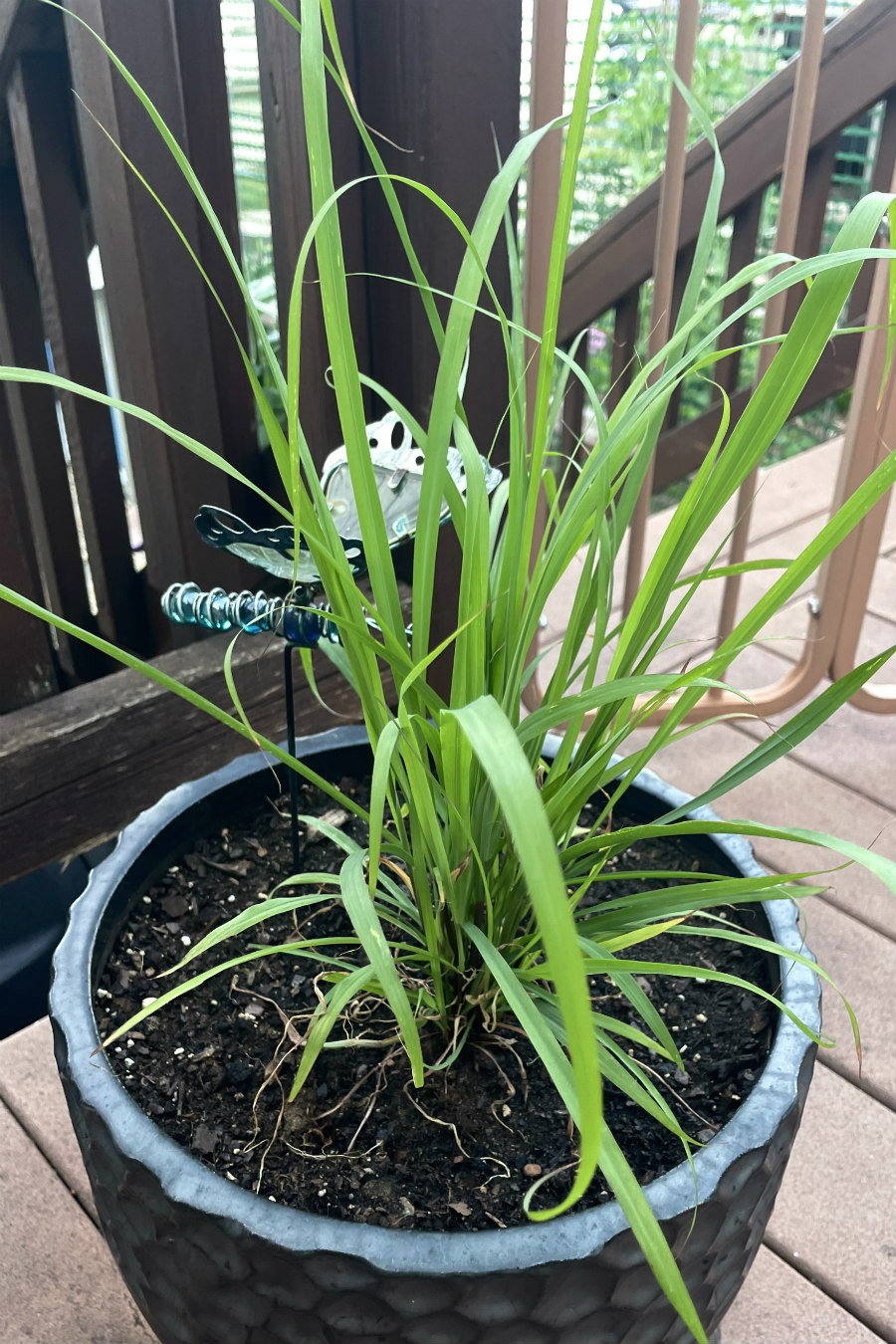
Lemongrass
If you want to keep mosquitoes away, lemongrass is one of the plants that's marketed just for that. However, I love its fountain of leaves. It makes a nice potted plant on our deck and the lemon scent is so nice. Plus, I like to use it in Asian-inspired soups and stir-fries. It's also an herb used in my simmer pot kits.
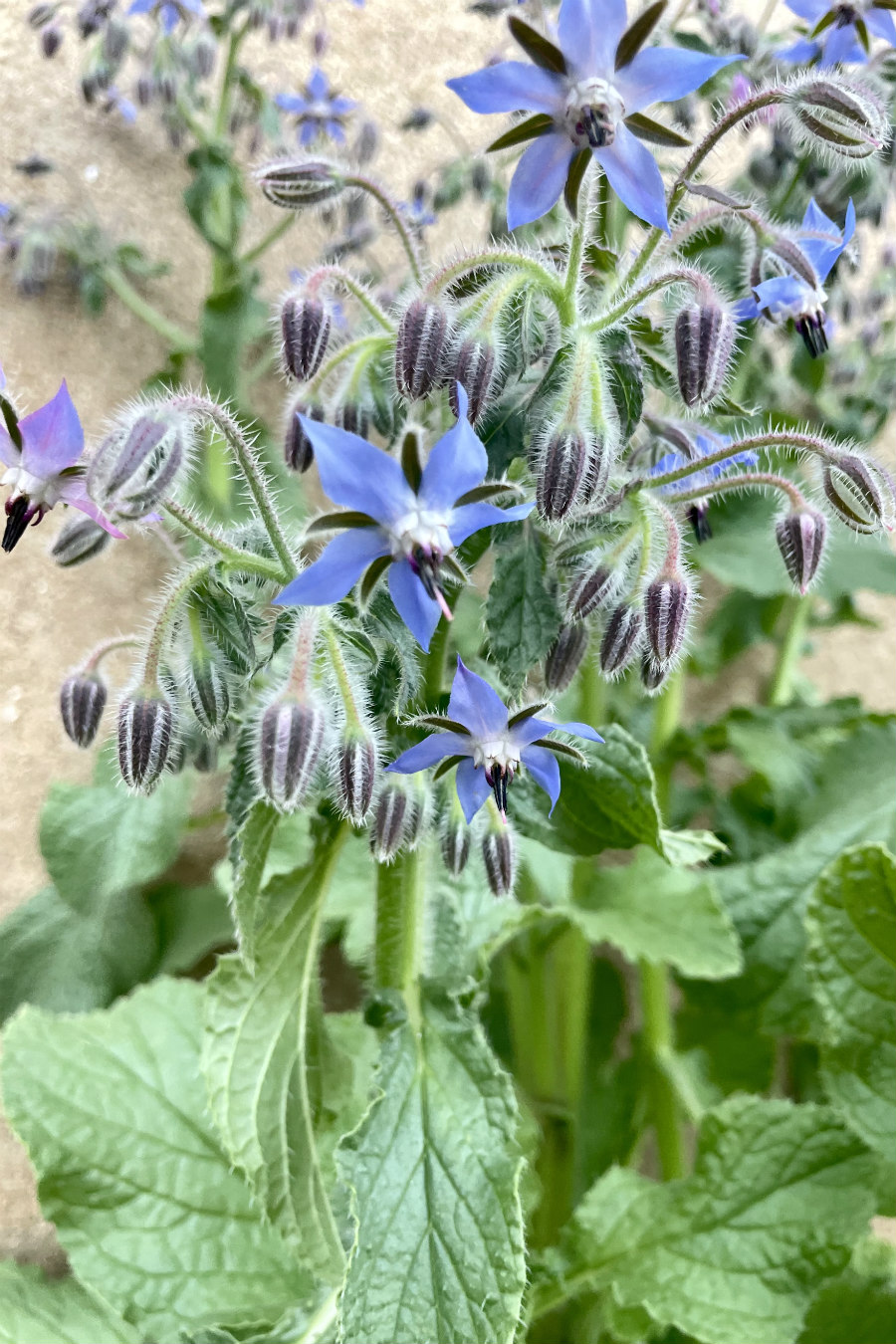
Borage
Borage is a relatively new-to-me herb. I grew it last summer and it quickly became a bee magnet! It's also a companion plant for strawberries. So this year, when we moved our strawberry plants to their own patch, I planted a row of borage in the back. Once again, the bees are constantly buzzing around it.
The young leaves and flowers also have a slight cucumber flavor, making it a nice addition to water infusions. Just be careful where you plant it because it will spread! You'll notice tiny borage plants popping up nearby.
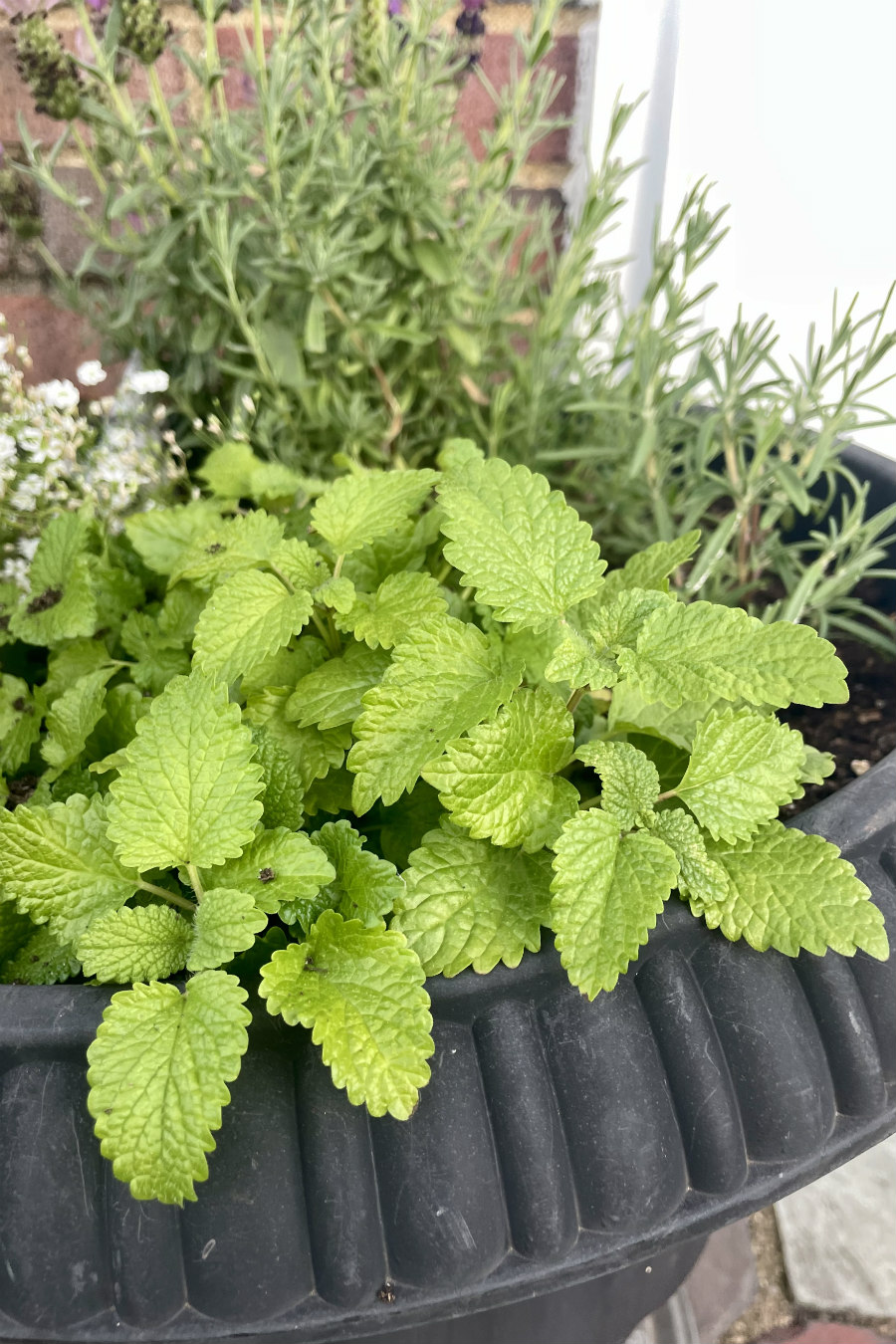
Lemon Balm
Lemon balm is in the mint family so it's better suited for a pot. Its lemony leaves are delicious in herbal tea. I also use it in my Etsy shop. It's easy to grow and easy to dry for later use.
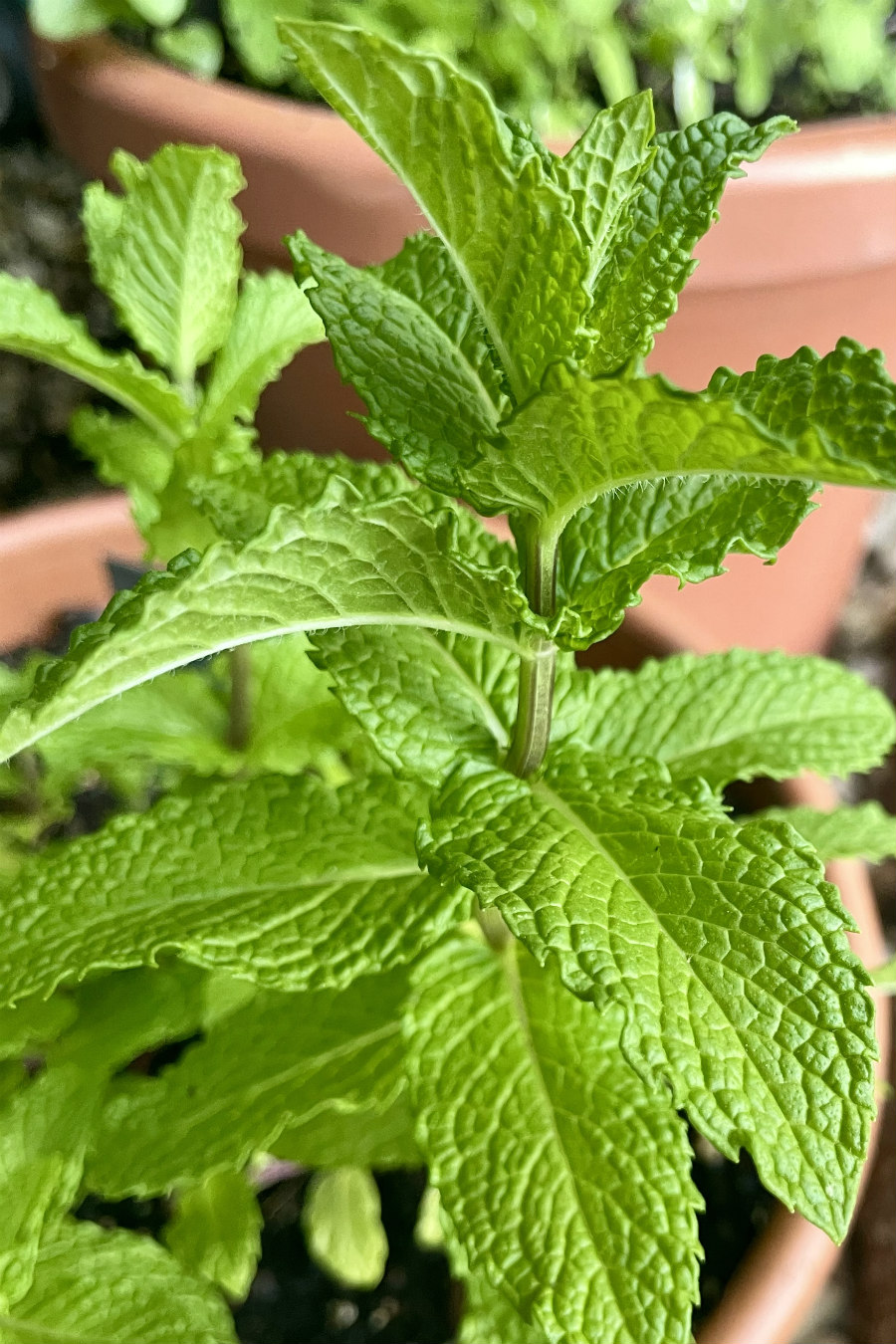
Mint
Once you grow mint, you'll never get rid of it! Never, ever, ever grow it in the ground. Even in a pot, it'll come back year after year. It's so good in herbal teas and water infusions. I also like to toss some leaves in fruit salad during the summer. I clip a lot of it to dry and use in my shop products, as well.
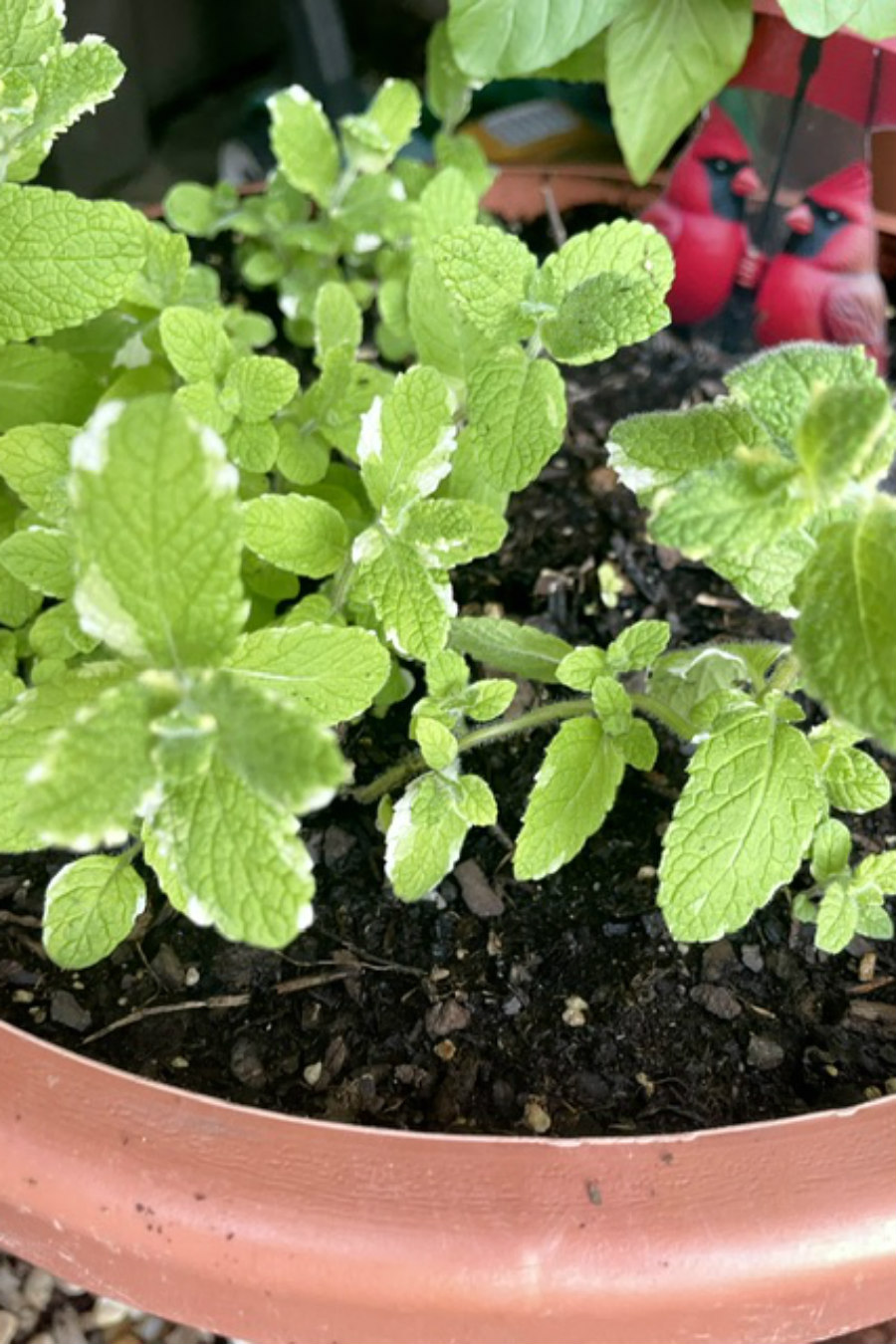
Pineapple Mint
I really love all of the varieties of mint available. Pineapple mint is definitely one of my favorites! Their variegated leaves add a nice touch to container gardens. The leaves themselves are a mix of mint and tropical fruit flavor. It's one of my favorite herbs to toss into water or steep as tea.
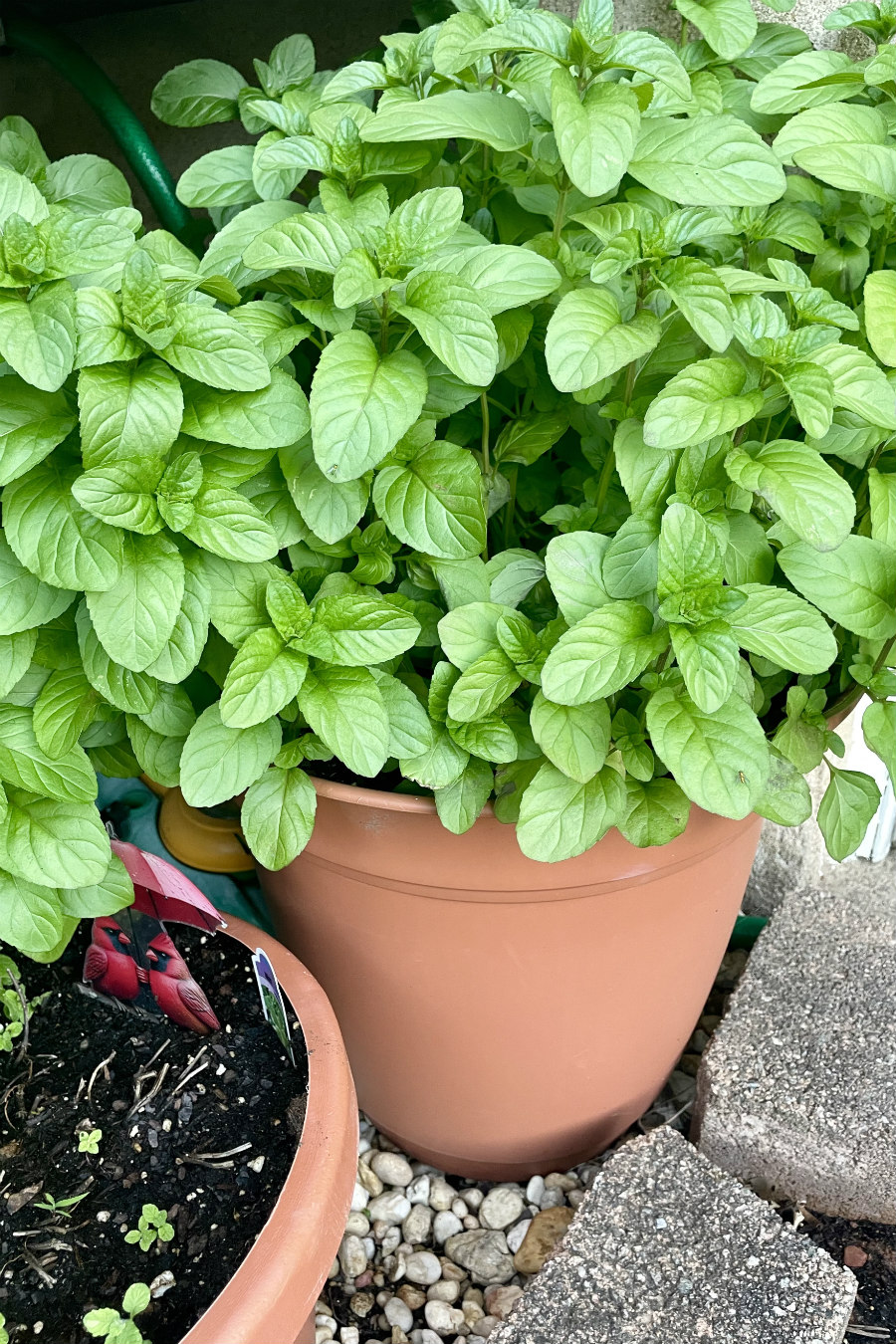
Orange Mint
Orange mint is another one of my favorite varieties of mint. This plant is very happy in a bigger pot this year. It's practically a bush! It has a sweet, citrus flavor that also makes it really nice for herbal teas, infused water, and fruit salads.
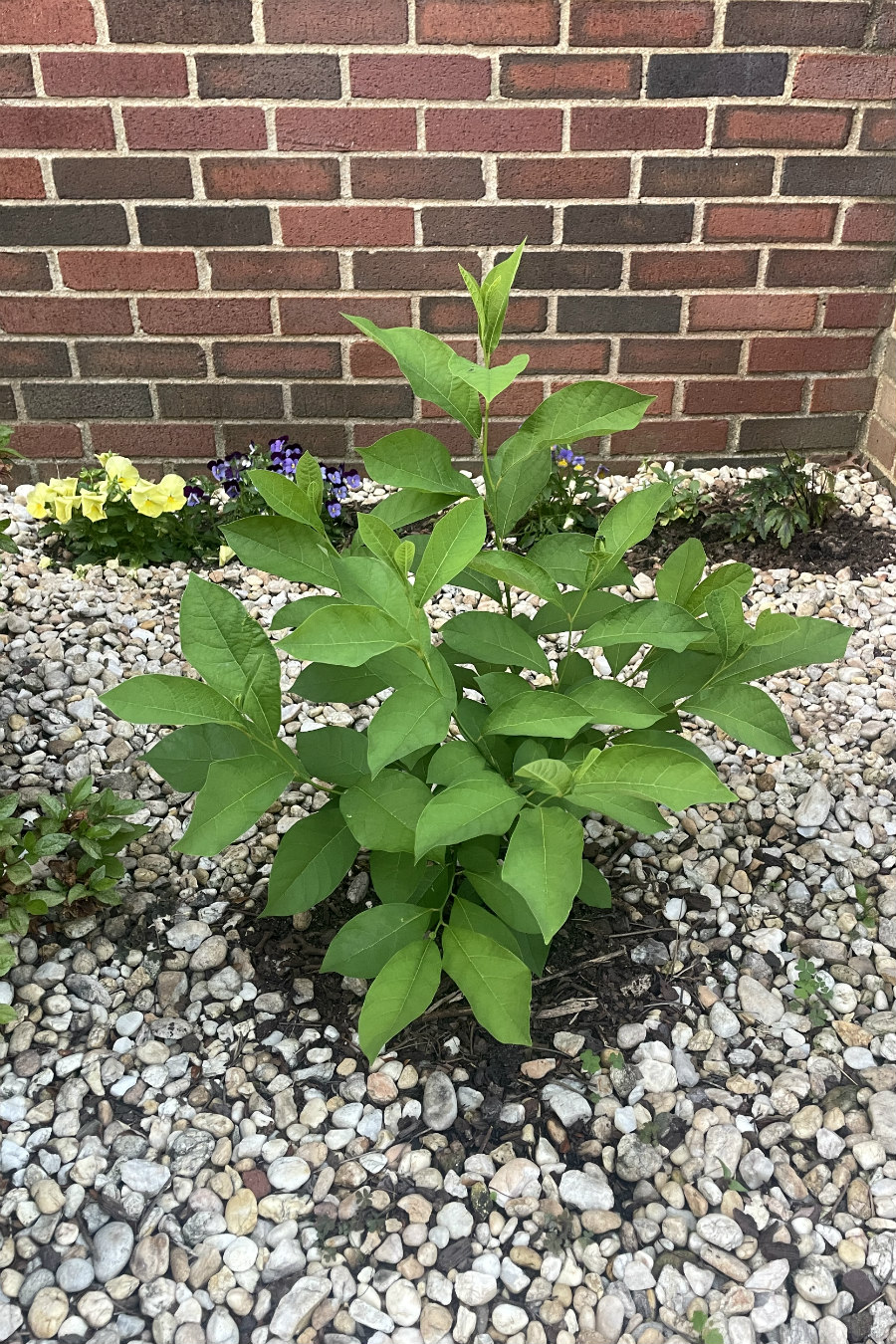
Spicebush
I bought my spicebush last year at a native plant sale. I needed something to fill a spot in our front yard and put it on my list. The leaves smell amazing! Like a peppery, citrus scent. The plant produces berries that can be used as a substitute for allspice. The bush itself is a host plant to the spicebush swallowtail.
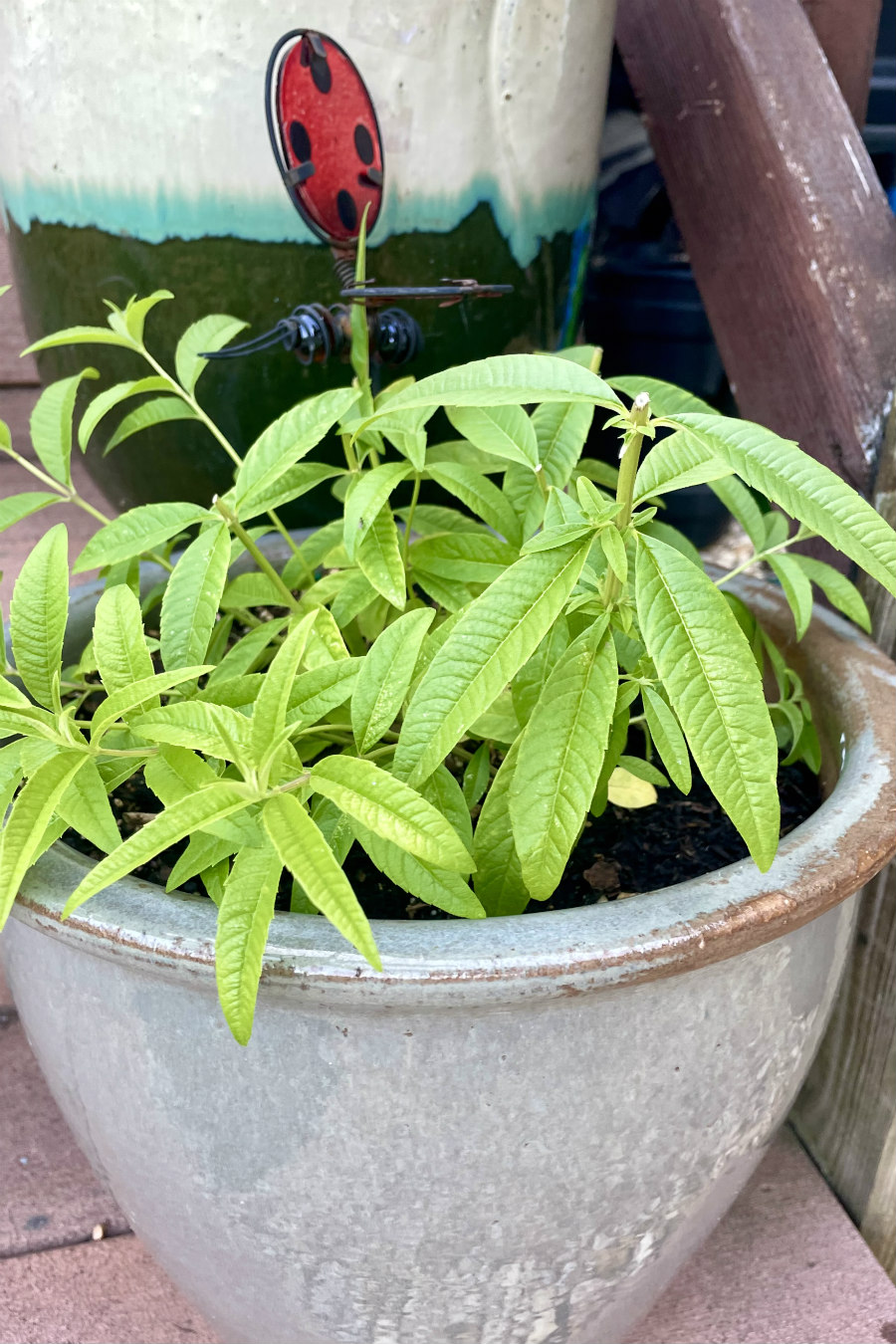
Lemon Verbena
I successfully overwintered my lemon verbena plant that I bought last spring. If you like lemon balm for its lemony flavor, you'll really like lemon verbena! It has an even bolder citrus flavor. It's also delicious in drinks and fruit salads. I use it in my simmer pot kits, as well.
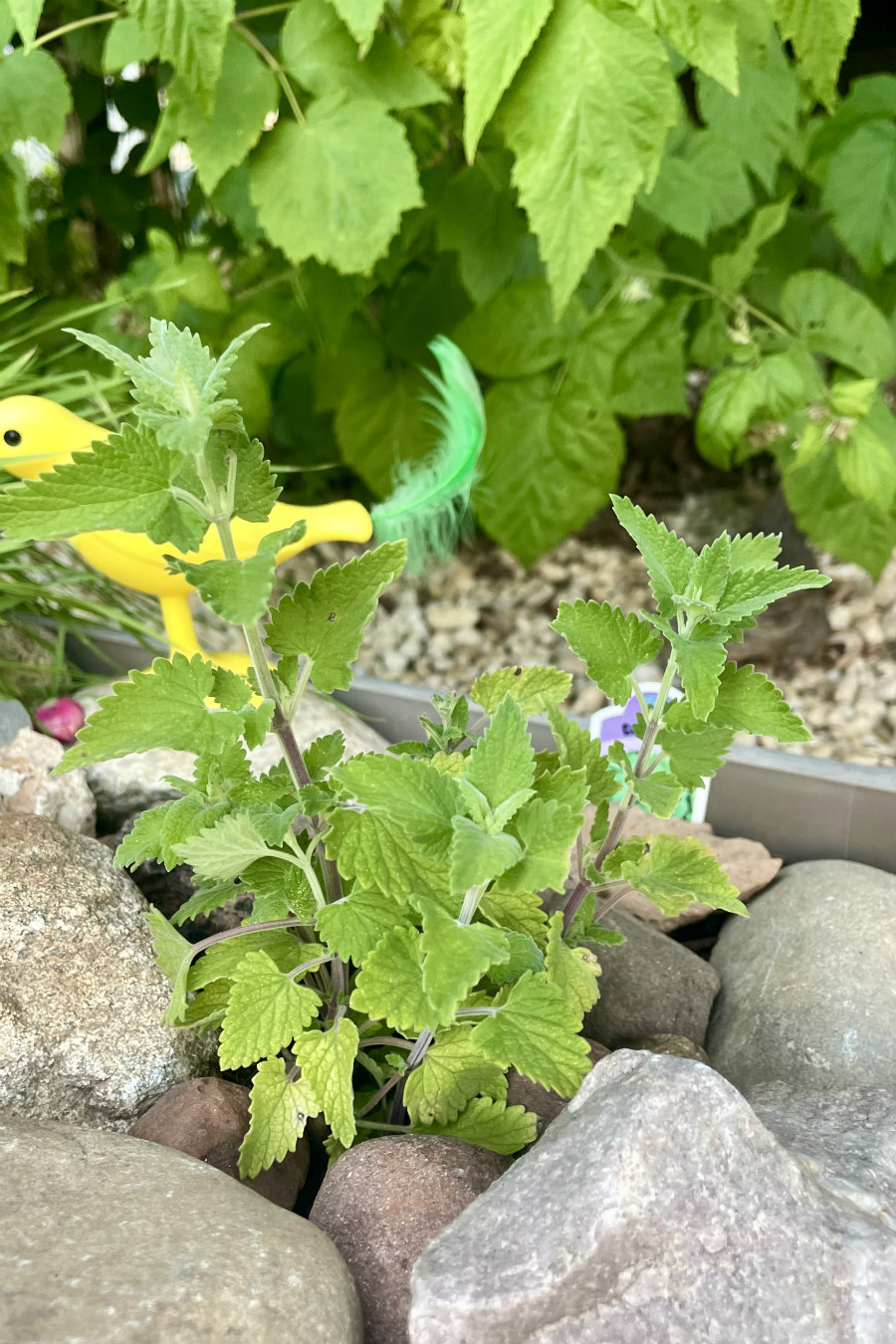
Catnip
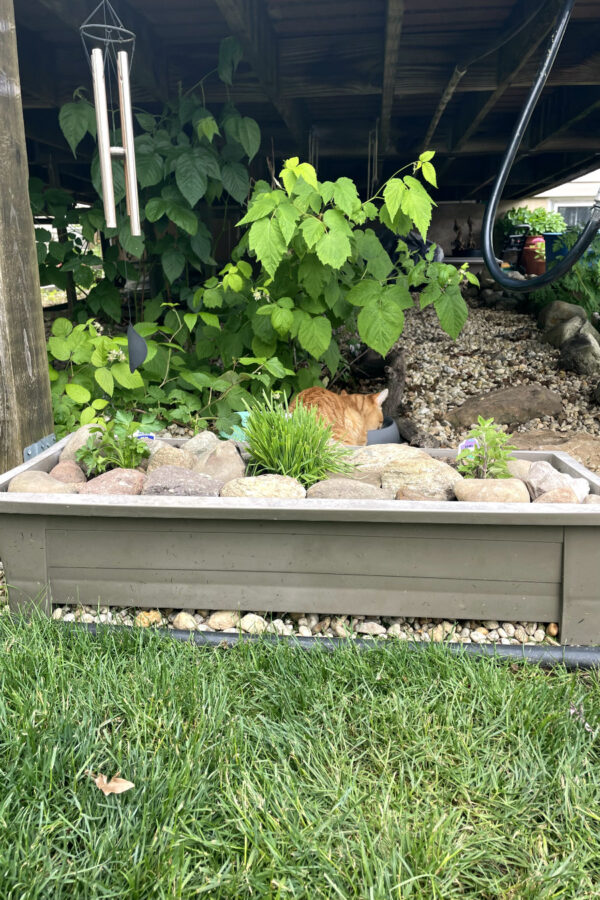
I never thought I'd have catnip growing in my yard, but then Sal started to visit. Now, we have a whole cat-friendly herb garden growing! Not only do cats go wild for catnip, it's also a mosquito-repellent plant.
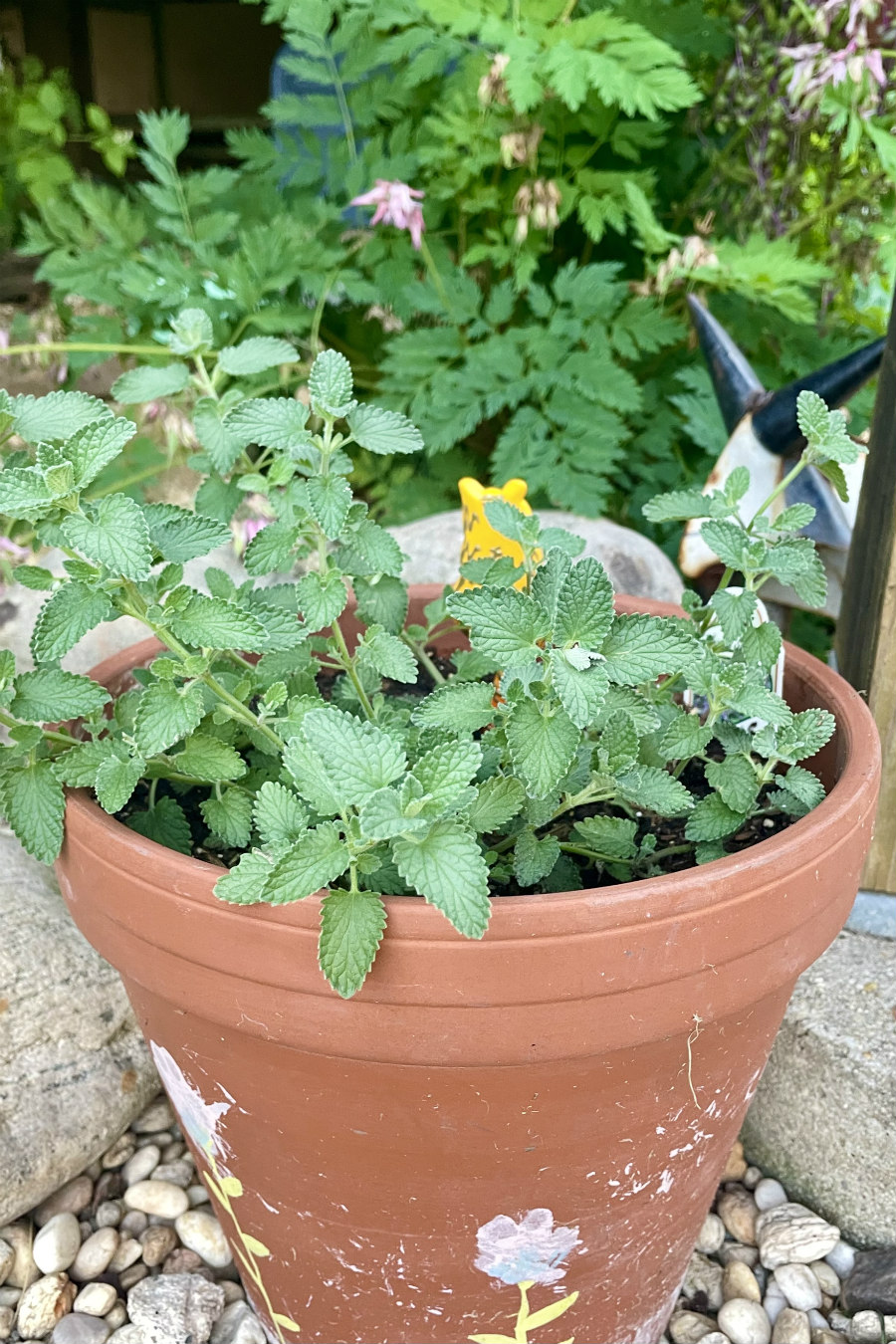
Catmint
Catmint is less potent than catnip, but cats will still roll around it or brush passed it. It has a really nice smell to it - kind of minty, citrusy, and earthy. It's a great pollinator plant as well and is also said to repel pests like aphids.
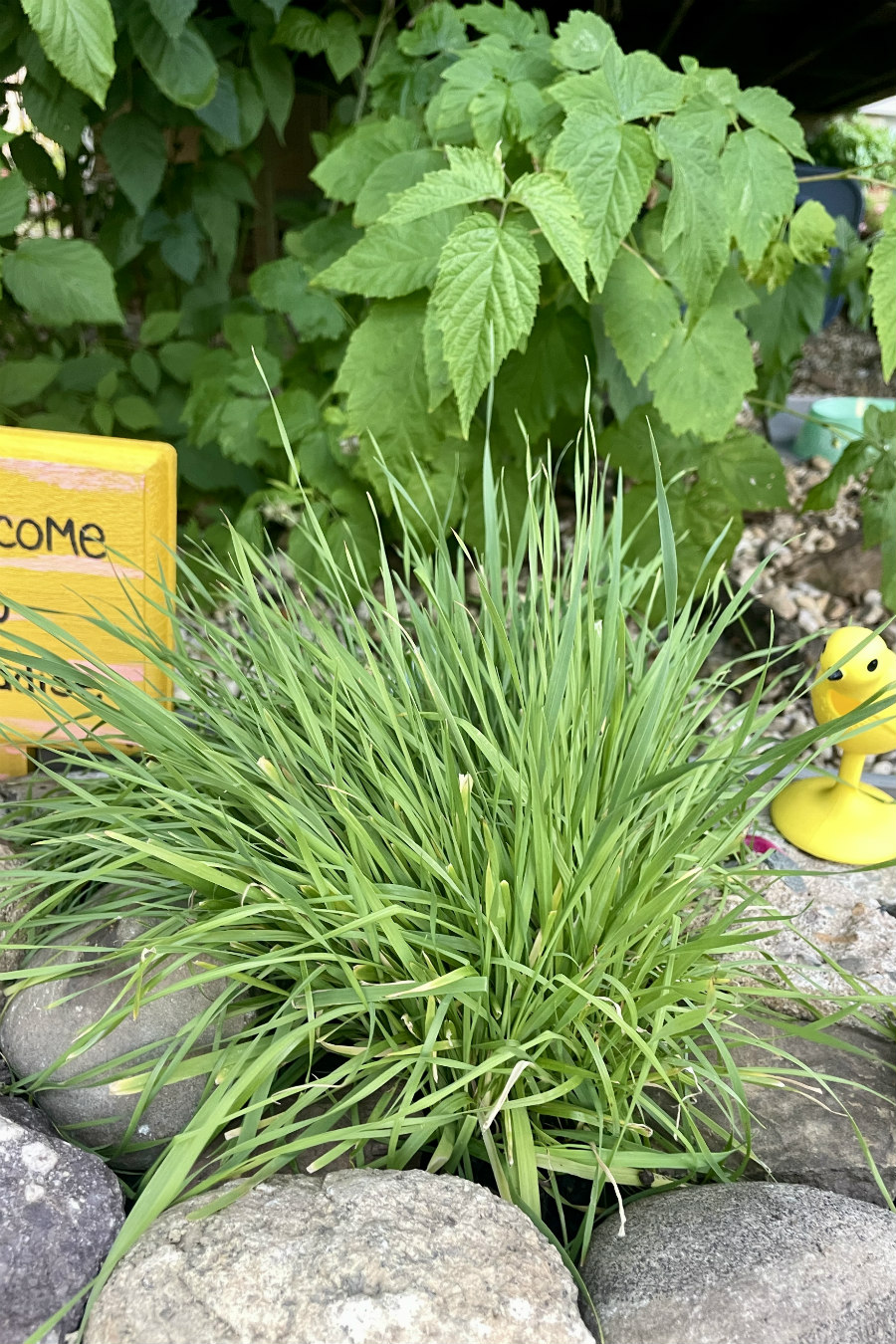
Cat Grass
While cat grass technically isn't a grass, I'm including it anyway since it's part of my cat-friendly herb container garden. It's full of nutrients that are good for cats and is super easy to grow! Sal doesn't seem too interested in eating it, but brushes against it every once in a while.
Now do you see why I have to break everything down into four posts? We have a ton of herbs growing this year! Next week, I'll be sharing all of the flowers I'm growing this year. They're all starting to bloom now and look gorgeous!
What kind of herbs are you growing in your garden this year?