Easily create a trendy chirpcuterie board using a terracotta saucer, small bungee cords, and an aesthetically arranged variety of wildlife-friendly treats like seeds, nuts, dried mealworms, and fruit that will attract different birds to your yard.
This post may contain affiliate links. Making a purchase through one of these links helps support this blog.
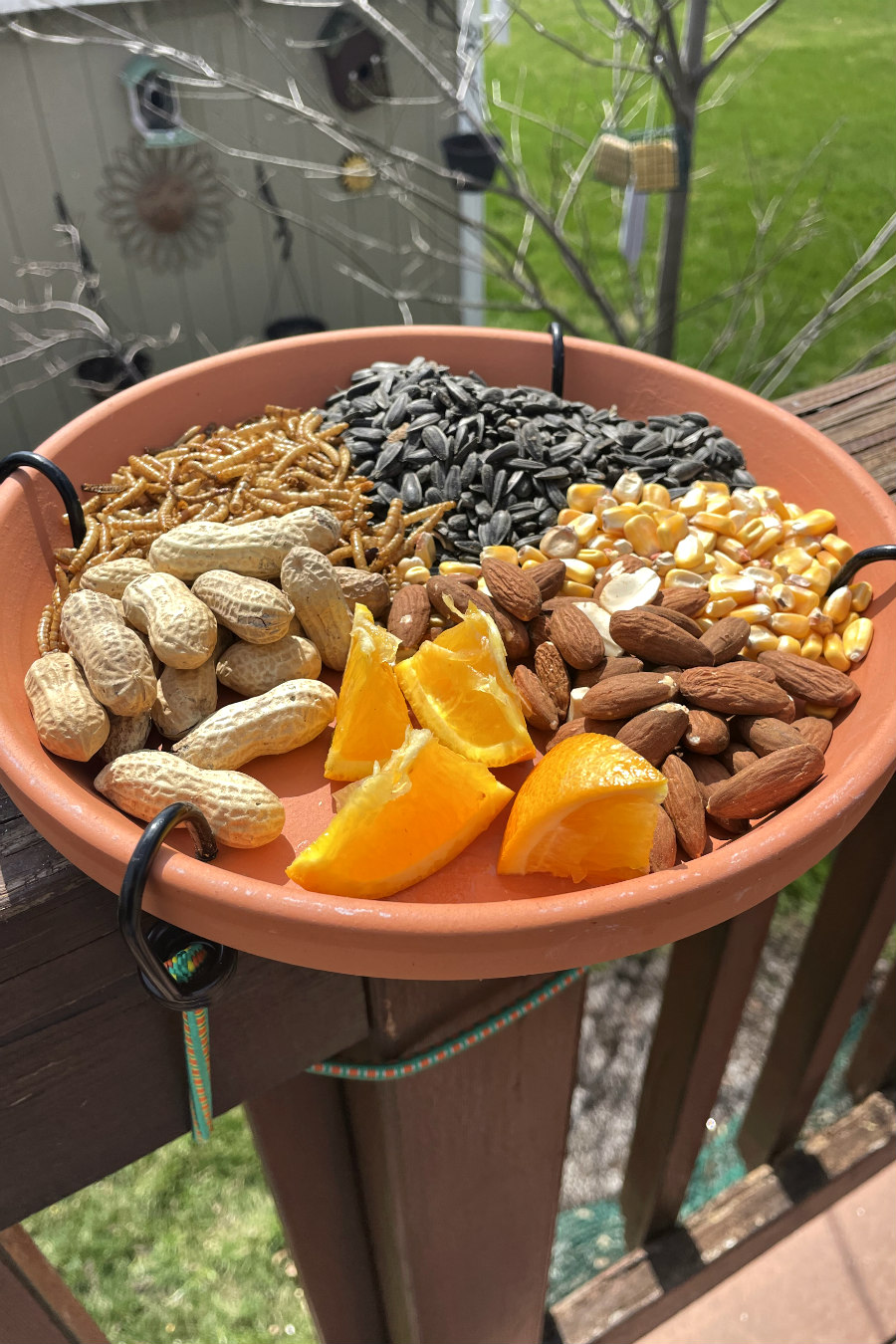
If you've been following me for a while, then you know that I'm a total bird nerd. I love feeding them, watching them interact with the cozy habitat we've made for them, and seeing new birds visit our yard. Most recently, we've started attracting crows. So I set out a terracotta saucer on our deck (away from the bird feeder) for the crows. They're not as frequent visitors as the other birds - and squirrels - so it's become another community feeder.
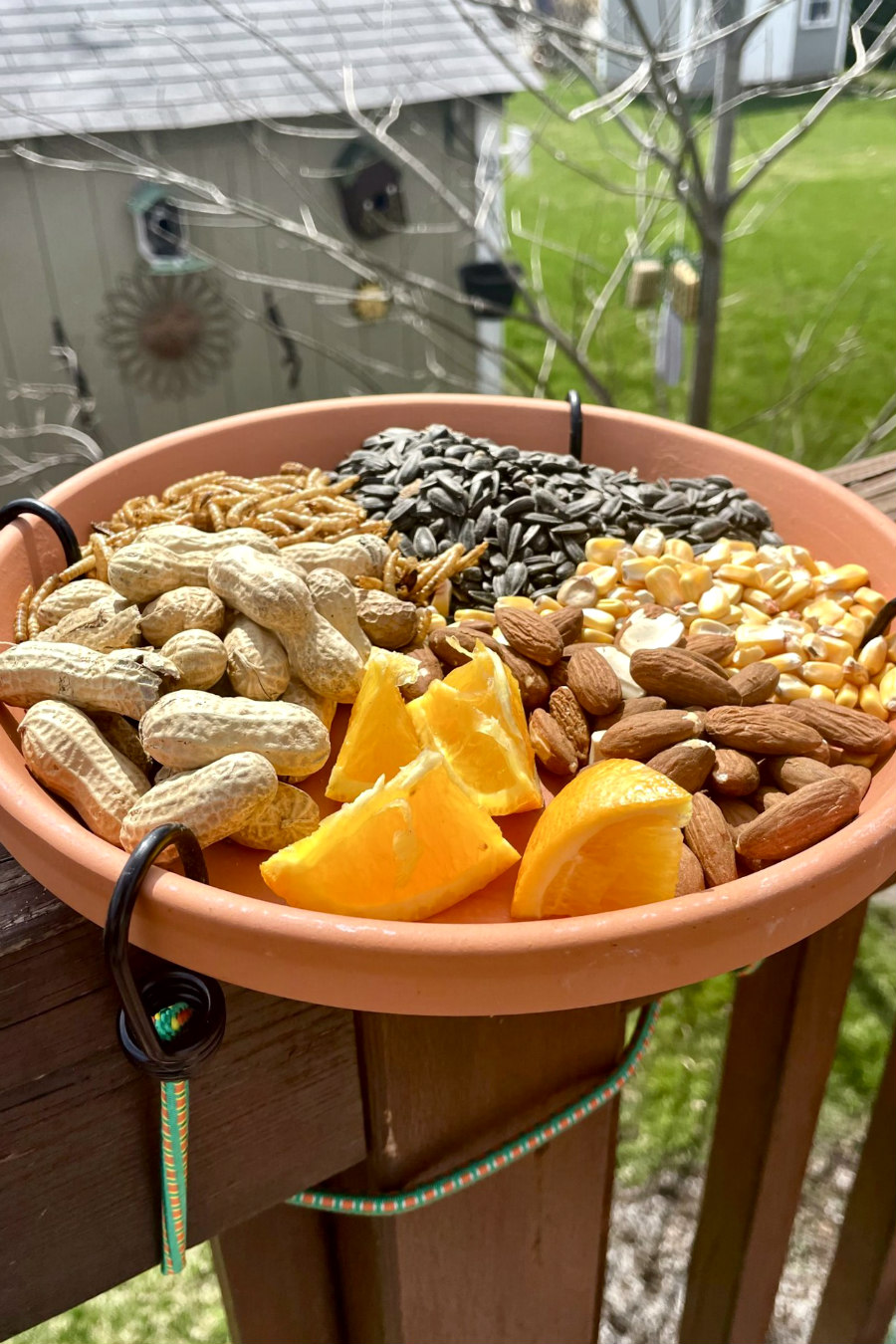
Since all of the birds - and squirrels - feed from this dish, I decided to turn it into a trendy wildlife "chirpcuterie" board. Basically it's a grazing board for birds filled with some of their favorite treats like seeds, nuts, fruit, and even some protein-packed options like mealworms. I started with an 8-inch terracotta saucer and recently upgraded the birds to a slightly larger 10-inch saucer.
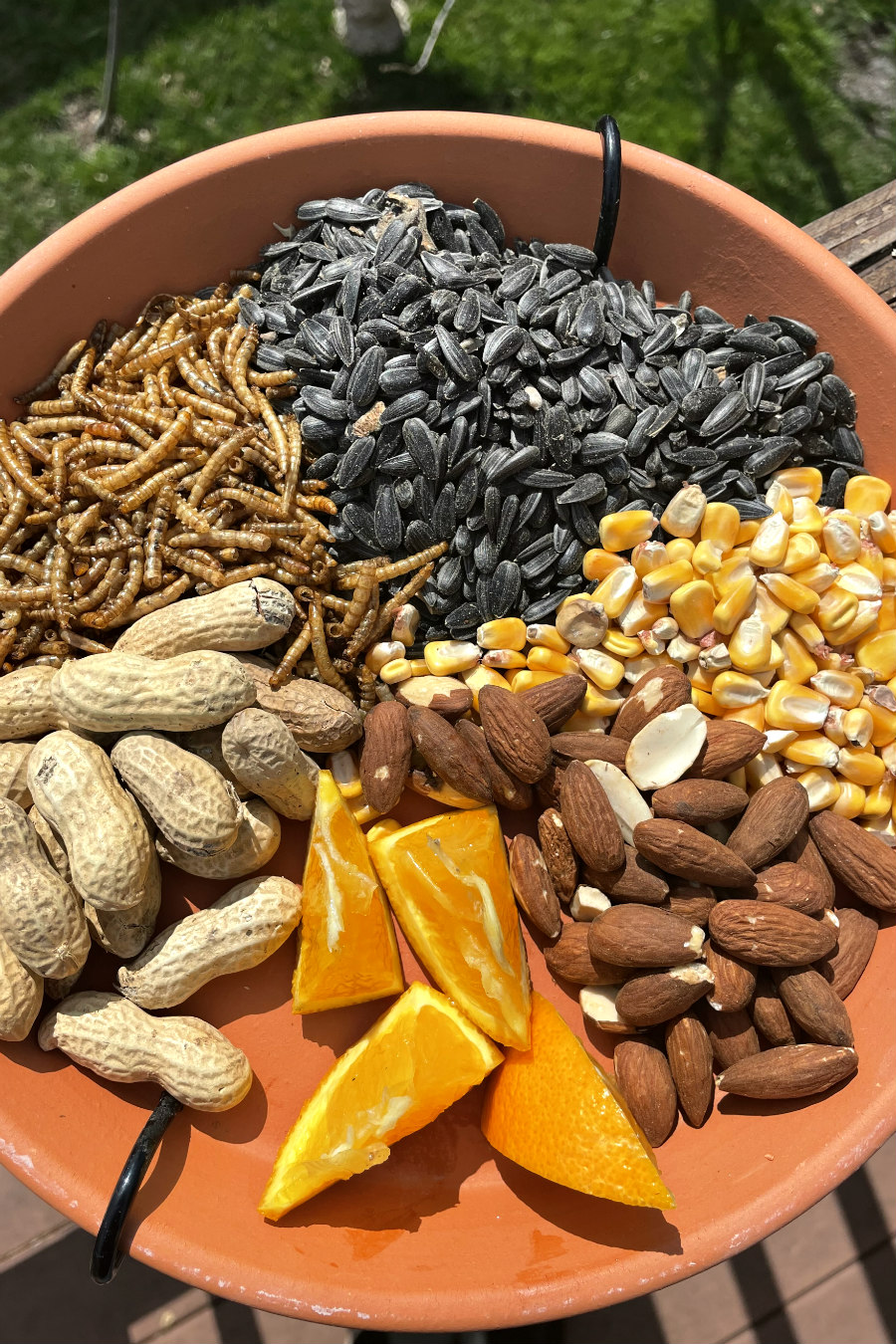
Just like charcuterie, chirpcuterie boards are also about presentation. Although it doesn't take long for our happy little snackers to pick, toss, and mix up the treats set out for them, the food is initially set out in an aesthetic fashion.
What to Add to a Chirpcuterie Board
What's fun about creating a chirpcuterie board is you can add food based on the season. Since it's warming up, I've made sure to provide spring favorites like black oil sunflower seeds, fruit, and dried mealworms. But here are some treats you could add to your board:
- Seeds: Seeds like millet, packaged blends, and black oil sunflower seeds (highly preferred) are good choices for energy.
- Protein: Suet nuggets or chopped blocks are good options for winter and early spring. I've switched over to dried mealworms since it's starting to warm up.
- Dried cracked corn: While this is typically provided as an extra treat, corn does attract all sorts of wild birds. It can be a source of protein and fiber. The squirrels are a fan.
- Nuts: Another good source of energy for the birds. Just make sure the nuts you feed them are dry roasted and unsalted (raw nuts are best).
- Fruit: The crows seem to like chunks of apple and the mockingbirds seem to like when I leave out oranges. If there is any bruised fruit left behind in the fridge, it usually goes to the birds.
- Grape jam or jelly: If you have orioles in the area, they enjoy a jelly treat. Woodpeckers and mockingbirds apparently like it, too. But they have other options they can enjoy.
- Small water dish: We have a bird bath pretty close to this feeder so I don't set out a small dish of water. If you don't have a bird bath, you can add one to your chirpcuterie board.
How to Build a Chirpcuterie Board
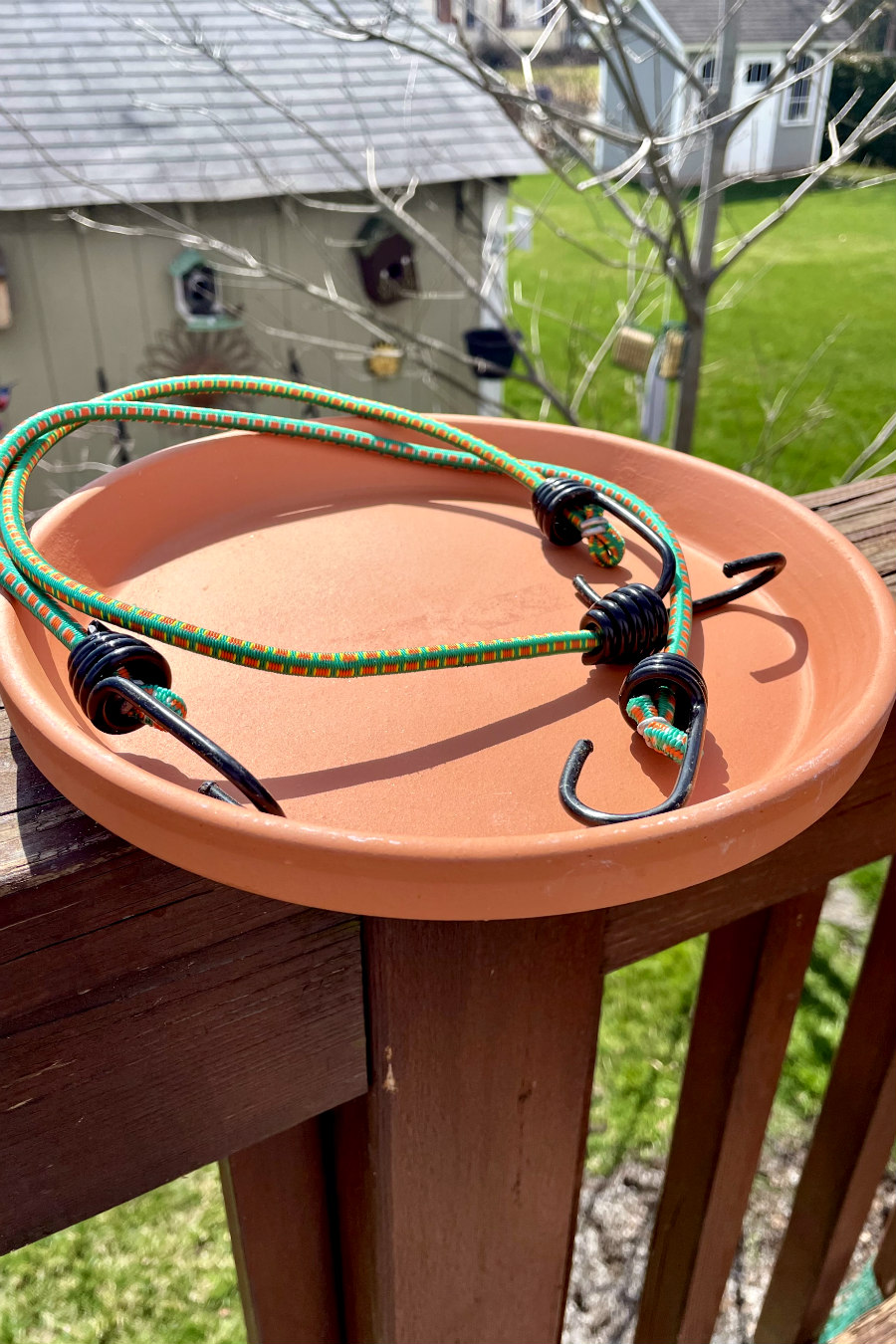
Now that we know what to add to a chirpcuterie board, you're going to need to set up a board. You can grab a deck feeder or easily DIY one, like I did. All you need is a terracotta saucer (8 or 10 inches is a good size) and some small bungee cords. Then, stock on different types of bird food to fill it with.
I added my chirpcuterie board to an open area near some small trees and the bird bath in our yard. This not only gives the birds easy access to the feeder, but also access to fresh water and shelter.
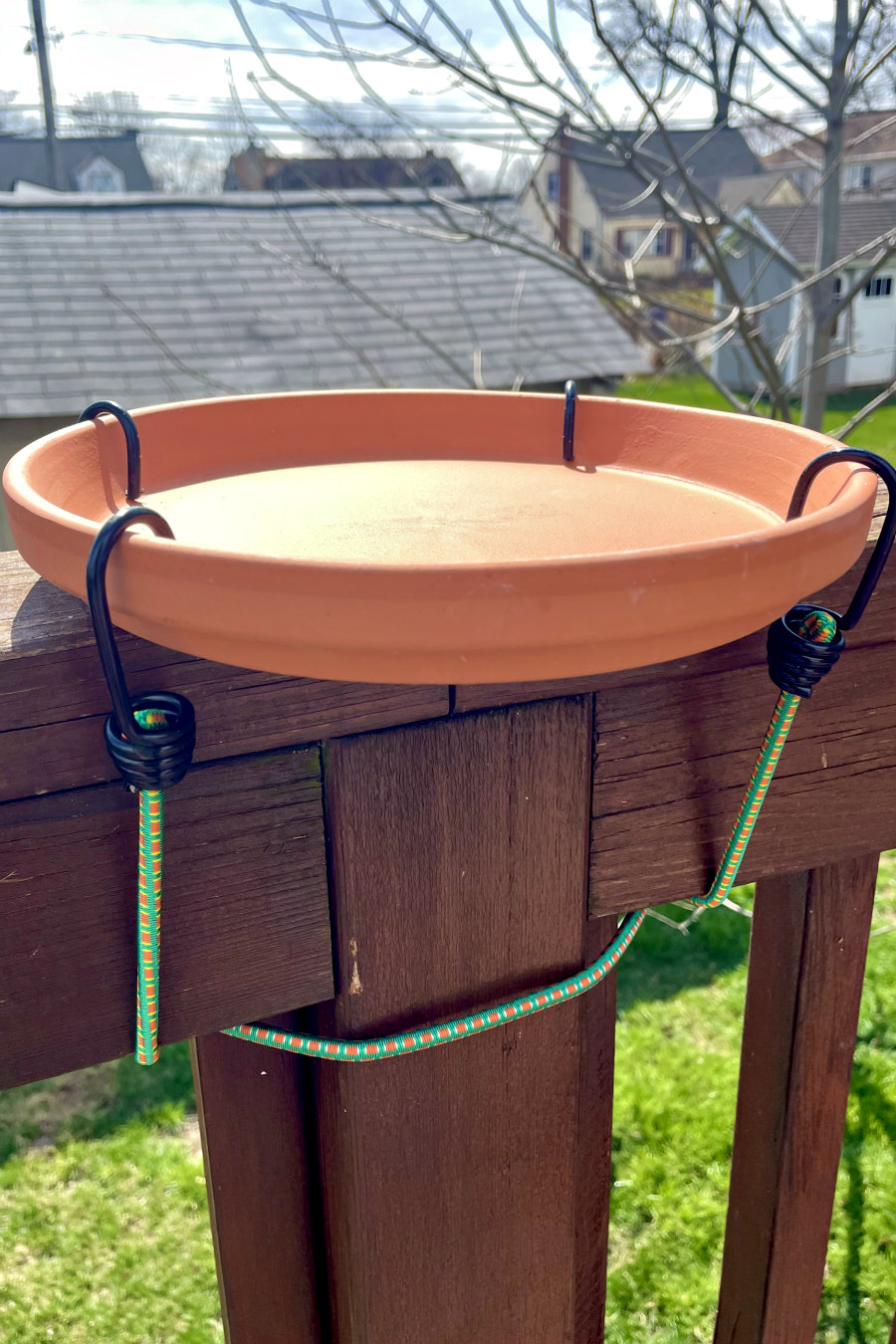
I placed the terracotta saucer on top of our deck railing. Then, I strung the bungee cords through the railing and added the hooks to the saucer to keep it in place. It's sturdy and easy to remove to clean (which you'll want to do often).
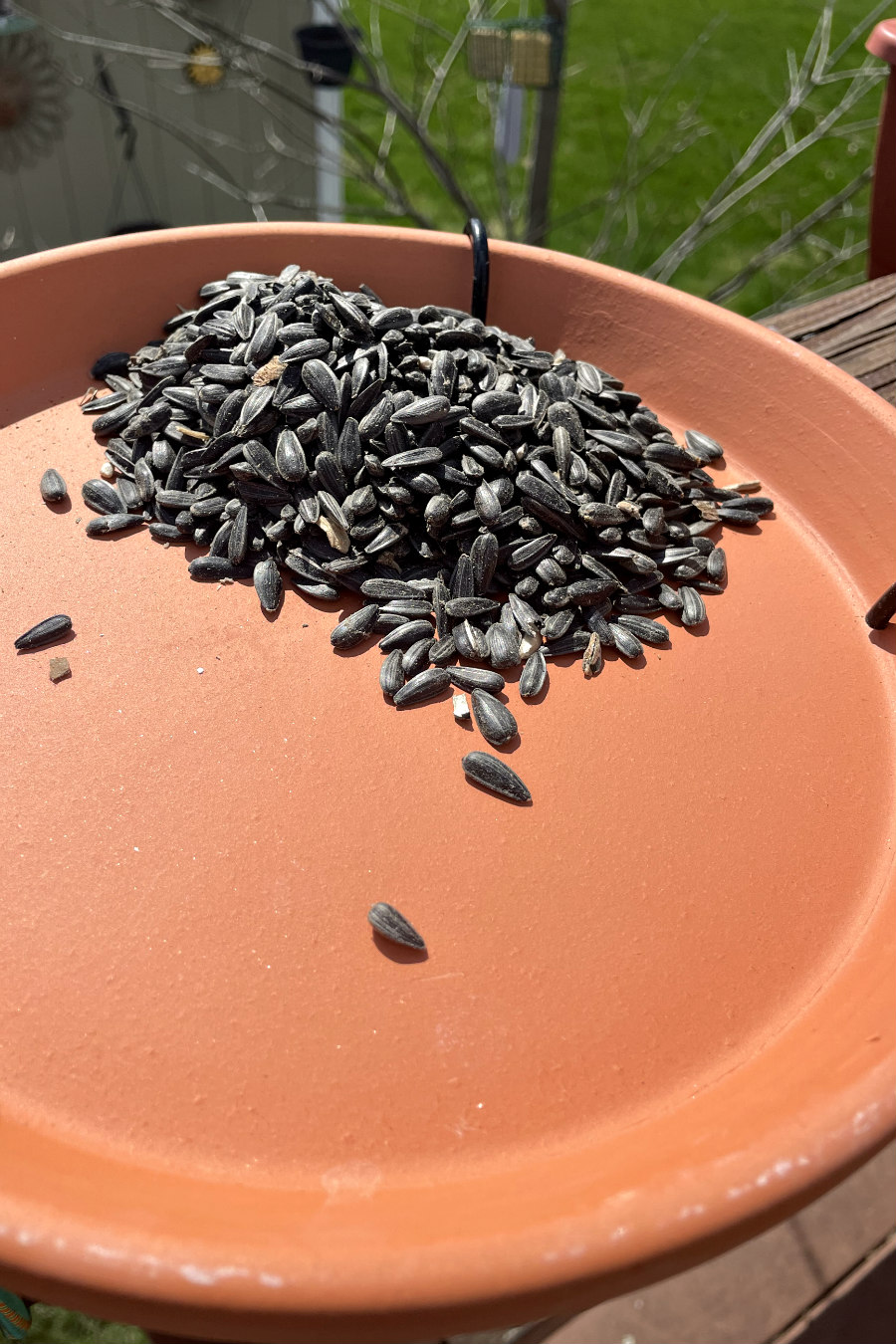
Next, I started filling the saucer with treats for the birds. I started with their favorite, black oil sunflower seeds. Most of the birds seem to enjoy these, but especially the cardinals!
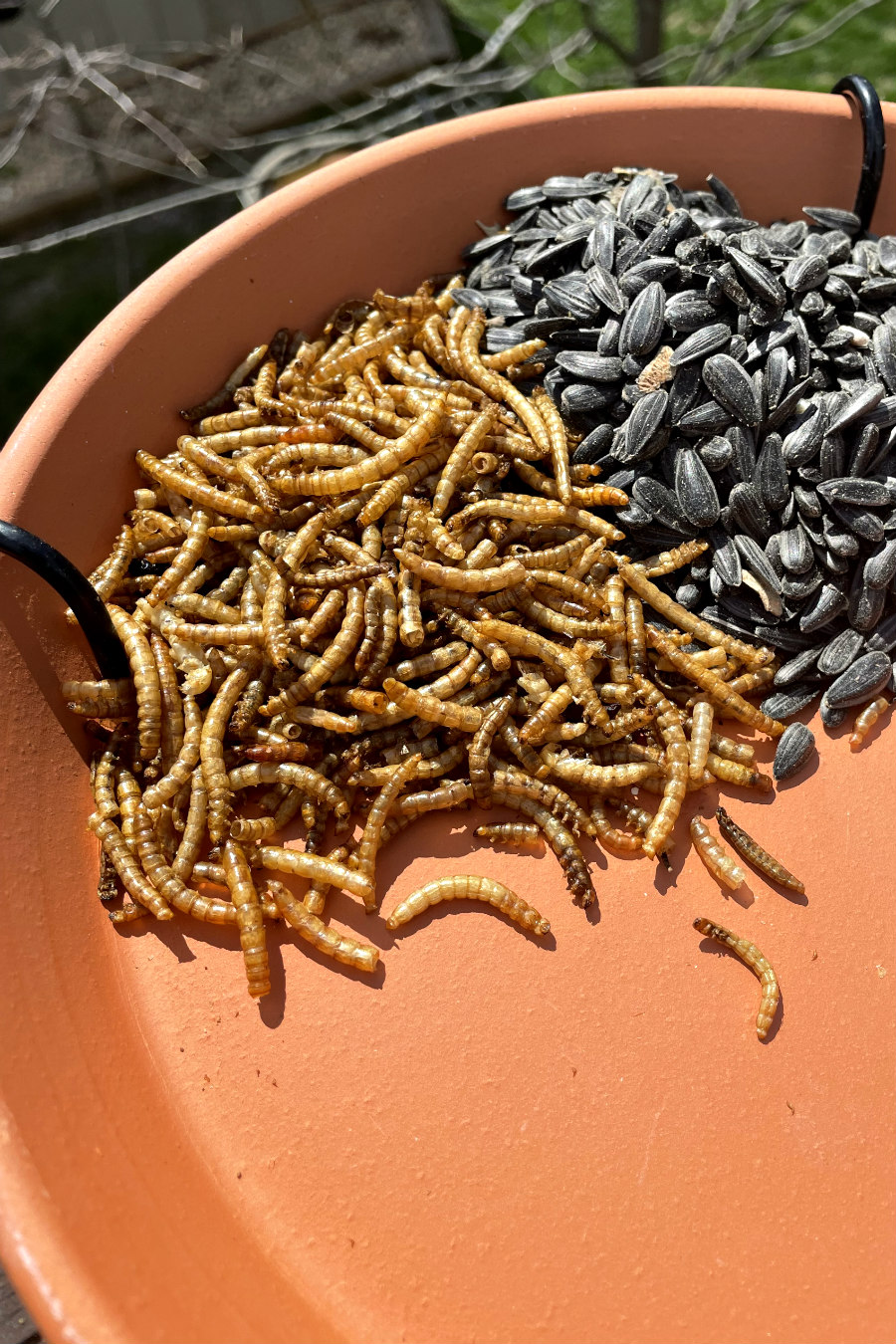
For some extra protein, I added dried mealworms. These are a good source of protein for nesting season. They'll attract birds like robins, wrens, cardinals, and woodpeckers.
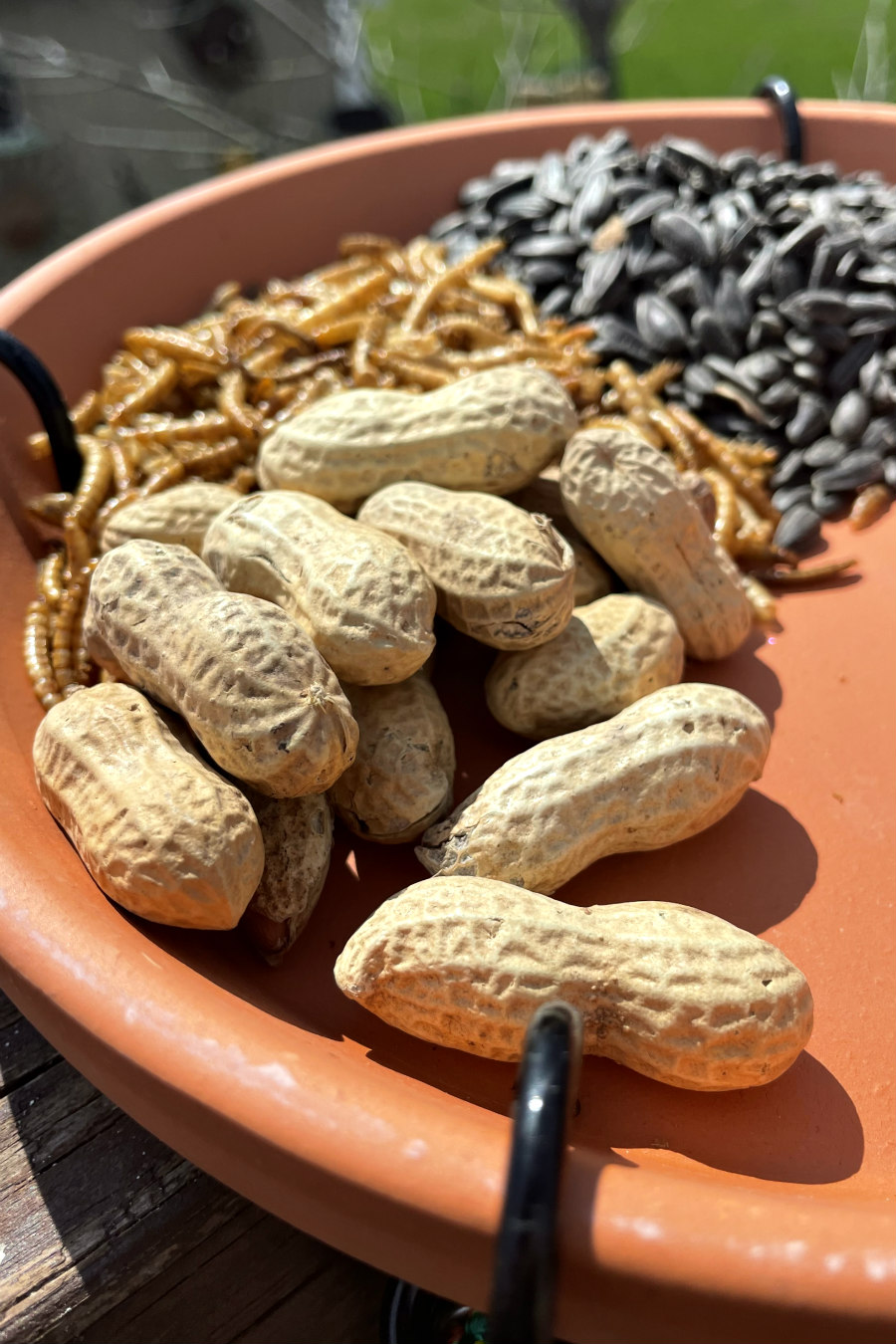
Then, I added a favorite of the crows and squirrels - raw whole peanuts. Other birds, like the cardinals and woodpeckers, will snatch one up and fly away. But I always see the squirrels munching on these.
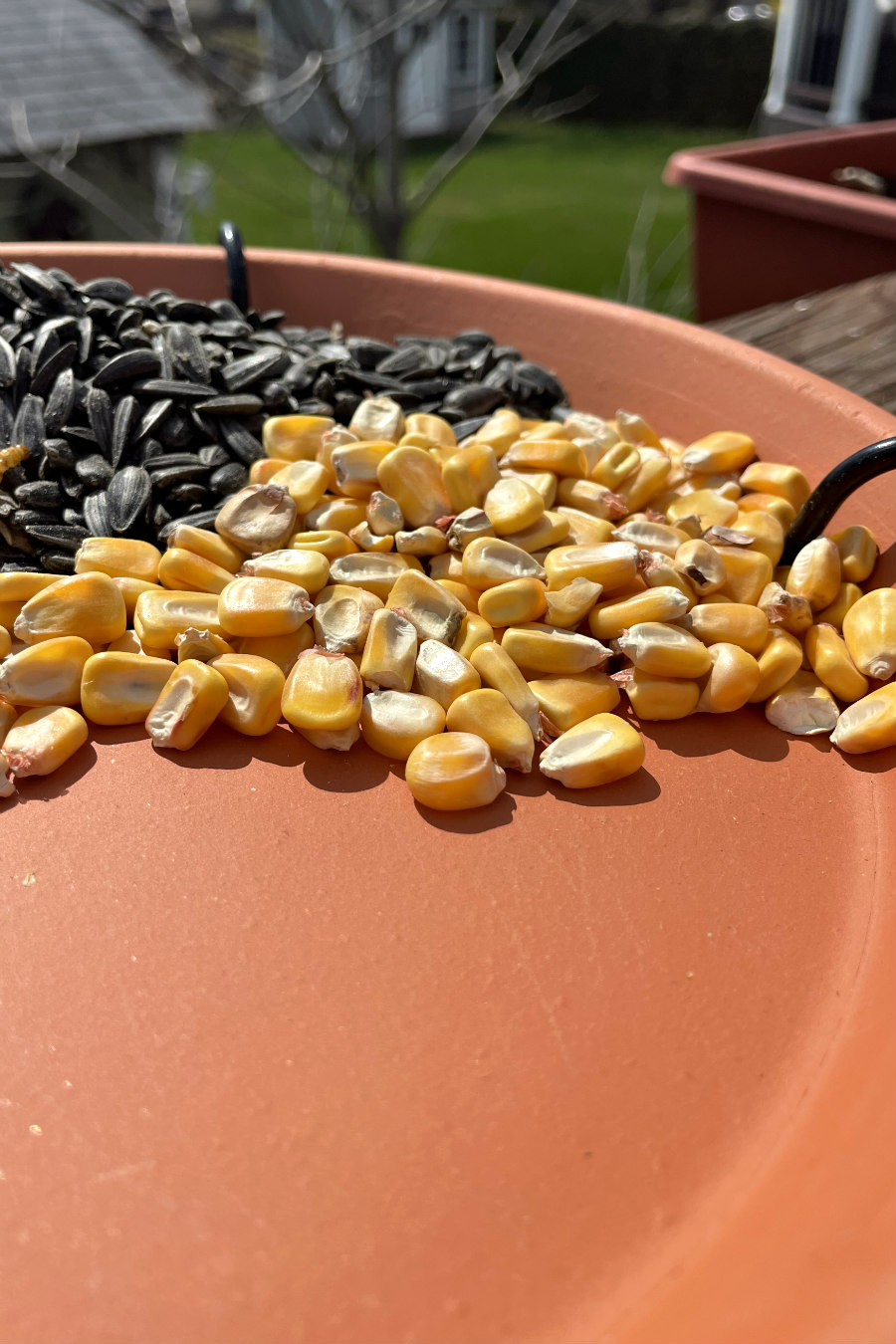
I also added a small handful of dried corn. This also attracts a variety of birds, but keep the area beneath clean to avoid attracting unwanted critters.
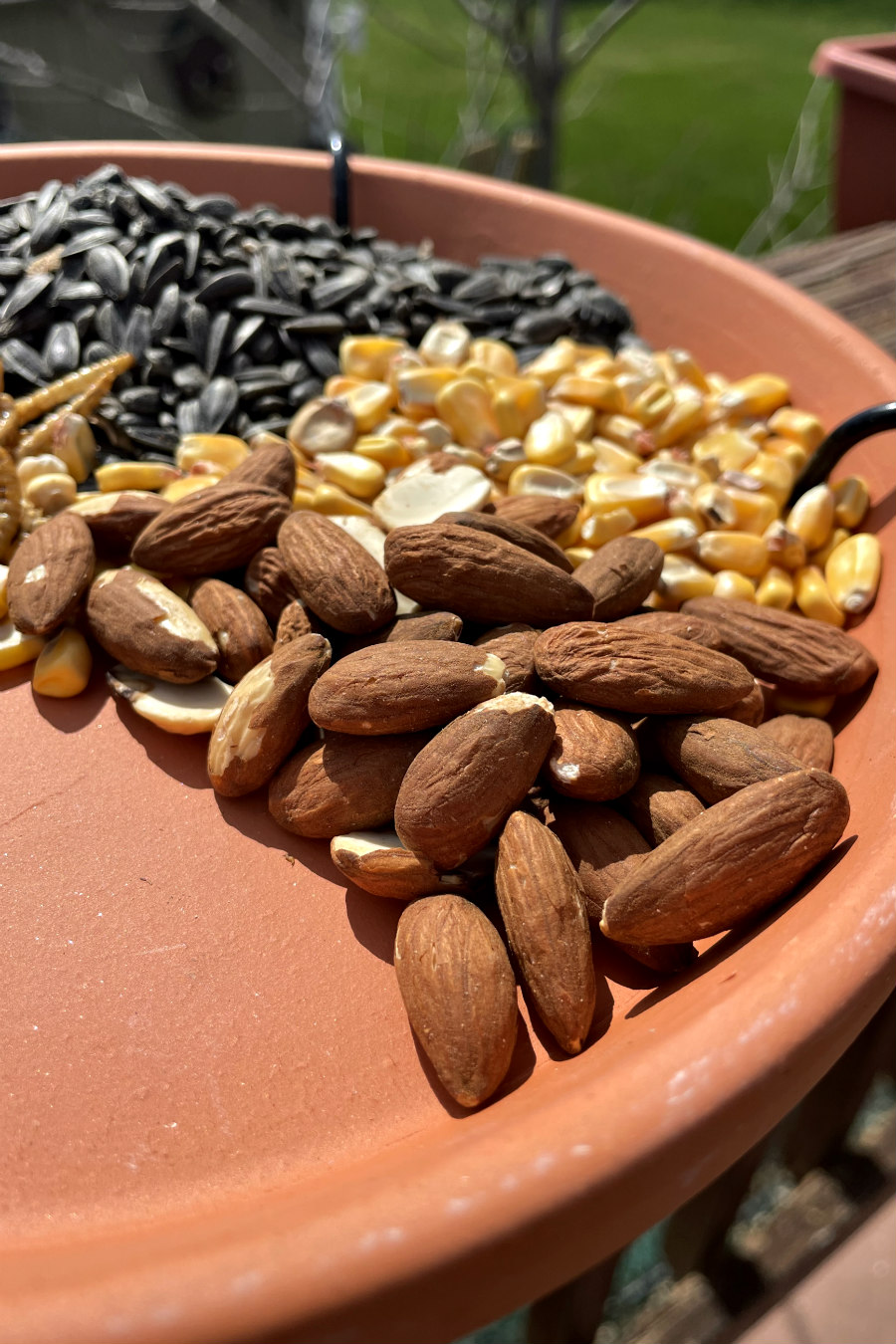
Then, I added a handful of unsalted, dry roasted almonds. Woodpeckers, blue jays, and crows will eat them.
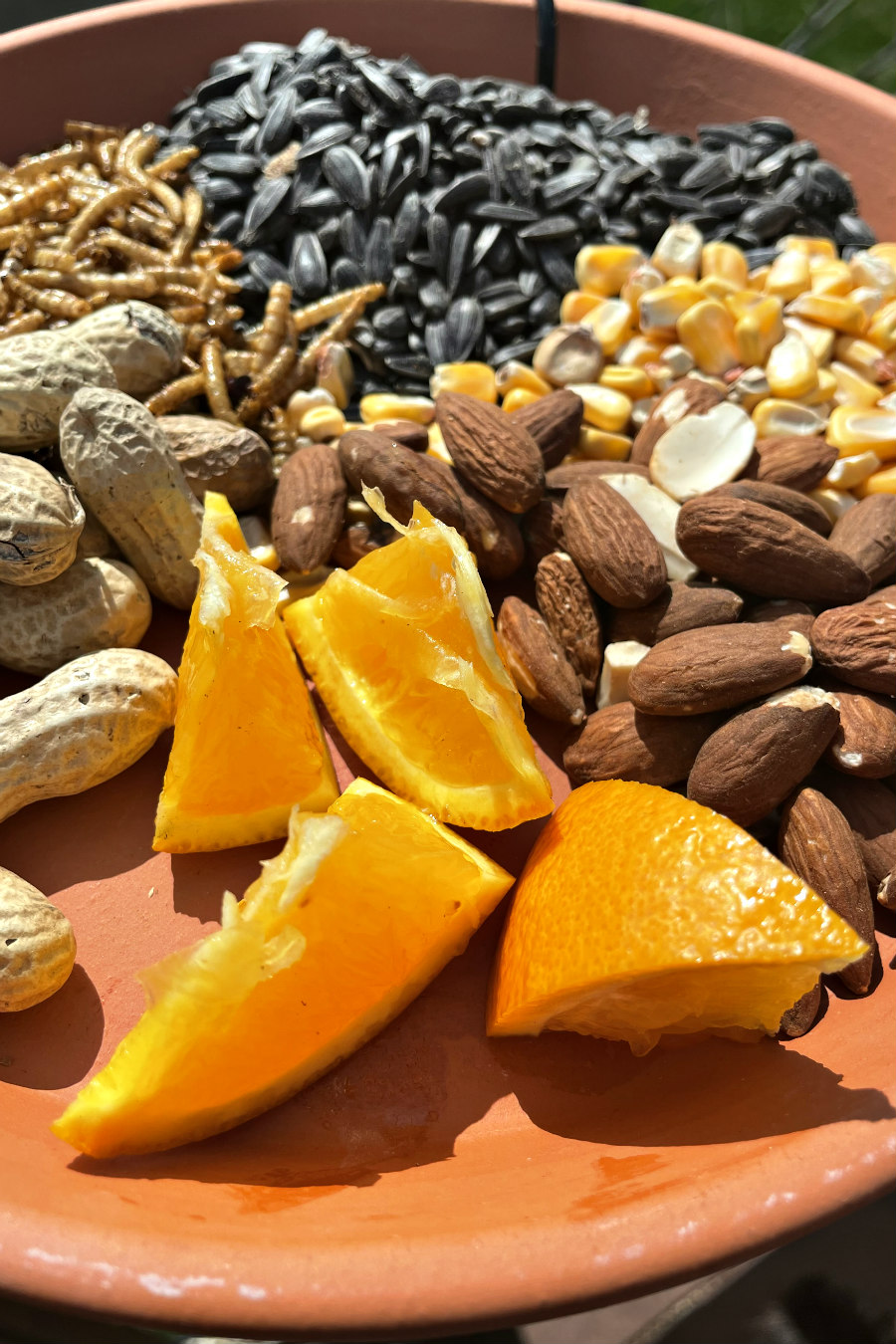
Last, I added some chunks of orange for my mockingbird friend.
SUPPLIES
- 2 - 24" bungee cords with hooks
- 8 or 10 inch terracotta plant saucer
- Variety of bird seed, nuts, fruits, and other treats
STEPS
- Clean the terracotta saucer and let it dry completely. Then, set it in an open area like on a small garden table or deck railing. If attaching to a deck railing, string the bungee cords through the railing and attach the hooks onto the saucer to keep it in place.
- Start filling the saucer with different foods for the birds. Arrange them in sections like a charcuterie board. Then, sit back and wait for the backyard birds to find it.
- Remove plate when empty to clean and dry. Then, refill.
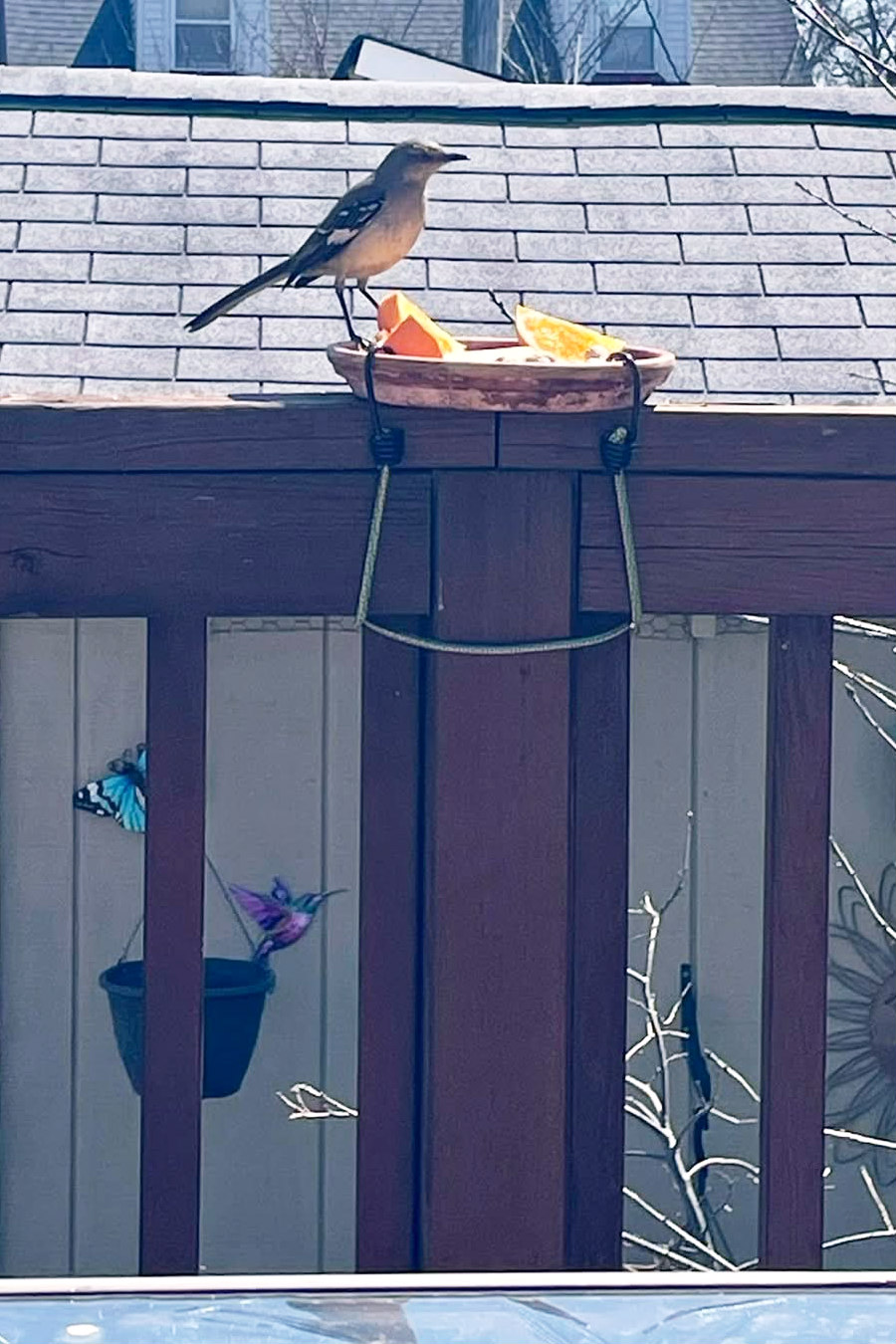
And there you have it! An easy chirpcuterie board set up that will attract lots of different birds to your yard! Place it somewhere you can easily see it and enjoyed watching the birds eat. I have mine set in an area I can easily see from the dining room and kitchen windows. It's also far enough I can sit and watch the birds while I sit outside on the deck.
Did you make this Chirpcuterie Board project? Share it on social media using the hashtag #holokahome. Don’t forget to tag me @holokahome!